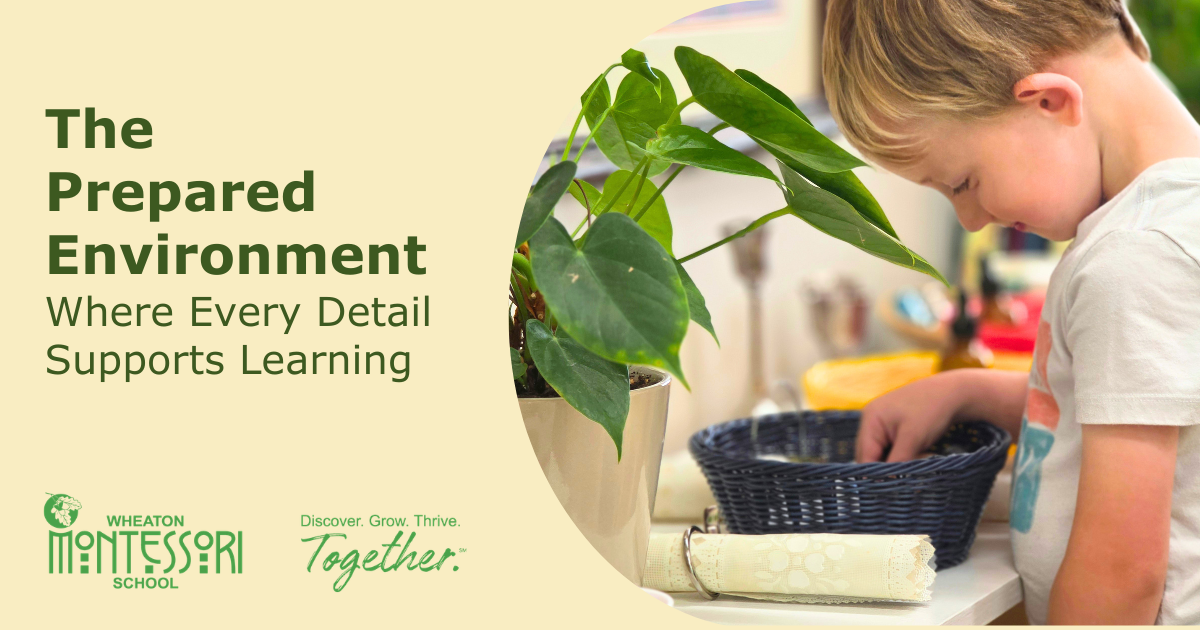
When you step into class at Wheaton Montessori School, one of the first things you notice is a sense of calm, order, and engaged focus. There are no bright plastic toys, noisy electronic devices, or cluttered spaces. Instead, you see low wooden shelves, natural light, beautifully arranged materials, and child-sized furniture thoughtfully laid out at eye level.
No teacher in the front of the room. No timed classes or station rotations. No class lesson aiming to entertain and reach a whole class.
This is not by accident. Our classrooms are called prepared environments for a reason. Every single object, piece of furniture, activity, and lesson on our campus is intentionally to serve a specific developmental purpose. Each encourages independence, focus, confidence, and a lifelong love of learning. Each person is working in a way that often feels like play.
1. Designed for Independence and Choice
In traditional public and private schools, adults control the environment, distributing supplies as needed and telling them what to get out at what time and for how long. Here, the space belongs to the children. Everything is in its space and accessible for them whether they need it in the moment, next month, or beyond their “grade level”.
2. Beautifully Arranged Materials to Nurture Concentration
Dr. Maria Montessori observed that beauty naturally attracts the young child's attention and invites exploration.
- Natural Elements: We prioritize natural materials like wood, glass, fabric, metal, and living plants. These tactile materials offer rich sensory experiences and convey a sense of respect for the child's aesthetic environment.
- Control of Error: Our academics and practical life activities have "control of error." For instance, if a child pours water into a cup and spills a drop, or if a puzzle piece doesn't fit into a wooden frame, math beads will be left over when not correctly counted; the material itself provides immediate, non-judgmental feedback. The child can correct their own work without requiring an adult to check their work.
- Order and Predictability: Every item in the classroom has a specific “home”.
3. Supporting Development Across Every Age Level
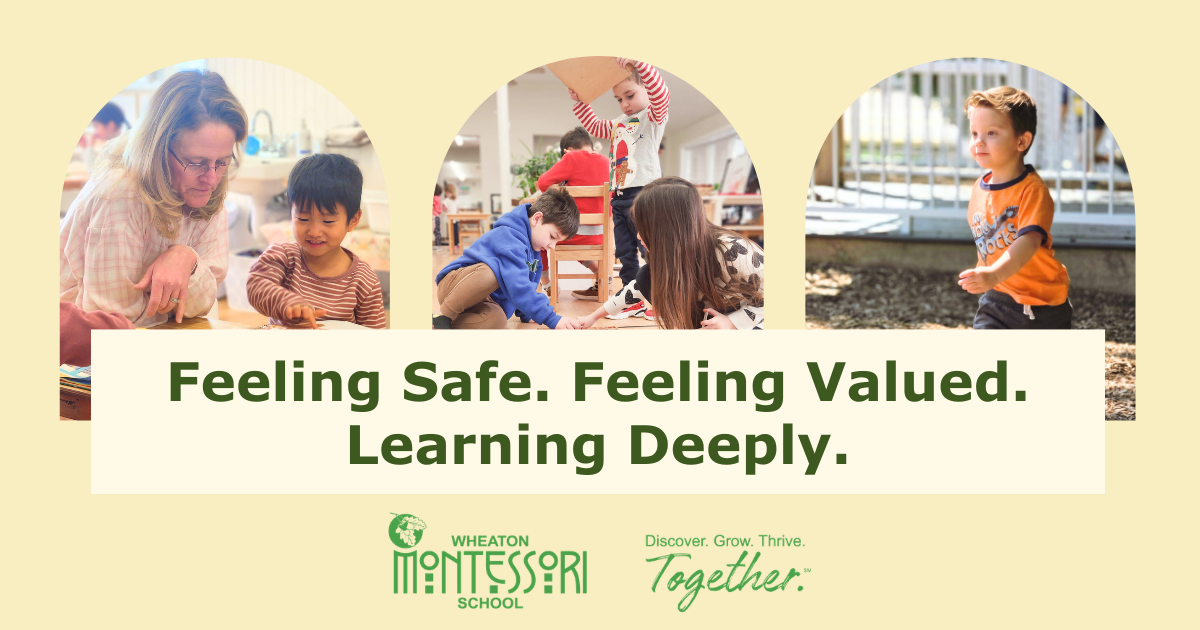
The prepared environment is intentionally designed to meet each child in their moment of development and challenge them to level up. Each classroom has mixed-age peers, and the academics offer unlimited opportunities to be challenged and just the right amount of support to excel.
In Primary (Ages 2 1/2–6)
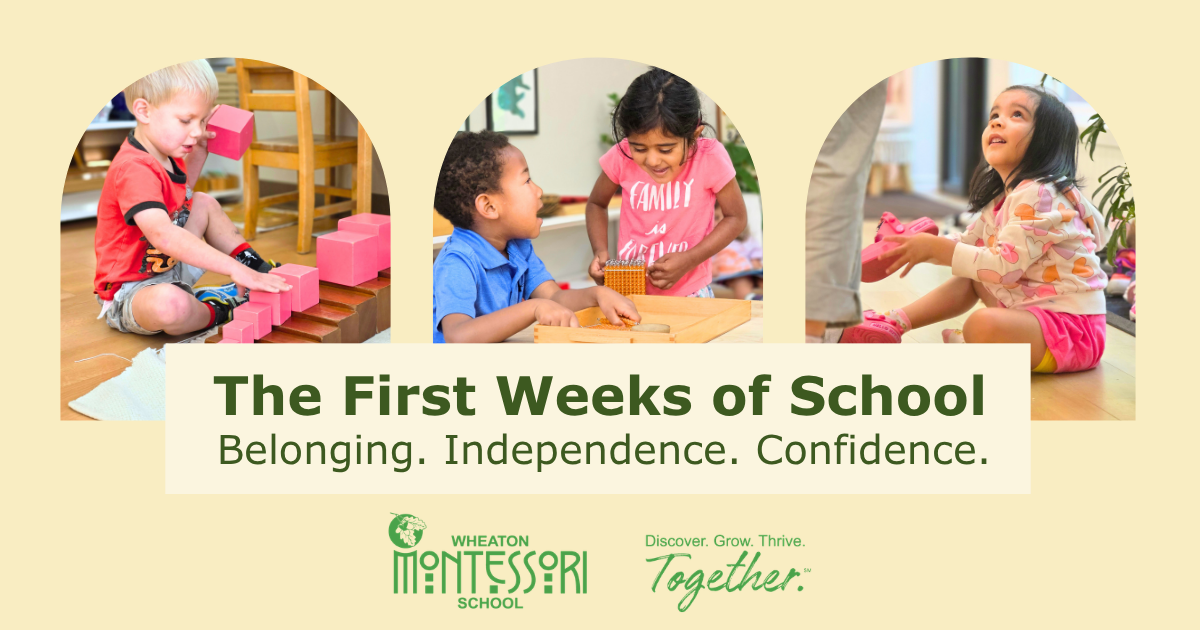
The Primary classroom focuses on concrete multi-sensory academics and practical life. Sandpaper Letters, moveable alphabets, Golden Beads, colorful chains, blocks, and more make reading, writing, and all four math operations manipulative and developmentally appropriate and exciting for our youngest students. Children move, socialize, and play within the designed space, developing fine motor control, sequence awareness, and deep stamina for work.
In Elementary (Grades 1–6)
As children transition from concrete learning to abstract reasoning, the environment adapts. Elementary classrooms feature large collaborative work tables, unique research libraries, and specialized materials like the Checkerboard for Long Multiplication, colorful cubes for finding cube roots, test tubes and beakers for science, timelines of human history, and so much more. The environment encourages social collaboration, big-picture research, and self-directed project management.
In Adolescent Program (Grades 7–9)
For young adolescents, the prepared environment extends beyond the four walls of the traditional classroom into the real world. The environment incorporates micro-economy centers, science labs, and community management spaces. Here, students work through complex academic projects, manage real budgets, and engage in land-based and community-centered work, building practical leadership and real-world mastery.
4. How the Prepared Environment Shapes Confidence
When your children and adolescents spend their days in a space specifically tailored to their capabilities, something remarkable happens: they begin to trust themselves.
When a three-year-old carries a fragile glass pitcher across the room without dropping it, or an elementary student organizes an entire research project using classroom resources independently, their confidence grows naturally. They realize, "I can do this myself."
Experience Our Classrooms in Action
The best way to appreciate the prepared environment is to experience it firsthand. See how our students move with purpose, choose their work with confidence, support one another, and thrive under the guidance of our long-tenured teachers.
Whether you are a current family with questions about your child’s classroom environment or a prospective family interested in learning more about Wheaton Montessori School, we invite you to connect with our office team or
schedule a personalized campus tour.