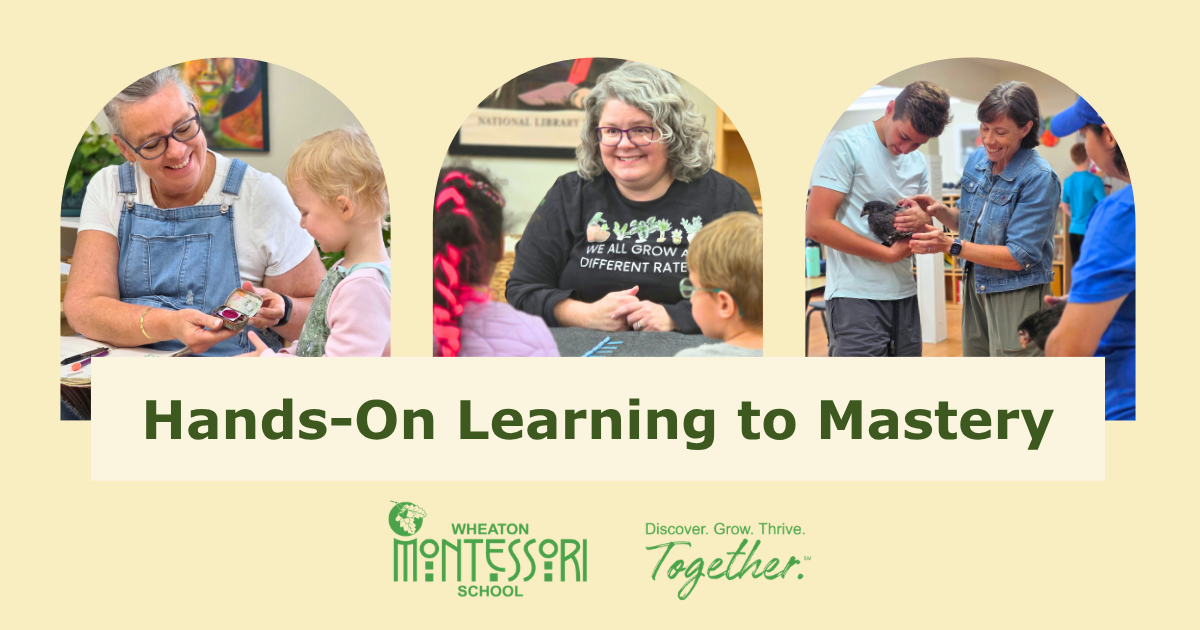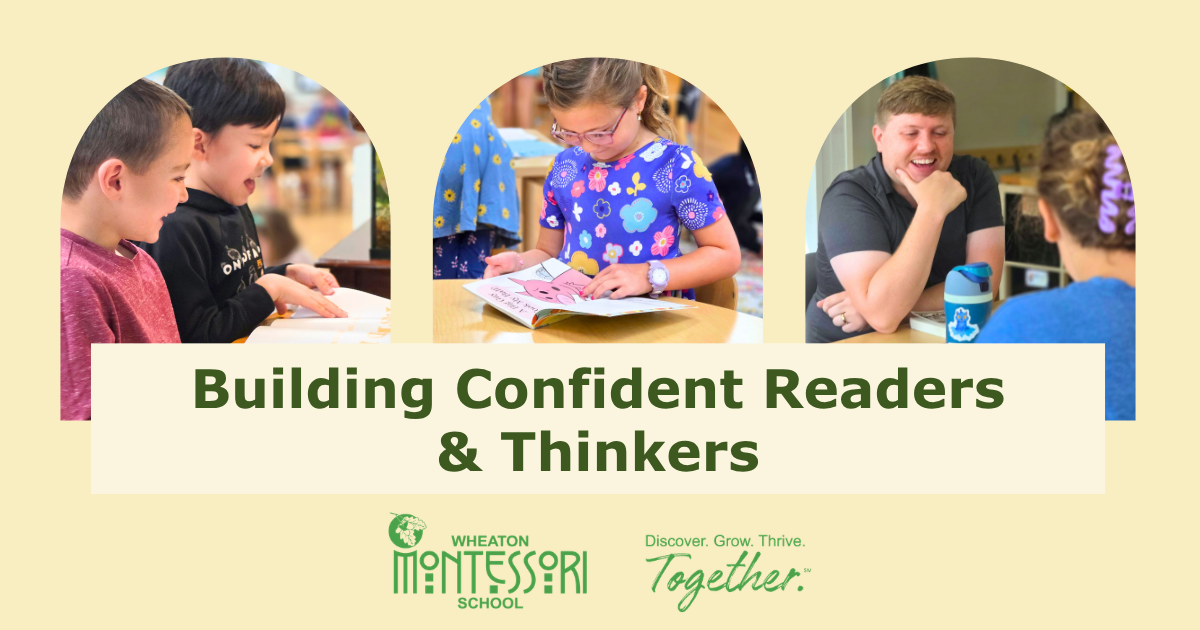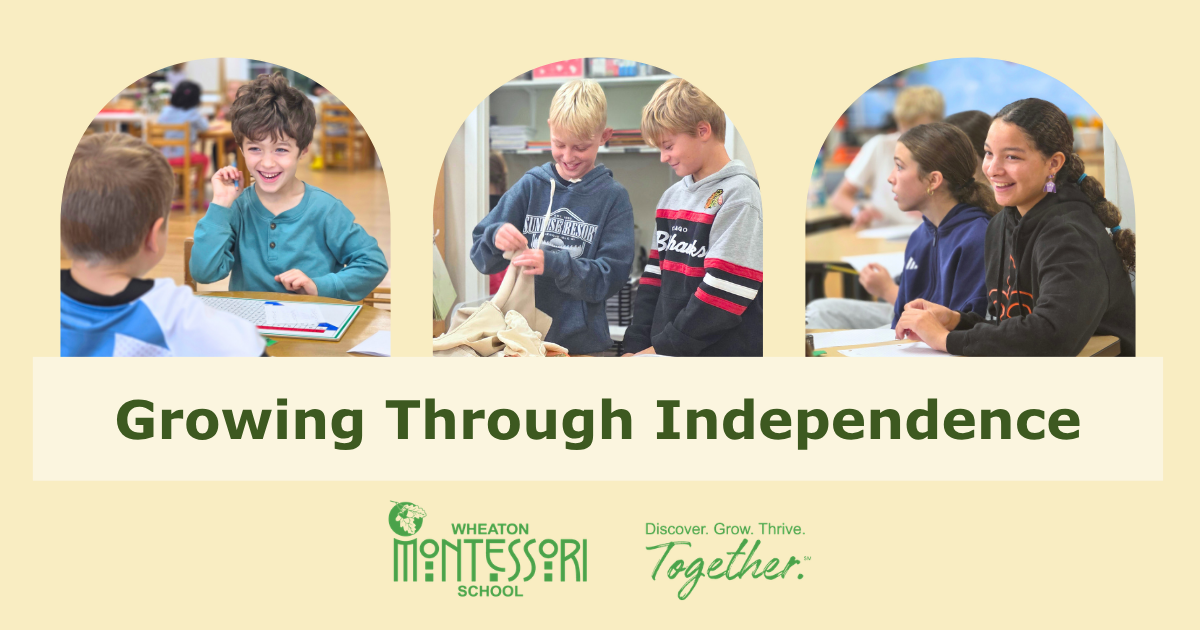
From Curiosity to the Future
As your child learns to navigate their day with autonomy, their natural curiosity guides them to deep learning, vast knowledge acquisition, subject mastery, and academic confidence. At Wheaton Montessori School, academic excellence and whole-child development go hand in hand. Guided by Montessori principles and supported by modern scientific research on human development, our programs combine authentic Montessori practice with rich academic rigor, consistently exceeding the international standards established by the Association Montessori Internationale (AMI).
Through the guidance of our long-tenured faculty, all of whom hold master’s degrees and specialized AMI diplomas, students build strong academic foundations while developing the problem-solving and self-reliance needed for lifelong learning and professional success.
Primary (Ages 2 1/2–6): Fostering Curiosity and Deep Concentration
In the Primary environment, academic growth begins with tactile exploration and freedom within limits. Young children are naturally curious, and our prepared environments help channel that intrinsic desire to learn.
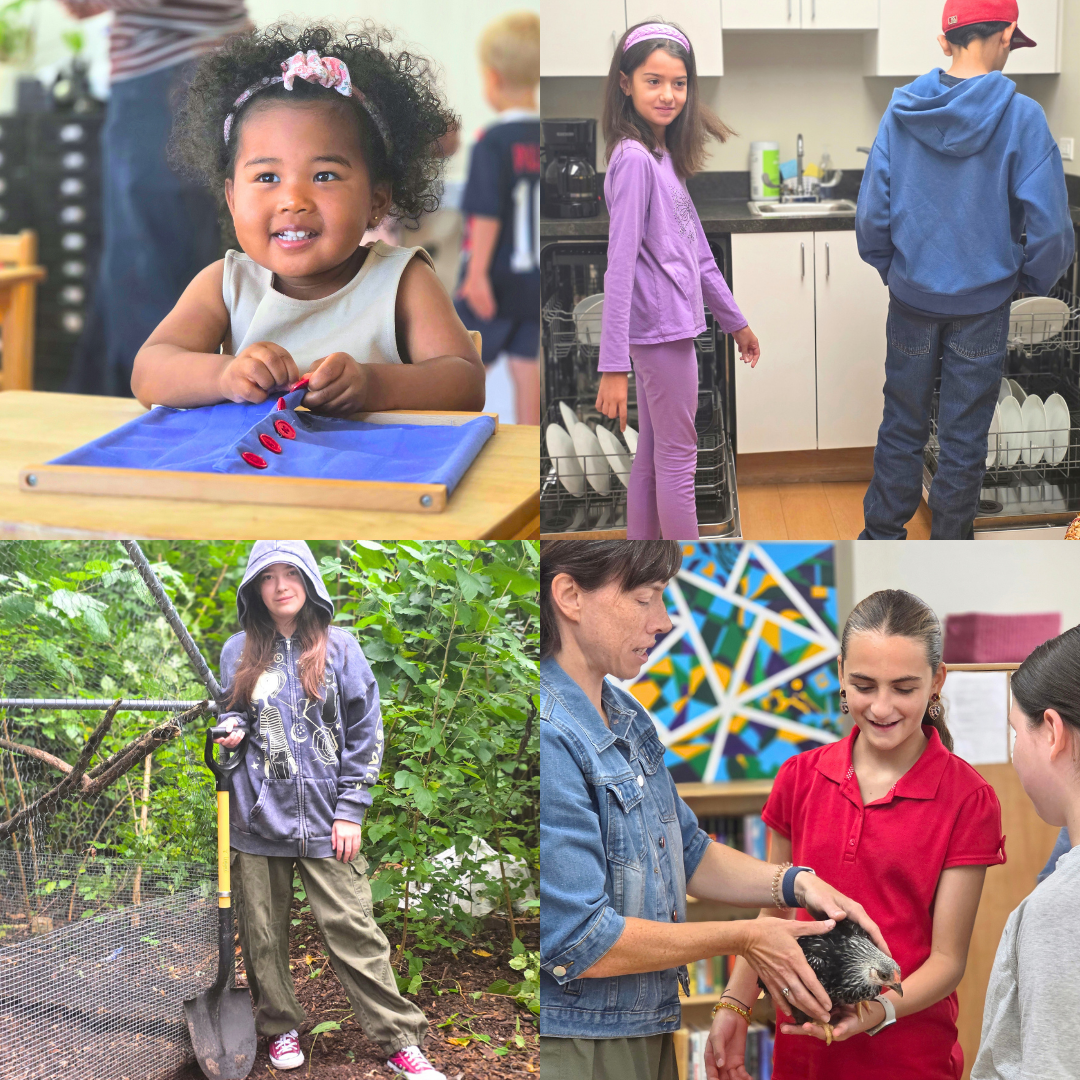
- Choosing and Completing Work: Children learn how to select a work material from the shelves, bring it to a rug or table, complete the activity with focused attention, and return it to its place. This simple cycle establishes foundational concentration and work habits.
- Concrete Foundations for Abstract Concepts: Math and language concepts are introduced through hands-on materials. Children manipulate wooden puzzle maps to learn geography, trace sandpaper letters to link tactile and auditory memory, and handle golden bead quantities to physically experience mathematical place value.
- Building Self-Trust: By receiving immediate feedback from self-correcting materials rather than relying only on adult evaluation, Primary children develop quiet confidence in their own abilities.
Elementary (1st-6th Grades): Expanding Inquiries and Academic Responsibility
As children enter the Elementary years, their intellectual interest shifts to why and how things work. Learning expands into collaborative inquiry, deep research, and organized academic responsibility.
- Interdisciplinary Exploration: Subjects are not taught in isolated blocks. History, geography, biology, geometry, and literature are interconnected through the Great Lessons, inspiring students to pursue research questions across multiple disciplines.
- Managing Complex Studies: Elementary students learn to plan their work over longer timelines. Using work journals, they manage multi-day research projects, balance group responsibilities, and track their own academic progress.
- Real-World Application ("Going Out"): When students need resources beyond the classroom, they plan and execute "Going Out" trips: contacting experts, arranging logistics, and visiting local community sites to gather data and deepen their understanding.
Adolescent Program (7th-9th Grades): Real-World Ownership and Leadership
For young adolescents, learning connects directly to personal identity, ethical reasoning, and community impact. Academic rigor is matched with practical application as students take real ownership of their work.
- Advanced Analytical Rigor: Adolescents engage in literary analysis, higher-level mathematics, scientific inquiry, and formal writing. Through student-led Socratic seminars, they evaluate complex texts, critique logic, and present well-supported arguments.
- Entrepreneurial and Ecological Projects: Students apply academic concepts to real-world ventures, managing micro-economy projects, conducting environmental science studies, and overseeing school community initiatives.
- Leadership and Self-Reliance: By managing deadlines, working in teams, and communicating with the broader community, students develop the self-advocacy, leadership, and emotional maturity required for high school and beyond.
Prepared for School and Prepared for Life
The trajectory from Primary to the Adolescent Program is a deliberate progression from foundational knowledge and concepts to abstract understanding and creative explorations, always with age-appropriate levels of independence. The skills children develop at Wheaton Montessori School, deep concentration, critical thinking, articulate communication, and meaningful engagement prepare them not only for the next grade-level, but for a changing world.