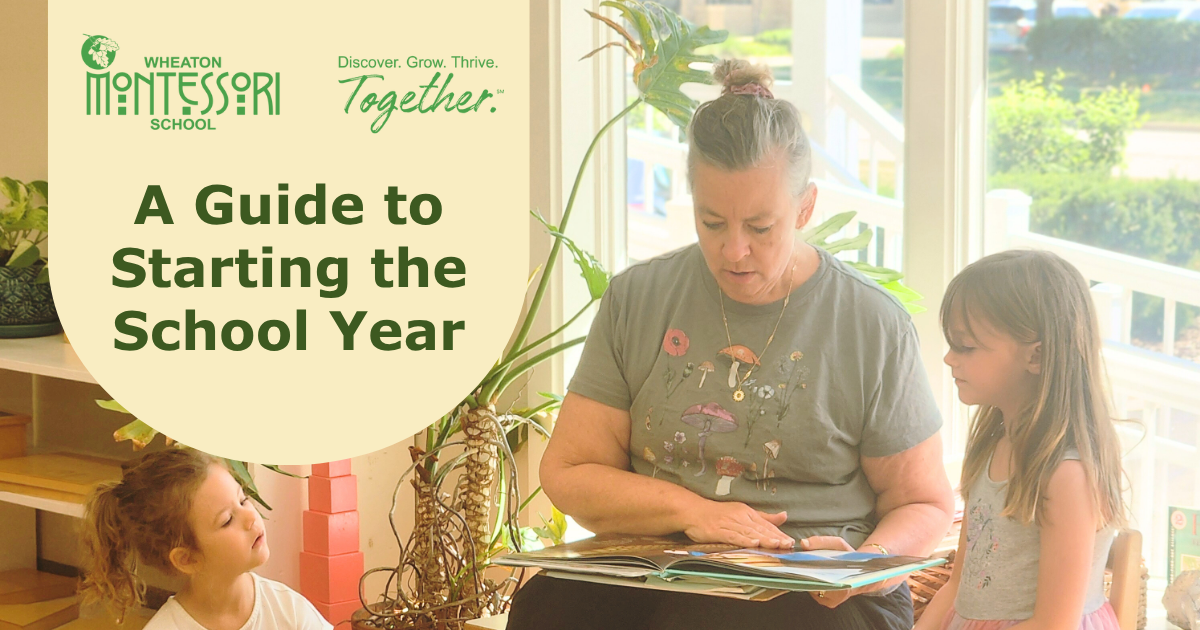
A Guide to Starting the School Year
Rebecca Lingo • August 4, 2025

As summer winds down and the school year approaches, our children often experience a mix of emotions from excitement and curiosity to worry and anxiety. Whether your child is returning to familiar routines or stepping into something entirely new, transitions can be challenging for both children and parents. Back-to-school time doesn’t have to be something that “happens to” children. It can be a time to begin some amazing conversations and build constructive new habits. When we invite children into the process with genuine collaboration, they begin to feel more in control and more confident. 


Wondering how to do this? We’ve got you covered with some ways to encourage independence and collaboration.


Reestablishing Routines


One of the most effective ways to support a smooth transition is to gradually reintroduce routines. Children thrive on consistency and predictability, and reestablishing your school year rhythm can reduce stress and help everyone feel more grounded. As summer winds down, you can reintroduce sleep schedules and morning routines that closely mirror the school year schedule.


Preparing Lunches and Snacks


If they haven’t had experience doing so already, offer your children chances to prepare their lunches. Involving children in packing their own lunch fosters independence and gives them a sense of responsibility. Set up a small shelf or refrigerator section with healthy, ready-to-grab options. With a little support, even very young children can help pack their snacks and lunches the night before or as part of the morning routine.


@ Adolescent Program parents – Your young people will be back in the Kitchen Lab making incredible meals. Enjoy not packing lunches.


Preparing Space & Managing Belongings


As we all prepare for managing more gear, we can plan to designate spaces at home to help ensure children have what they need when they need it. For first-time school goers, you can “practice” what leaving for or coming home from school looks like. Where will they hang their backpacks? Place their shoes? Take out their lunchboxes? 


Supporting Emotions


It's normal for children (and us!) to feel a mix of emotions about the return to school, especially when starting something (or somewhere) new. We can encourage conversations about feelings when they arise, and rather than trying to rush in and “fix” any discomfort, we can practice reflective listening and model positive mindsets even while emotions are mixed.


Inviting children into the process of getting ready for back-to-school builds skills and fosters independence. More importantly, it empowers children with the knowledge that they can acknowledge and work through big feelings when they arise. The result? A smoother transition, a greater sense of peace, and families who feel ready to step confidently into the school year ahead. 


Curious to learn more about supporting children in developing habits that serve them for a lifetime? Visit our school today!


One last tip: To increase your parental confidence going into week one, I invite you to watch Day 1 of last year. This video is of kiddos from families with worried parents, too.

How Your Young Children Learn and Why It Matters
By Rebecca Lingo February 23, 2026
How Your Young Children Learn and Why It Matters Your young children learn by actively constructing themselves through purposeful work. From birth through age six, learning is not passive or instructional. It is driven from within your child, supported by responsive adults like you and all of my colleagues. This internal passion to learn is also boosted through the campus design and surroundings. Every movement, repetition, and exploration is meaningful work that builds the child’s body, mind, language, and sense of self. How learning happens Active construction through work: Your young children learn by doing. Don’t we all! Movement, using the hands, exploring real materials, and repeating challenging tasks are how the brain develops. This work must be meaningful and appropriately challenging, not busy work. Movement and the hand: Development of walking, balance, and refined hand use is foundational. Your children of all ages need freedom to move and manipulate real objects to fully develop coordination, concentration, and foundational academics like writing and adding. Language through relationship: Language develops through reciprocal human interactions. Rich spoken language, conversation, naming the world, and storytelling are essential. Wheaton Montessori School eliminates screens and background noise to highlight communication. Sensorial exploration of reality: Your children learn the world through their senses. Touching, comparing, carrying, observing, and interacting with real things builds the foundation for imagination, reasoning, and abstract thinking later. Authentic Montessori immerses us in exploration and discovery. Sensitive periods: Your children pass through brief, powerful windows of heightened interest and ability, such as for language, movement, social behavior, etc. Wheaton Montessori School teachers observe and offer the right experience at the right time. Learning happens easily and joyfully and feels like play! Concentration and normalization: When your children are connected to meaningful work that they choose themselves and repeat, they develop deep concentration, self-regulation, delight in effort, and care for others. Why This Is Important Early experiences shape lifelong learning: Early experiences lay the neurological, emotional, and social foundation for everything that follows. Missed opportunities are harder to recover: Skills learned during ideal stages are acquired with ease. When these periods are missed, learning later requires more effort and frustration. My colleagues are passionate about tailoring lessons and their classrooms to match child development (and adolescent development, too!) Strong foundations support later independence: Your children deserve rich early support leading to confident, capable, socially aware, and academically prepared people. Well-supported children become well-adjusted humans: This approach supports not just academic readiness, but the development of secure, courteous, empathetic children who care about their community and the world. In short, your children learn best when they are trusted as active learners, supported by attentive adults, and given real, challenging work at the right time. Investing in this early foundation supports not only your child’s success in school, but their lifelong well-being and ability to thrive.
Be Quiet and Sit Still
By Rebecca Lingo February 16, 2026
At Wheaton Montessori School, your child is guided by highly trained professionals who deeply understand child and adolescent development. Every day, thoughtful structures and intentional practices support students in using their intellect, curiosity, time, and choices successfully, so they can grow into capable, self-directed individuals. Dr. Maria Montessori never equated being “good” with silence or stillness. Our teachers do not equate being well-behaved with being quiet and sitting still. In fact, like Dr. Montessori, we believe that movement, communication, and social interaction are essential to learning. When you observe a classroom at Wheaton Montessori School, you’ll see exactly that: children moving purposefully, talking with peers, collaborating, and responsibly managing their academic work throughout the day. What may look like “freedom” on the surface is actually built upon a strong underlying structure. Students experience a sense of choice, what to work on, where to sit, how long to engage, and who to collaborate with, because the environment has been carefully prepared to support those decisions. The Power of Structure and Grace The foundation of our campus is made up of proactive lessons called Grace and Courtesy . These lessons explicitly teach students how to: Set up and return materials Respect others’ space and work Ask to observe a peer’s work Acknowledge feelings and resolve conflict respectfully These shared lessons give everyone a common language and reference point for living and learning together. Older or more experienced students model appropriate behavior, creating classrooms full of young teachers, not just the adults guiding the environment. Students always have opportunities to challenge themselves or to take a healthy break. They work and play with materials they are developmentally ready to use, ensuring success while still encouraging growth. Not a Free-For-All: A Thoughtfully Designed Community Authentic Montessori environments are often misunderstood as unstructured. In reality, our campus is carefully designed to meet the developmental needs of preschool children through high school freshmen. The structure is natural, respectful, and aligned with who children and adolescents truly are. We know learners may still experience frustration, regret, and disappointment at times. Those moments are part of learning. When a child sits beside a teacher to regroup, it may feel like a “time out” to them, but it is actually a moment of support, reflection, and connection within a safe community. When challenging behaviors arise, our teachers respond with empathy and expertise. They understand that all behavior communicates a need. Rather than relying on rewards or punishments, teachers may guide a child toward a break, offer work that better meets their developmental needs, or help them return to a centered and purposeful state. Growing Self-Discipline From the Inside Out At Wheaton Montessori School, self-discipline and regulation develop through meaningful activity. Expected behavior grows through practice within a warm, structured community. Curiosity sparks interest, interest fuels focus, and focus leads toward mastery. This process contributes to valorization, your child’s growing sense of confidence, capability, and belonging. Children who feel balanced and respected naturally behave with greater care for themselves, others, and their environment. This sums up Dr. Montessori’s limits in three rules: care for yourself, care for others, and care for your surroundings. The true outcome of this work is human development: your child and adolescent’s identity, agency, purpose, and love of learning. When they understand big ideas and see themselves as capable contributors, they grow in ways that last a lifetime.