We recognize that every young person needs to feel they belong, that they are capable, and that they have something of value to contribute to their world. We call this the process of valorization, of coming to know one’s own worth through effort, adaptation, and usefulness. We believe valorization is at the heart of human essentials.
Valorization is a component of thriving, with thriving as a broader goal, a state of well-being. It nurtures the confidence to try, the courage to contribute, and the belief that one’s efforts matter. As adolescents experience valorization, they step into a fuller sense of themselves and into a life they feel ready to shape.
The Experience of Belonging
Teens enter new and uncertain territory in life. They are leaving behind the familiarity of childhood and finding their way in a larger, more complex social world. What helps them to feel at home? What protects them from feeling lost?
The answer lies in experience. They need the living understanding that they can adapt, contribute, and make themselves useful. They need the confidence that, no matter what the challenge, they have within them the capacity to meet it.
This is not something that can be told to adolescents. Rather, they need to live and earn this through real activity, through purposeful work, and through freedom and responsibility. That lived experience provides valorization, a deep inner experience of usefulness and purpose.
The Roots of Confidence
Valorization is not the result of praise, good grades, or awards. It is the result of work and effort. It is the result of doing something real and discovering that you actually can do it.
We see the beginnings of this process when a toddler insists, “I do it myself.” That same drive for independence grows and transforms over time. We support this process as the young child learns through purposeful activity in our scientifically designed classrooms at Wheaton Montessori School, the elementary child tests fairness, justice, and morality through recess and in group work, and the adolescent seeks belonging and contribution through meaningful work within the community.
At each stage, children and adolescents are constructing themselves. This is why we call everything “work”. They are testing the match between their growing capacities and their surroundings. When those conditions are right, when freedom and responsibility coexist, valorization occurs. Young people feel useful. They feel their own worth.
Independence, Normalization, and Adaptation
Dr. Maria Montessori saw human development as a process of self-construction. To thrive, children and adolescents must adapt through independence, interaction, and activity.
When the environment welcomes children and adolescents, allows freedom to move, to choose, and to act, and to interact, the connection grows strong. Children and adolescents feel they belong.
However, when freedom is restricted or when the environment doesn’t meet developmental needs, children and adolescents may feel alienated. They lose that sense of being able to connect and contribute. They begin to feel disconnected in their own world. Teen years that are famous for being prone to tumult are eased when adolescents are given meaningful work, real responsibility, and the trust to exercise their growing independence. When they feel capable and valued, they become more grounded, secure, and connected to themselves, to others, and to their purpose.
Deeply Experienced Usefulness
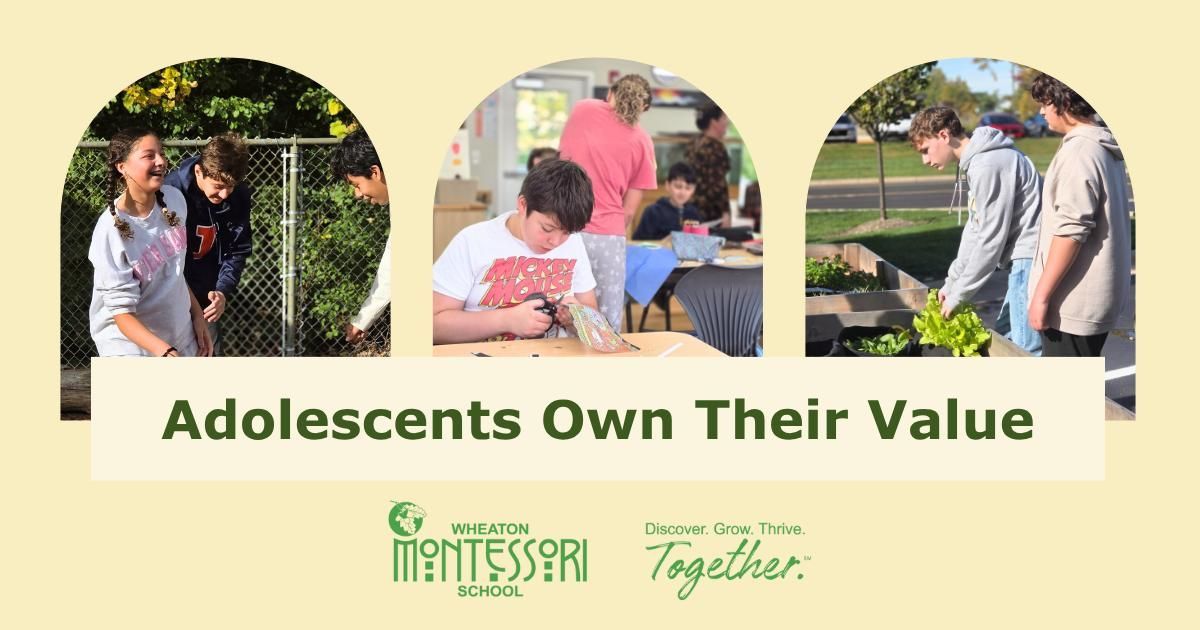
In our adolescent program at Wheaton Montessori School, valorization occurs through work that matters, work that contributes to the life of the community in addition to academics: practical projects, environmental stewardship, community building, and social enterprise. Valorization, at its heart, is not about the task itself. It is about the experience of usefulness, contributing value.
When adolescents lead a group project, mentor a peer, read with lower elementary students, repair the raised beds and greenhouse, tend to chickens, winterize the bees, perform at their own coffee house, conduct seminars, and prepare lunch, they experience themselves as capable and needed. They know they matter and they belong: valorization that they carry into their futures strengthened, encouraged, and ready for more.
A Lifelong Process
Valorization is not a single event. It is a continuous process that unfolds through every stage of life, a component of thriving. We experience it each time we adapt to a new challenge and find that we can meet it. Think about the infant reaching for an object with determination, the preschooler insisting on pouring their own water, the elementary child working through a problem with a friend, and the adolescent finding purpose in meaningful work.
Each is an act of self-construction, a declaration of worth, and a rehearsal for the life of an independent, resilient adult.
Trusting the Process
In Education for a New World, Dr. Montessori said, “We must take a new path, seeking the release of human potentialities.”
That path requires trust. Trust in the child’s inner guide, in the process of development, and in the power of purposeful work.
Valorization is not something we can teach. It is something we must prepare for. Our role is to create the conditions where valorization can unfold: an environment rich with real responsibility, freedom, and meaningful human connection.
When we do, children come to know, deep within themselves, that they are capable, adaptable, and valuable. They no longer feel out of place in the world. They feel at home within it.
See how we help young people feel at home throughout their many stages of development at Wheaton Montessori School.
You’re invited!
What: Open House
When: Thursday, January 15, 2026, 6:00 p.m.
Explore our academic curriculum from early childhood through the freshman year of high school, and connect with our expert teachers and school community. Tour our campus, natural playscape, and conservation areas.
Current families with children of all ages RSVP:
https://calendly.com/wheaton-montessori/open-house-2026
Prospective Families with children ages 4 ½ and under* RSVP:
https://calendly.com/wheaton-montessori/open-house-2026-prospective-families
*2026 Summer and Fall Openings
Openings are available only for new students under 4½ years of age and for current students to re-enroll. The waitlist for the
2025–2026 school year (kindergarten through freshman year of high school) is closed. Exceptions may be considered for students transferring from AMI-accredited Montessori schools with continuous attendance.