It is easy to focus on the academic benefits of Montessori education. An August 2023 meta-analysis of 32 studies highlights how students in Montessori programs, in comparison to students in traditional schools, show higher performance in language, math, general academic ability, and executive functioning. The Montessori method has a powerful impact on student performance. Academic vigor, though, isn’t the only thing that matters in our children’s lives.
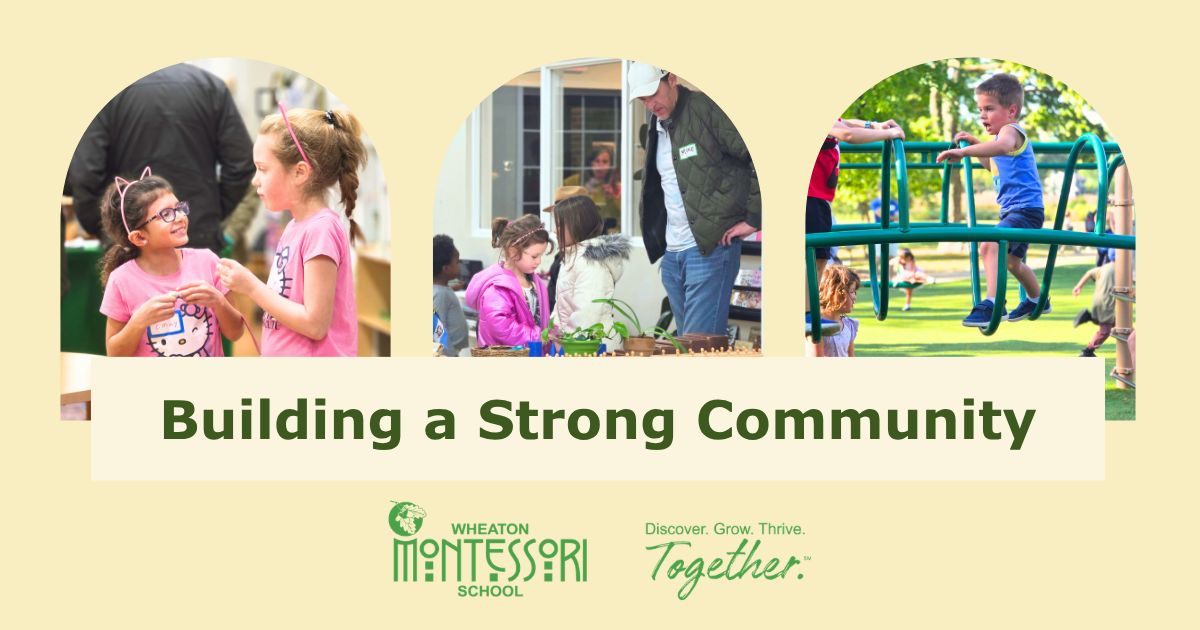
The social-emotional benefits of a Montessori education are also incredibly significant. This is especially apparent at the elementary level at Wheaton Montessori School as children are figuring out who they are as social beings. The near-peer learning in our mixed-aged communities helps our young people develop their collaboration strategies, problem-solving skills, and conflict-resolution techniques. Plus, Montessori environments are purposefully designed to support our children developmentally. We are working with human nature, rather than against the strong forces that drive our young people.
Collaboration
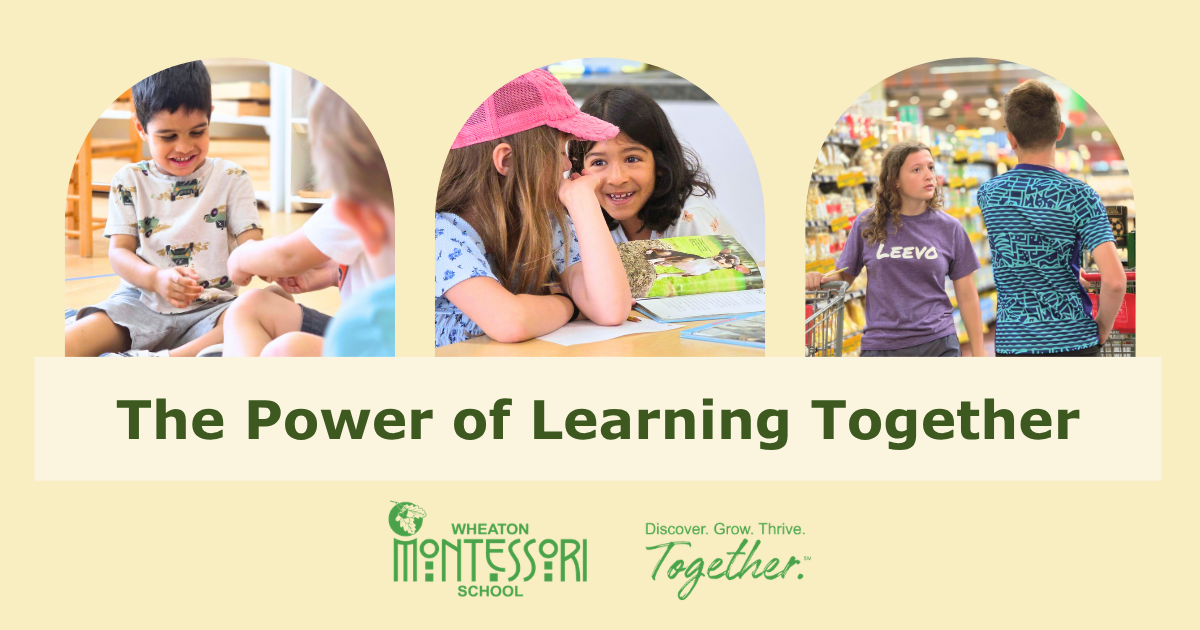
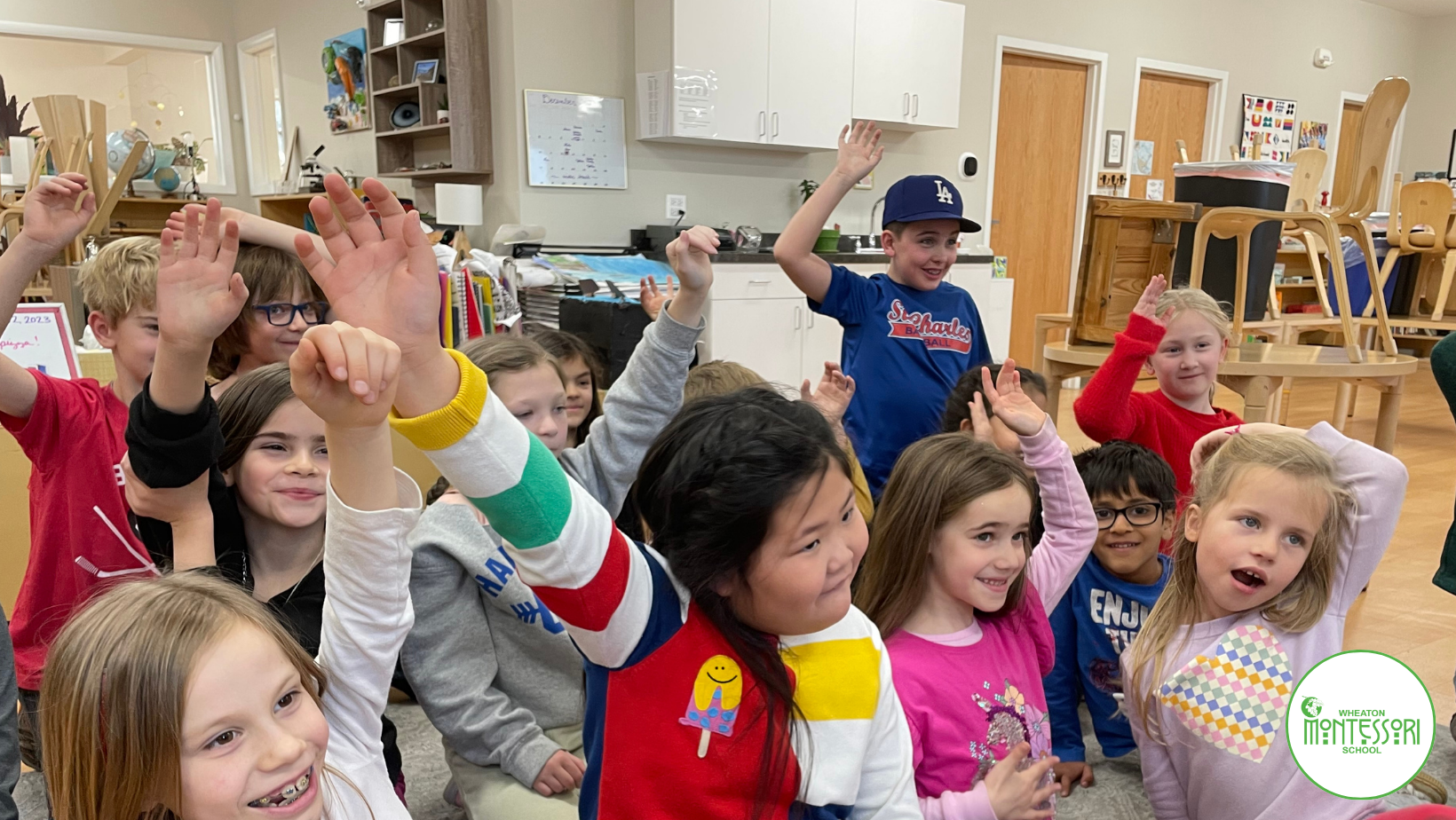
At the elementary age, it is all about the “we” because children of this age have a strong gregarious nature. They want to do things together and thus group work is an integral part of our elementary classrooms. In the process of working together on projects, elementary students practice important communication skills and learn how to lift each other in their group work. We want elementary children to know that collaboration will take us further, so we help children learn how to support each other.
As they develop these collaborative skills, each individual comes to recognize not only the power of the group but also what it means to belong to a group in a meaningful way. As children experience themselves as part of a community, they are constructing their social selves.
Practice Society
This social construction can be seen as the way that elementary-age children begin to practice what it means to create societal structures. In Montessori, we sometimes think about elementary communities as “practice societies”.
It is “practice” because children are engaging in something they haven’t already mastered, which means they aren’t going to be good at it at first! We recognize that children need to work at creating their “practice society” and there will be gradual improvement. This also means that there will be mistakes, including conflict and hurt feelings. In Montessori communities, we have the time and space to support children as they work through this process. We value the importance of this social development! We model, support, practice, and role-play the necessary skills and support each individual as needed.
The word “society” comes from the Latin root for companion. Thus, being in society implies having friendly associations with others. We want elementary children to find joy in associating with each other. Which also takes practice. During the elementary years, children benefit from real jobs that contribute to their community and begin to appreciate how to make sure everyone gets their needs met collaboratively. We support children in this work of forming a society based on joint cooperative work in a positive, productive environment.
Hero Worship
Elementary children look up to power, strength, and beauty in whatever form that occurs. Because they look toward heroes, we use the elementary years to introduce a variety of different types of heroes (even non-human ones!).
In looking toward heroes, children are thinking about how to actualize their potential. They become very observant of others. They love to research and look into the histories and stories of people and cultures, known and unknown. They begin to recognize individual strengths and apply those to their own practice society, community, and family. They invite each other to work based on their strengths. As a result, individual children begin to feel truly seen. Eventually, they even begin to recognize that the strength of the group is their strength. Hero worship drives all kinds of prosocial development.
Part of hero worship also involves stepping into leadership roles in the community, which means both learning how to lead and learning how to follow. Rather than just acquiesce, Montessori students develop joyful cooperation. They find joy in belonging to the group that brings out their best selves and being part of something together.
Building & Solidifying Skills
In the process of working with peers of varying ages, children make connections with different types of people and realize that learning occurs with those who are both older and younger! Through connection and conversation, children practice their patience, listening skills, and communication strategies. As classmates engage collaboratively on both projects and classroom responsibilities, they learn how to work toward one goal, lean into each other’s strengths, prioritize tasks, and organize their time. Because their social and academic lessons are individualized, they have space and time to develop their skills, collaborate based on interests, practice what they have recently mastered, and share their strengths with others.
We see much of this social and emotional growth in how our students interact with people both in school and out in the broader community. Because they have had the experience of adults as partners and allies, we see that our alumni know how to seek help, ask questions, and generally converse with people of all ages.
But don’t just take our word for it! Our school values the importance of developing social-emotional skills in our students to shape them into capable individuals who can flourish in society. If you would like to know more, we encourage you to speak with your child's teacher and learn about our approach to this critical aspect of development.
Current families are invited to schedule their classroom observation by clicking the green buttons below.
We believe that seeing our students' development firsthand is the best way to understand the impact of our programs and the value of social-emotional learning. "Schedule a Tour" by clicking on this link or the green button located in the upper right-hand corner of our website. and discover how our students engage in various activities and interact with their peers and teachers in a supportive and inclusive environment. We are enrolling children who will be between 2.5 and 4 for the summer and fall of 2024 and we will hold a space for enrolled students who have not quite reached 2.5.