Our Montessori Bookshelf: Life on Earth
Rebecca Lingo • December 2, 2024

As children approach their elementary years, they can truly access the power of their imagination. As a result, they begin to ask big questions and want to explore through space and time. One way to support this big thinking is to provide resources they can explore. We love to find books that children lose themselves in, and that support deep learning.  


We’ve found the following books particularly engaging, especially as children begin to grasp the vastness of time, the interdependency of all living things, and how human life is a continuation of much that has come before. For those children who have spent time working with the Timeline of Life, these books will reinforce concepts while offering new doors to open!
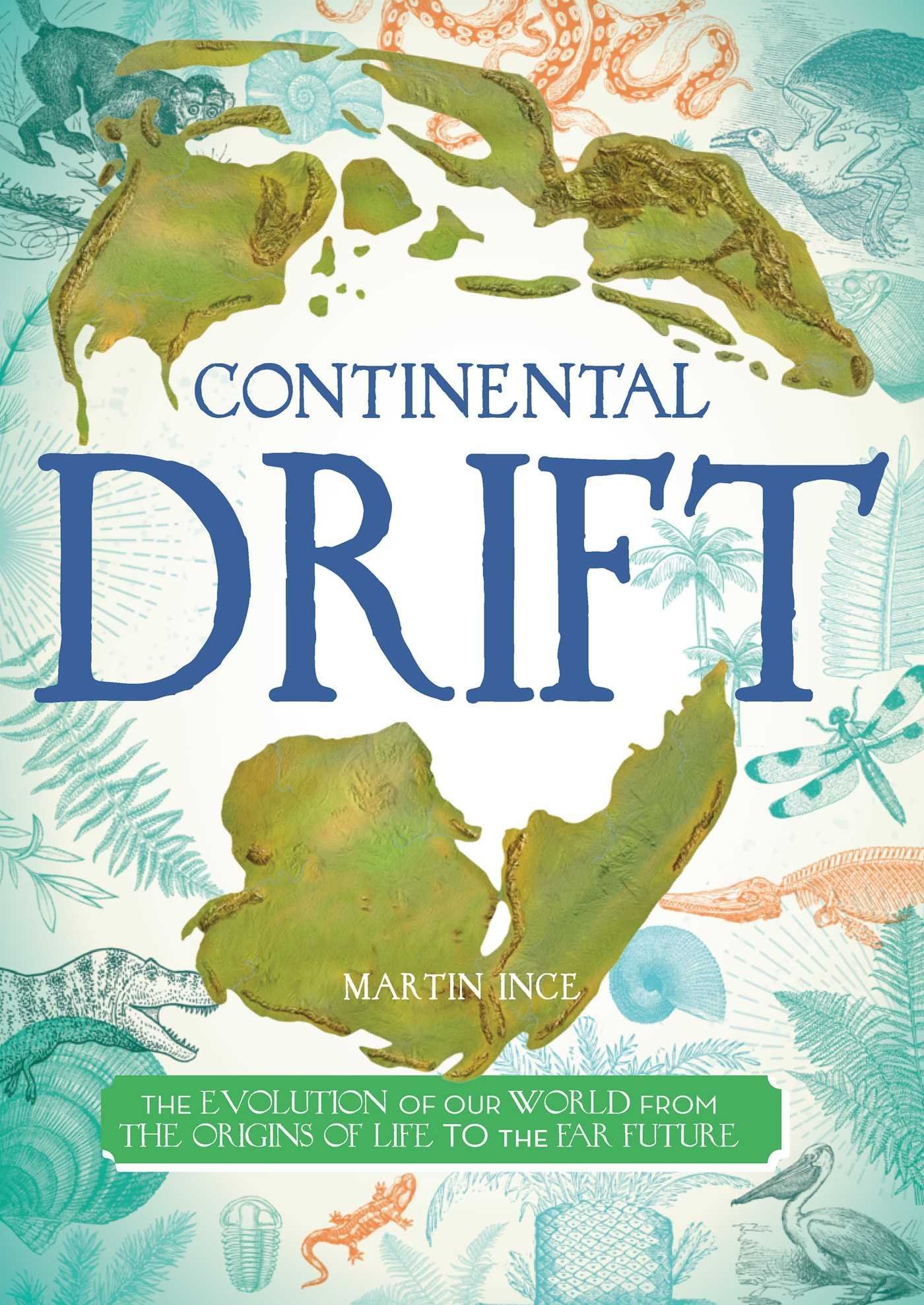

Continental Drift: The Evolution of our World from the Origins of Life to the Far Future

By Martin Ubce


The dance of the continents throughout the earth’s history provides a structural overview of this incredible resource. Illustrations, including images from the Natural History Museum in London, support the engaging text. This is a very large book, and rightly so! While Continental Drift can be a resource for students’ research, it is also just a delight to read due to the author’s ability to make complex topics accessible.`
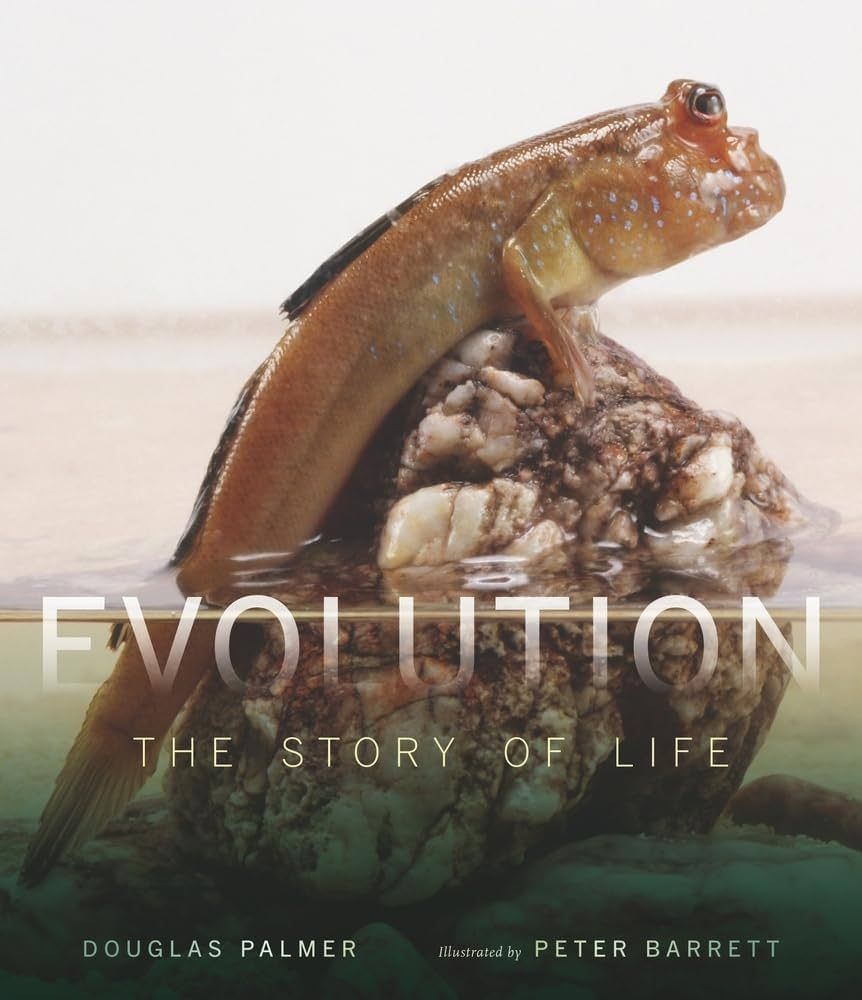

Evolution: The Story of Life

By Douglas Palmer, Illustrated by Peter Barrett


Although the beginning of the book has a great deal of helpful introductory and background information, children will most appreciate the site reconstructions based on fossil data. These two-page illustrations provide a visual of what life may have looked like from a strelley pool 3460 million years ago in what is now considered Western Australia to a late Carboniferous ice age 299 million years ago in what is now Karoo Basin in South Africa to the big-game hunters of Folsom, New Mexico 10,500 years ago. With a color-coded timeline across the top of each of the 100 illustrations and specifics about each scene detailed below, children pour through this resource, making it well worth its hefty weight!
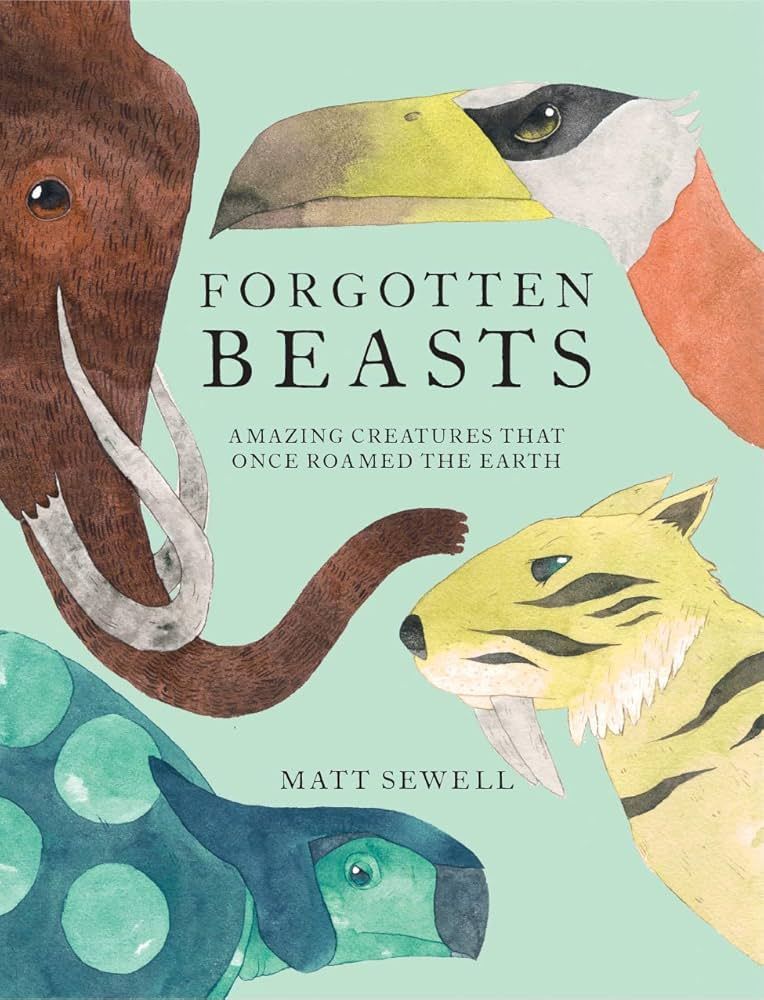

Forgotten Beasts: Amazing Creatures that Once Roamed the Earth

By Matt Sewell


With 45 lushly illustrated forgotten creatures and accessible information about each, this is a wonderful resource for children researching prehistoric life or simply peruse particular pages. Each life form listed also has a key for their size, weight, diet, and the period they lived. Sewell’s stated intention is to bring these often lesser-known beasts of our past into more bright and colorful detail as paleontologists theorize they were probably not “muddy brown or boring green” and he does so quite well.
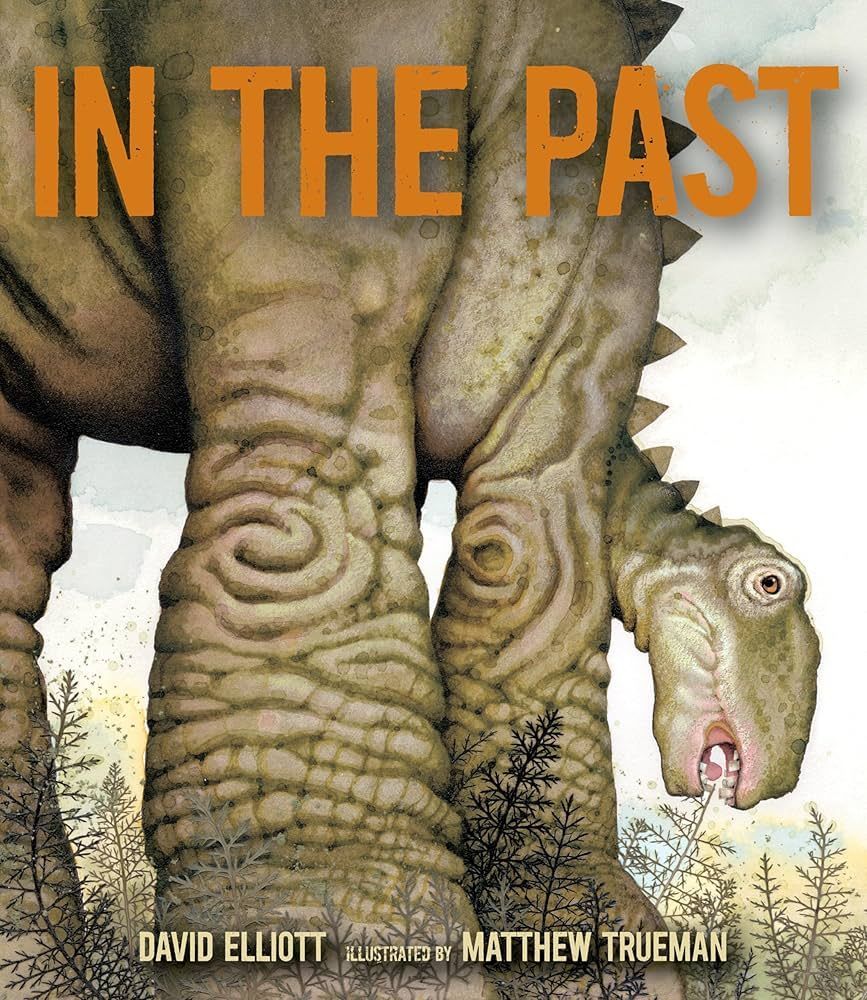

In the Past: From Trilobites to Dinosaurs to Mammoths in More Than 500 Million Years

By David Elliott, Illustrated by Matthew Trueman


A collection of short poems about creatures from the Cambrian Period (544-505 million years ago) to the Quaternary Period (1.8 million years ago to the present), this sweet book can inspire young people to think about prehistoric life from a new perspective. With just the right touch of humor and science, the poems provide illuminating information and fresh perspective, while the illustrations fill the page and expand the reader’s senses. Plus, the notes at the end of the book provide a launching point for children who want to learn more! 
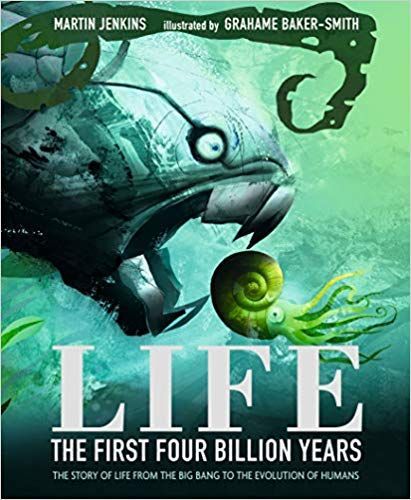

Life: The First Four Billion Years: The Story of Life from the Big Bang to the Evolution of Humans

By Martin Jenkins, Illustrated by Graham Baker-Smith


This incredibly large book is full of information and is the perfect resource for young people who have big questions about life on Earth. The illustrations balance a deep sense of mystery with scientific details, and this book embodies the magnitude of the story of our planet. It is a must-have for those interested in exploring everything from the primeval seas to the various giants who rose and fell as the dominant rulers of the land and air. 
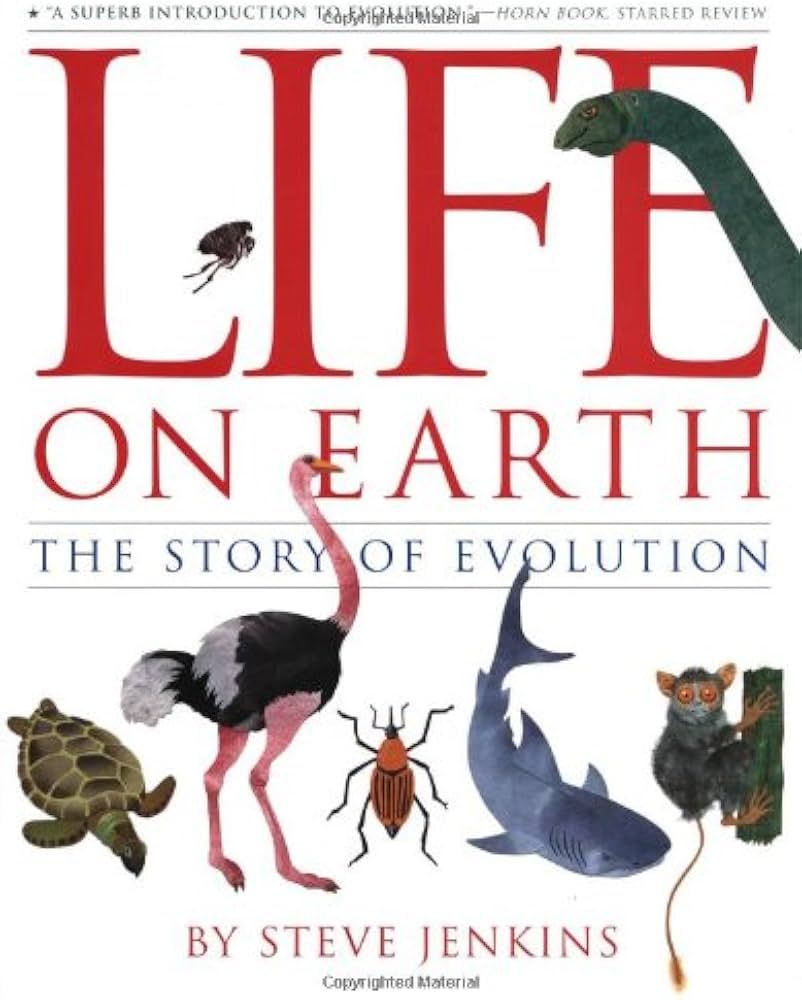

Life on Earth: The Story of Evolution

By Steve Jenkins


This uncomplicated yet scientific story provides stunning watercolor cut-paper collage illustrations. It can be shared as a picture book with a story-style narrative explaining the evolution of what we know about life on Earth. Those wanting more details can rely upon the smaller caption-style text that follows a more chronological timeline and offers more information and examples that support the overarching narrative. This is an excellent introduction to broad concepts!
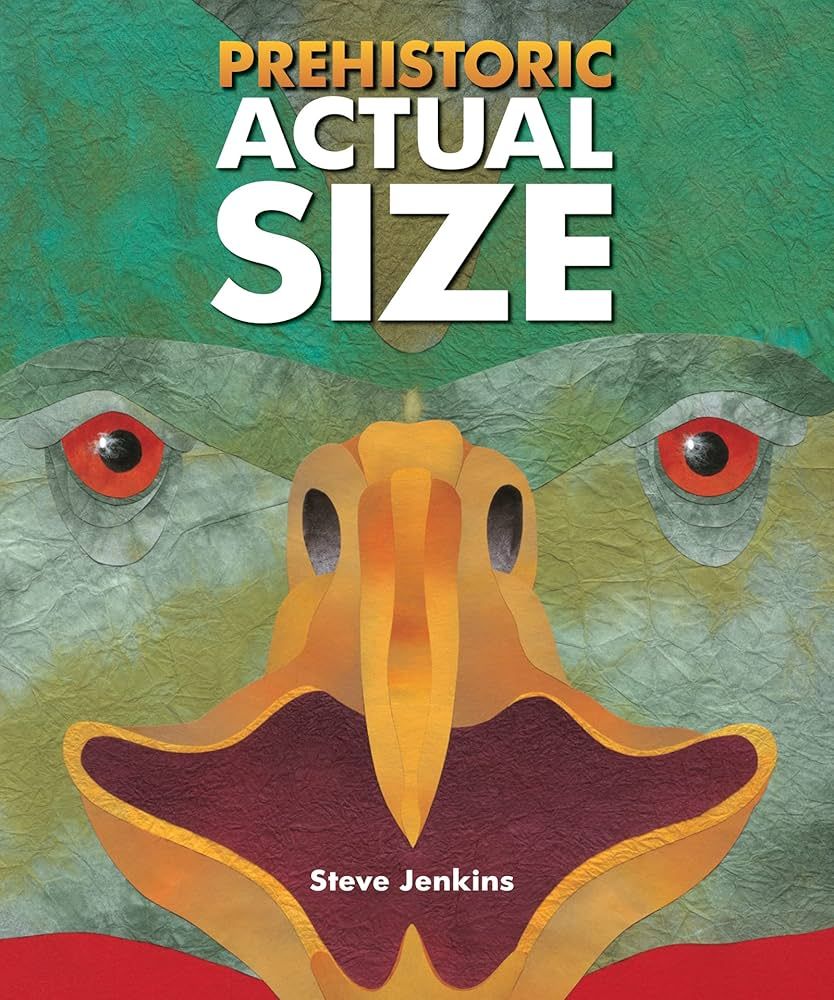

Prehistoric Actual Size

By Steven Jenkins


For young people looking for a simpler source of prehistoric information, this picture book relies more on images with just the right amount of accompanying text to capture our imagination. The life-sized illustrations help young readers visualize the Baryonyx claw or the spiny shark's size. Super fun for any age!
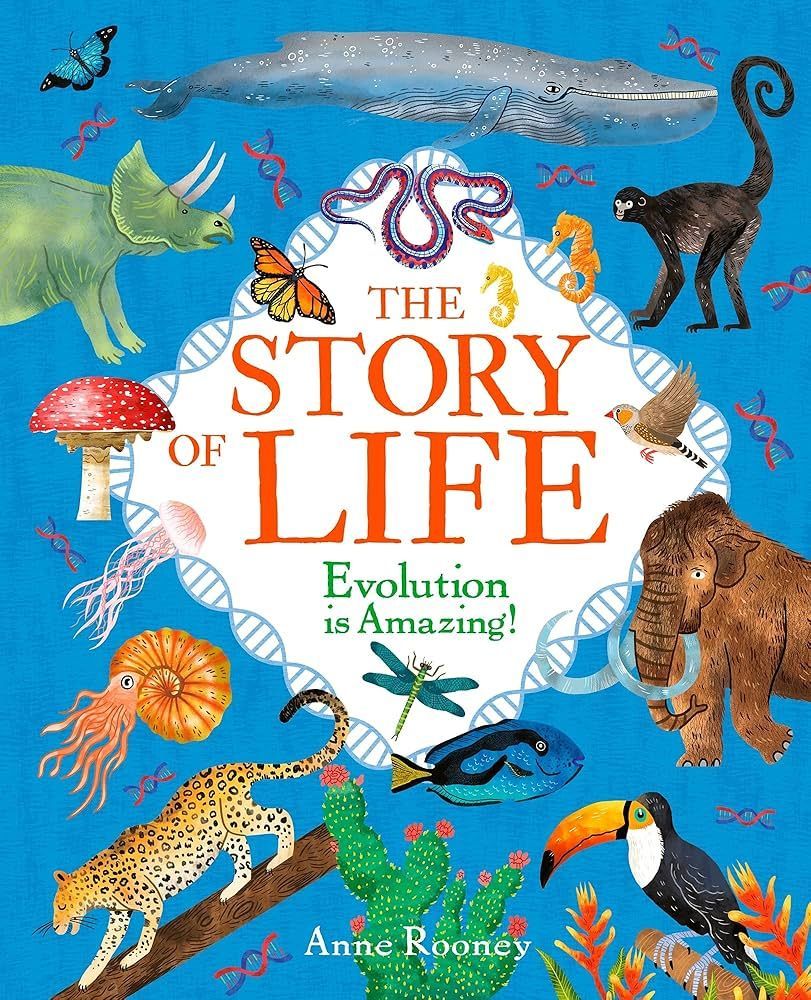

The Story of Life: Evolution is Amazing!

By Anne Rooney, Illustrations by Nat Hughes


Chock full of content, this book is one children will want to spend some time exploring. Organized chronologically, the sections focus on scientific concepts and major themes as life evolved. To reinforce critical ideas, circles of text hone in on particular examples, such as “adaptation in action.” The captivating and playful, yet thoroughly scientific, illustrations fill each page and bring rich information to life. This book can serve as a reference for children to return to again and again. 


We hope these resources serve not only as a subject of study but also as a source of wonder and inspiration. As children immerse themselves in the rich tapestry of life's history, they develop a deep sense of connection to the natural world and a profound respect for all living beings. We hope you enjoy these books as much as we have! Here is a printable copy of the list of books. 


Current families with children of all ages and prospective families with children under 4.5 years of age are invited to attend our Open House on January 16, 2025, at 6:00 p.m. This event will offer comprehensive insights into our school, highlighting the benefits of completing our Primary, Elementary, and Adolescent Community programs, as well as providing a chance to interact with our dedicated teachers.


Current parents are also welcome to schedule a level-up observation to see what your next step is in our partnership.


In addition, prospective families, with young children can schedule a preschool tour and discover how from ages preschool to 9th grade engage in a lifelong journey of learning and discovery. Our waitlist is closed for students in kindergarten through 9th grade for prospective families unless your child is transferring from an AMI Montessori school with continuous Montessori experience. 


Materials Spotlight: Sandpaper Letters & Moveable Alphabet
By Rebecca Lingo February 9, 2026
Unlocking Literacy the Montessori Way At Wheaton Montessori School, Montessori literacy materials like Sandpaper Letters and the Moveable Alphabet provide hands-on experiences that connect sounds, symbols, and meaning, building the foundation for confident reading and writing. These materials help children translate the words they hear into the symbols they see, developing strong neural pathways for literacy while fostering independence and a love of language. In this blog, we explore how Sandpaper Letters and the Moveable Alphabet guide children from sound awareness to word building, creating a joyful approach to early literacy. Sandpaper Letters The Sandpaper Letters incorporate decades of insight into how children truly learn to read and write. Sandpaper Letters embody the Science of Reading—connecting sound, symbol, and meaning through hands-on learning and building strong neural pathways for literacy. These timeless Montessori principles continue to align beautifully with what modern science confirms about how your child’s brain learns best. Moveable Alphabet Before handwriting comes word building! The Moveable Alphabet lets your children ‘write’ their thoughts with letters long before they can hold a pencil—bridging the gap between spoken and written language. With literacy materials like the Moveable Alphabet, children communicate their thoughts by building words with cut-out letters—translating the sounds they hear into symbols they can see. This powerful step develops the foundation for reading and writing, helping children understand that words are made of sounds and that sounds can be represented with letters. Because our teachers base every lesson on development, writing comes first—because it’s easier to build words from sounds than to read or decode someone else's written thoughts. Our literacy approach at Wheaton Montessori School is designed to meet each child where they are, providing hands-on experiences that foster confidence, independence, and a lifelong love of reading and writing. From Sandpaper Letters to the Moveable Alphabet, every tool and lesson helps children connect sounds to symbols, build words, and discover the joy of language.
How Geometry Got Its Name
By Rebecca Lingo February 2, 2026
In Wheaton Montessori School classrooms, we like to introduce big ideas with big stories. We offer children a sense of wonder first, sort of like an imaginative doorway, so that when they later study formulas, theorems, and proofs, they already feel connected to the human story behind them. One of these stories is The Story of How Geometry Got Its Name, an introduction to a subject that is far older than the textbooks and protractors we encounter today. In Montessori, Geometry is more than about shapes. It is about human beings solving real problems in the real world. A Problem as Old as Civilization To reintroduce geometry, we time-travel back around 5,000 years to the ancient civilization of Egypt. This was a land shaped by the Nile River, the longest river in the world. Each year, the Nile flooded its banks as snowmelt poured down from the mountains far to the south. The Egyptians depended on this yearly flood as it left behind rich, dark silt that nourished their crops and made life possible in an otherwise harsh desert. But the flood created a challenge, too. It washed away the boundary markers that separated one farmer’s field from another. When the waters receded, no one could quite remember where their land began and ended. Arguments ensued. “This corner is mine!” And the fields needed to be measured and marked again. The First Geometers: The Rope Stretchers To solve this annual problem, the Egyptians relied on a special group of skilled workers called the Harpedonaptai, or Rope Stretchers. These were early land surveyors who used a knotted rope tied at regular intervals and three weights to create a very particular triangle. In our elementary classrooms, we invite a few children to hold a prepared rope at its large knots, forming that same triangle. As they stretch it out and lay it on the ground, many quickly recognize what the Egyptians had unknowingly created: a scalene right-angled triangle. This shape would later become central to the geometry studied by Greek mathematicians. The Harpedonaptai used this simple tool to re-establish field boundaries, set right angles, and make sure the land was measured accurately and fairly. Geometry, in its earliest form, served a deeply practical purpose. From Rope to Pyramid The Harpedonaptai’s expertise was valued far beyond the farmlands. They also helped lay out the foundations of temples, monuments, and even the Great Pyramid of Giza. The base of the Great Pyramid is a perfect square, which is an astonishing feat of measurement and design. The Pharaoh himself oversaw these measurements, but it was the Rope Stretchers who executed them. Their work represents one of humanity’s earliest recorded sciences: the careful measuring of the earth. How Geometry Got Its Name The name geometry reflects this ancient practice. It comes from two Greek words: gê — earth metron — measure Geometry literally means earth measurement. The Egyptians did not use the language of right angles, nor did they classify triangles as we do today. Their work was grounded in practical needs. They needed to solve problems, organize land, and create structures that would endure for thousands of years. Yet their discoveries influenced later thinkers like Pythagoras, who likely traveled to Egypt and learned from their methods. Over time, the simple knotted rope inspired a whole discipline devoted to understanding lines, angles, shapes, and the relationships between them. Why We Tell This Story in Montessori When Montessori children hear this story, something important happens. Geometry becomes more than a set of rules or vocabulary words. It becomes a human endeavor born from curiosity, necessity, and ingenuity. The heart of Montessori education at Wheaton Montessori School is to help children view knowledge not as isolated subjects, but as valuable gifts passed down from earlier generations. When children pick up a ruler, explore angles with a protractor, or classify triangles in the classroom, they are continuing a legacy that began with those early Rope Stretchers, the Harpedonaptai on the banks of the Nile. Through story, students feel connected to the people who shaped our world and to the problems that inspired great ideas. Geometry becomes meaningful, purposeful, and alive, from our preschoolers working with the Geometry Cabinet , to elementary students classifying and measuring angles or using hands-on Pythagorean Theory materials, and all the way through our adolescents. At the adolescent level, geometry moves fully into the real world. Students apply measurement, angles, area, scale, and spatial reasoning through meaningful work across campus, including: Measuring and mapping land for the campus’s Wetland Conservation Area, as well as calculating classroom square footage for recognition and accreditation applications Understanding and applying area, perimeter, scale, and proportion when working with acreage, restoration plans, and campus layouts Designing and situating functional structures such as chicken coops using geometric principles Applying angle classification, measurement, and spatial reasoning through woodworking Using geometry to cut, join, and build accurately, including raised beds, greenhouses, and beehive insulation boxes