Top Twenty Reasons Why Wheaton Montessori School is Distinct
Montessori is one of the most recognized and researched educational approaches in the world. Because Dr. Maria Montessori’s work has influenced education so deeply, many schools incorporate Montessori-inspired ideas in different ways. Not all Montessori schools adhere to the same standards or level of authenticity.
In fact, anyone can call themselves Montessori whether they practice the method comprehensively, piecemeal, or not at all. Montessori is not a trademarked method, so when looking for Montessori schools, you can find Montessori, “Montessori,” and “Monte-something…!” If you tour 5 different Montessori schools, you’ll most likely come out of the experience with 5 different ideas of what Montessori is.
So how do you know when you’ve found an authentic Montessori school that incorporates Dr. Montessori’s methods, developmentally-based lessons, and lets trained teachers lean fully into the science behind the method? You need to observe, you need to tour multiple schools, and you need to look at some key details for certification, training, and classroom environments.
What Sets Wheaton Montessori School Apart?
The short answer is: We work hard, we train hard, and we adhere to what Dr. Montessori developed.
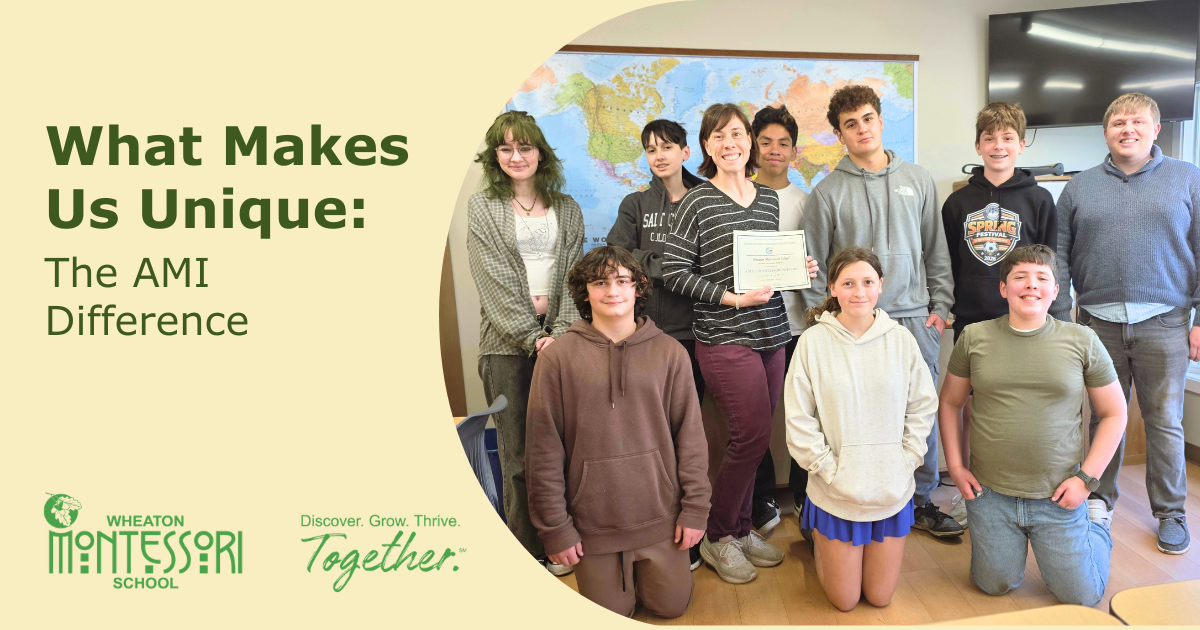
At Wheaton Montessori School, we are proud to uphold the highest standards of Montessori education and uphold recognition by Association Montessori International (AMI), the organization founded in 1929 by Dr. Montessori and her son, Mario Montessori, to preserve and advance authentic Montessori education worldwide.
AMI recognition reflects a commitment to Montessori education as Dr. Montessori intended it: grounded in careful observation of children, respect for human development, and a scientifically informed approach to learning. Below you can find the top twenty ways that Wheaton Montessori School, an AMI-USA accredited school for Primary through Adolescence, provides an authentic Montessori education for your child. We’re the real deal, folks.
- Individualized Learning
Children progress and are challenged at their own pace within a carefully prepared structure - a structure that strictly follows Dr. Montessori’s scientific guidelines and theories. This structure also ensures national and state standards are met or surpassed. Students are not limited by group pacing! Is your child ready for the next challenge? Let’s go! Is your child displaying a need to dig in deeper and practice a concept a bit longer? We see it and we honor it to allow for deep understanding. Teachers observe and assess closely to understand each child’s readiness, interests, strengths, and challenges, allowing learning to unfold naturally, deeply, and at an ideal pace. - Highly-Prepared Experts
Our teachers complete rigorous AMI training that goes far beyond curriculum delivery. They spent years developing curriculum albums and materials under the guidance of AMI Montessori trainers at AMI training centers. Their preparation centers on understanding child development, careful observation, and the thoughtful presentation of Montessori materials designed to meet the developmental needs of each child. Each teacher has completed an AMI graduate-level training, has extensive experience, and a Master's Degree or higher. - Authentic and Complete Environments
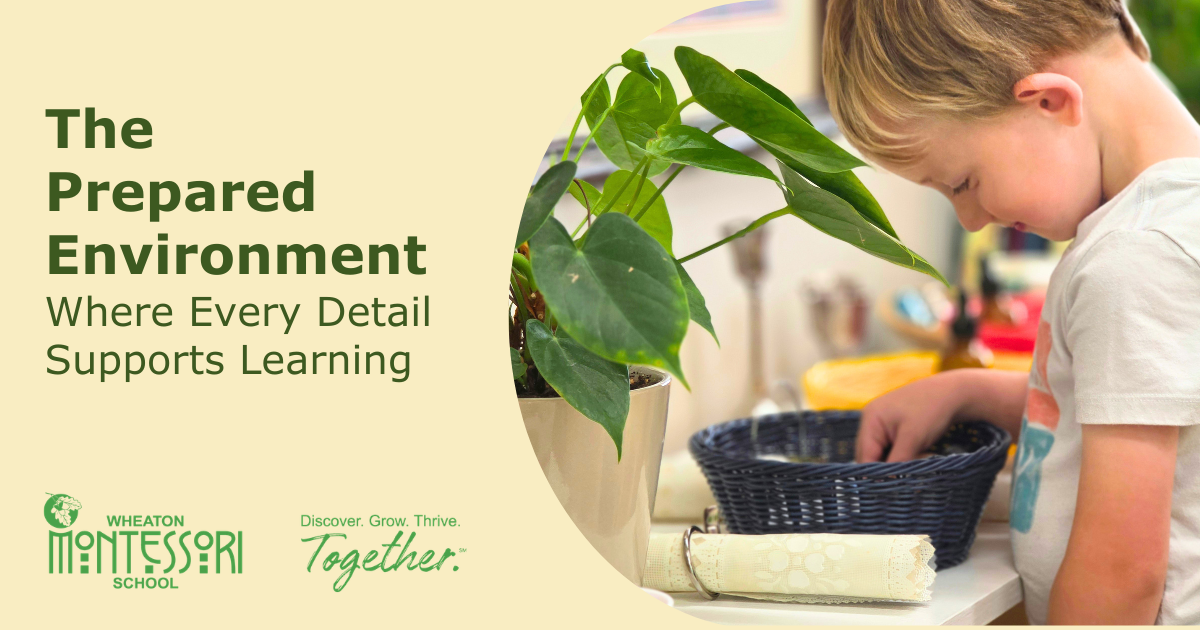
Each classroom is intentionally prepared with authentic Montessori materials arranged in orderly, beautiful spaces that foster independence, concentration, and purposeful activity. Every level at Wheaton Montessori School provides the complete range of activities to ensure every student is supported and challenged in the way that is ideal for them. - Multi-Age Communities
Children learn in mixed-age classrooms that encourage collaboration, leadership, empathy, and mentorship. Younger children benefit from observing older peers, while older children deepen their understanding through helping others. Every child is supported to excel at their ideal challenge level, both academically, socially, and emotionally. Have you ever wondered if you really understand something? Try explaining it to another human. Your children get the opportunity to test their knowledge, communicate their understanding, and exhibit skill mastery each day, just by being in a multi-age classroom and being a mentor to younger children. - Hands-On Learning That Engages the Whole Child
At Wheaton Montessori School, children learn through movement, exploration, community, and purposeful activity. Early preschool students build foundational skills in reading, writing, and mathematics through concrete materials. Elementary students engage in research, creative projects, and collaborative work. Adolescents participate in meaningful real-world experiences that develop independence, economic understanding, responsibility, task ownership, and confidence. Pediatric Neuropsychologist Dr. Stephen Hughes refers to Montessori as the original brain-based method of learning because of the unique emphasis on hands-on learning. Dr. Montessori called the hand “the instrument of the mind.” Your children are learning through hands-on materials, not YouTube videos. - Deep Concentration and Uninterrupted Work
Every classroom schedule offers extended, uninterrupted work periods that allow students to become deeply engaged in meaningful activity. These protected work cycles cultivate focus, independence, perseverance, and intrinsic motivation. Art, music, and physical movement are built in and available throughout the school day instead of in limited schedule blocks with frequent transitions that fragment the school day. If you’re wondering why this matters for brain development, happiness, and understanding, check out the work by Csikszentmihalyi on the concept of being in “The Flow.” - Consistency and Continuity
Our school standards create predictability instead of guessing for children and adolescents daily. This level of repeated predictability translates to feeling safe, regulated, and prepared to learn well. On a larger scale, AMI standards enforce consistency (for work periods, lessons, daily attendance, and more) across classrooms and schools around the world. Families can trust that authentic Montessori principles guide every aspect of the schedules, priorities, environment, opportunities, and educational experience. - A Proven Method Rather Than Educational Trends
While research continues to affirm Montessori education, the foundational materials, methods, and teacher training remain rooted in Dr. Montessori’s decades of scientific observation and study of children. Rather than following educational trends, authentic Montessori education focuses on timeless developmental needs. Research is showing now that trends towards digital-only classrooms or moving away from developmentally-based education have NOT brought the rewards promised. AMI-certified classrooms with AMI-certified guides follow the science, not the trends. - A Calm, Respectful Learning Community
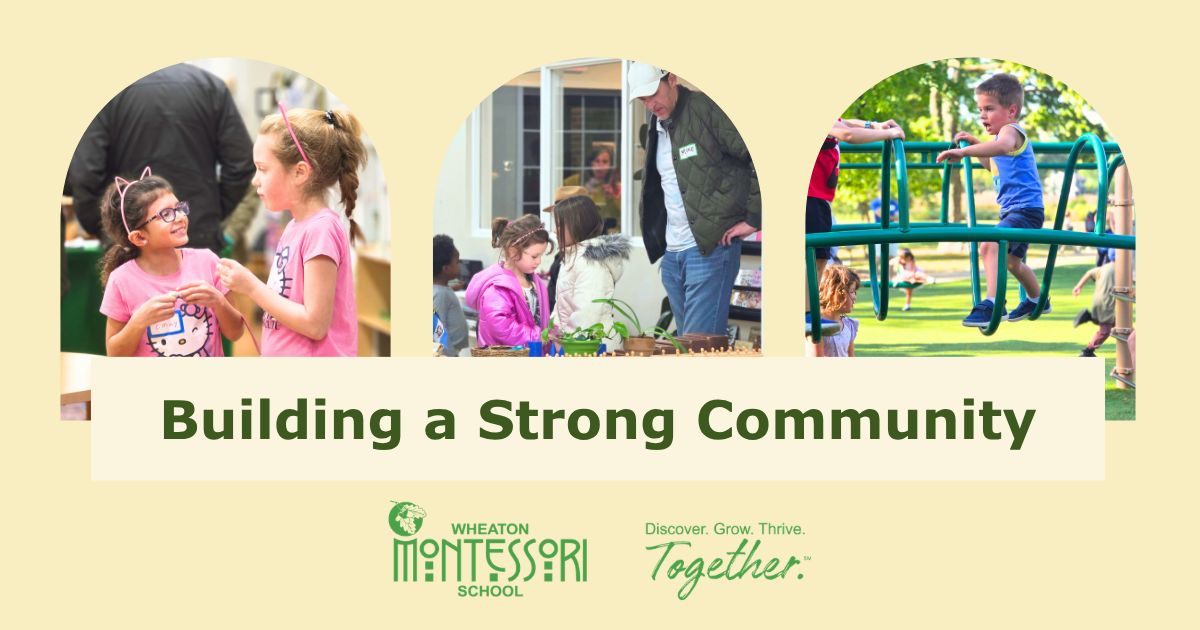
Authentic Montessori classrooms are peaceful, active communities where children develop grace, courtesy, self-discipline, and respect for others while engaged in meaningful work. Our culture encourages helping one another while building confidence, competence, and connections. Grace and courtesy lessons explicitly teach social skills, conflict resolution, and empathy. There is emphasis placed on respectful communication and healthy relationships. - Student-Teacher Ratio
Authentic Montessori schools do not rely on student-teacher ratios alone to provide individualized attention, one-on-one lessons, or ensure that every child is learning and progressing. We also do not depend on homework to fill learning gaps after the school day ends. While traditional schools focus on ratio, Montessori schools focus on relationships, readiness, and prepared environments. In Montessori, independence and community work together. - Guidance and Support
Montessori classrooms are intentionally designed to support each child throughout the day through guidance, support, and proactive instruction. Because children stay with a teaching team for an entire cycle (typically three years), the guide gets to know your child with a deep understanding of their personality, their strengths, and their limits, which allows for more insightful guidance and stronger relationships and communication, even with the youngest children! - Continuous Community
Established classroom communities that help new students transition smoothly through consistent routines, clear expectations, and peer modeling. New students are welcomed into established classrooms offering an abundance of enthusiastic helpers. New students entering established classroom communities where routines and expectations are already modeled. Did you ever have the feeling in your own education that you were constantly starting over each year? A new teacher, a totally new group of students, a new classroom? You won’t see that here. - Ongoing Accountability and Excellence
As an AMI-accredited school, we reapply annually to prove adherence to all standards. In addition, AMI-certified consultants regularly visit recognized schools to engage with teachers, oversee environments, and confirm strict administrative adherence. This ensures that high standards are maintained, helping schools continually refine and strengthen their practice. At Wheaton Montessori School, every classroom at every level is recertified annually. Many of our teachers have also worked with training centers, deepening their own understanding of the theories and lessons. - Evidence-Based Education
Modern neuroscience increasingly supports what Dr. Montessori observed more than a century ago: children and adolescents learn best through hands-on exploration, movement, concentration, independence, and meaningful work. Research continues to demonstrate strong outcomes in executive functioning, adaptability, creativity, and lifelong learning. - Choice leads to focus
Students chose lessons from within structured options that are offered to each individual through lessons. While the teacher connects with a learner on how to get the most out of exploring an activity, the attention is on the relationship between the learner and the materials. Attention is not on the teacher at the front of the room. Student choice and hands-on work foster engagement, concentration, independence, and ownership of learning. The underlying structure is designed and implemented with child and adolescent development front and center. - Movement
Freedom of movement and purposeful activity is the norm. There is a hum of organized activity rather than expectations to sit still and remain quiet for long periods of time. The underlying value is that people learn best through movement and retain knowledge. - Classroom Management or Behavior
Orderly classroom environments built on consistency, independence, and respect, with an emphasis on Grace and Courtesy Lessons. This is one of the times that “peer pressure” can be a really great thing; students want to work and play in a clean, kind, hard-working environment (truly! See earlier blog posts about Elementary students creating their own classroom rules.). They hold one another accountable for their actions, work, and kindness. - Practical Life
Practical life activities are essential at all levels as a foundation for academic knowledge, skill building, organization, and responsibility. These activities are built upon meaningful ways to care for self, others, and the surroundings. They also change depending on the age of the child. While a young primary student may engage in lessons that help them dress, feed themselves, and communicate with people outside of their families for the first time, adolescent students will be balancing the classroom checkbook, building greenhouses, cooking lunch for their entire class daily, and budgeting both for groceries and overnight trips. Lessons and follow-up work are purposeful and age-appropriate activities that sustain exploration and deepen understanding while building independence through caring for self, others, and surroundings. - Screens
Stay with us! There are no screens or classroom tech in our preschool and kindergarten classrooms, very little computer use is permitted in elementary, and extremely limited use exists in our Adolescent Community. We value learning through multi-sensory tools and social experiences. Our campus is able to provide immediate feedback and personalized attention without the use of technology. We understand that the world is becoming more digital and guide students as they get older. Older students are given lessons in source credibility, presenting their knowledge through digital presentations, researching online (after exhausting physical resources), and producing polished work products using tech. But we master the traditional first. Students learn to write with a pencil before we invite them to give Wikipedia a go. - Cursive
AMI diploma holders have been taught to use cursive writing because it is physically easier for your children, promotes fluid connections, and reduces letter reversals. Our preschool classrooms use cursive sandpaper letters to build muscle memory through tactile, visual, and auditory input, preparing them for reading and writing early. We are readers of an ancient script; your children are, too.
At Wheaton Montessori School, our goals include academic achievement and the development of capable, curious, compassionate human beings who feel confident contributing meaningfully to the world around them. How do you know you’re getting the real thing? Come visit our classrooms, talk with our teachers, and observe your child at work.