Montessori programs for adolescents are on the rise. There is a strong interest among parents, and for good reason! Montessori adolescents experience a rich educational setting that is unlike anything found in conventional education today.
The best news? You have access to Wheaton Montessori’s high fidelity adolescent program and our Alumni share with us similar feedback to what the research shows. Research links:
Read on to discover the details and don’t forget to sign up to observe a Literature or Math Seminar in January.
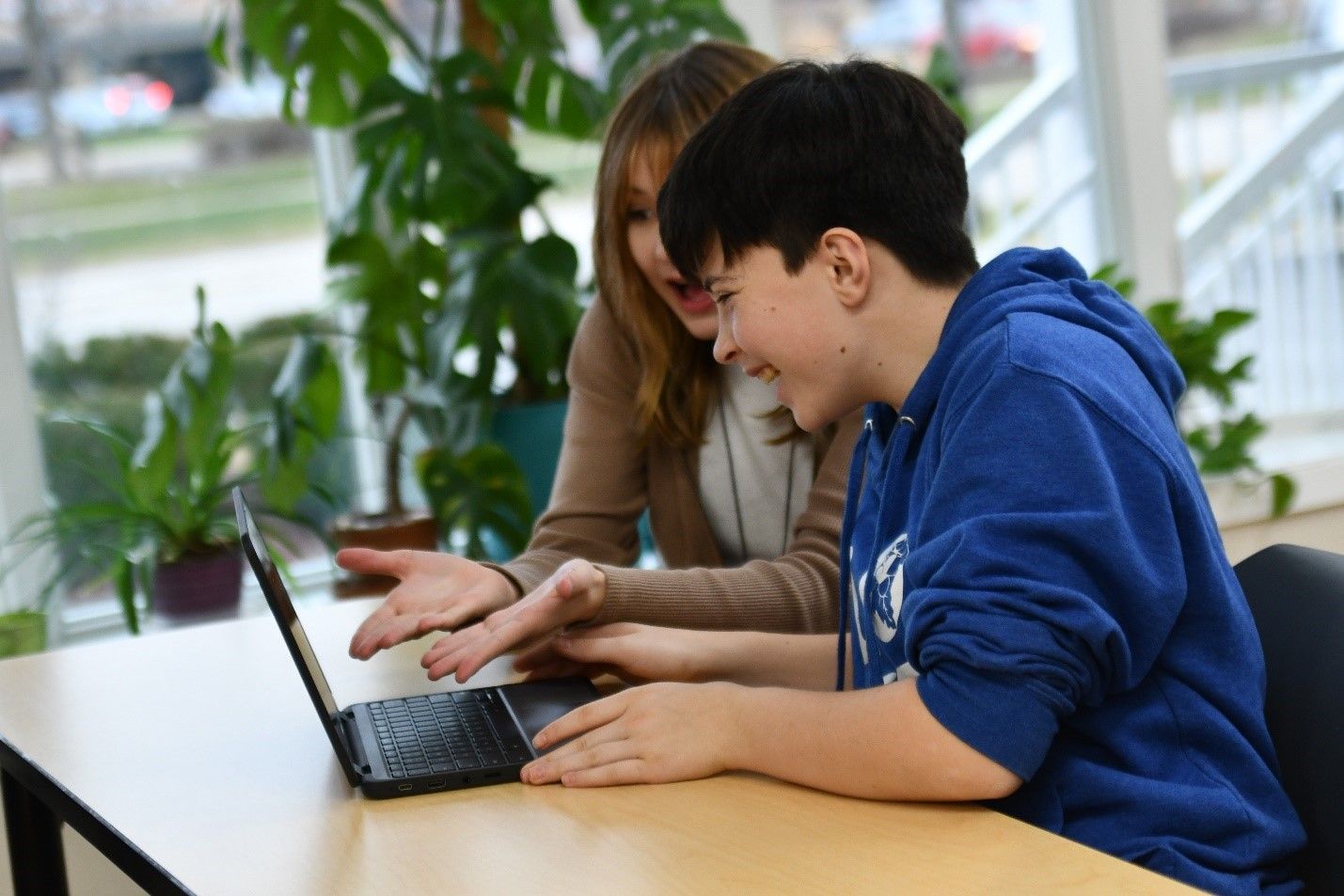
Based on past research that has shown strong correlations between self-determination and achievement, this study sought to measure the former in seventh-grade students. Data collection relied on student voice, a measure that researchers and others state to be the most valuable in making decisions regarding education. A guiding question of the study, which examined how these seventh graders acclimated to their new environment, was, “How would a learning environment designed to support students’ development of autonomy, competence, and relatedness affect their sense of self-determination during their seventh-grade year?”
The BNSW-S (the basic needs satisfaction at work scale) was modified so that the wording was applicable to students. Student volunteers then completed the survey and their scores were used to determine their various levels of self-determination (below, at, and above-expected levels).
Students in the study were asked specific, open-ended questions that necessitated a narrative response. After transcribing and analyzing the interviews, some of the most commonly shared thoughts and themes were as follows:
- Choose type of work
- Choose order of tasks
- Scared at first...now I can
- Organize time
- More Social Confidence
- Capability to do well in high school
- Teacher care: help me stay on top of things
- Student care: community meeting
Several interesting themes emerged. It was clear that all student participants had a strong sense of choice throughout their days in their school experience. While students felt uneasy about their ability to complete their work at the start of the school year, by November all students felt confident in that area. Another interesting finding is that students overwhelmingly spoke about the support they received from their teachers.
Researcher Casquejo Johnston suggests that conventional educators of middle school students who are interested in reform consider finding ways to implement personalized learning and community support, both of which are hallmarks of Montessori adolescent programs and can be attributed to the study’s positive findings.
The concept of STEM (science, technology, engineering, and mathematics) in education is theoretically meant to be taught in a cohesive, interdisciplinary, and authentic manner. Realistically, this is rarely the case, and “STEM disciplines are often implemented separately using contrived contexts”.
The researchers of this study argue that Montessori, by design, meets the theoretical intentions of STEM while also mirroring the challenges faced locally and globally, giving students practical experience and meaningful learning. They felt that in Montessori adolescent environments, STEM occurs naturally and organically, because “In these spaces, interdisciplinary science, technology, engineering and mathematics learning is contextualized within the real work of running a farm.”
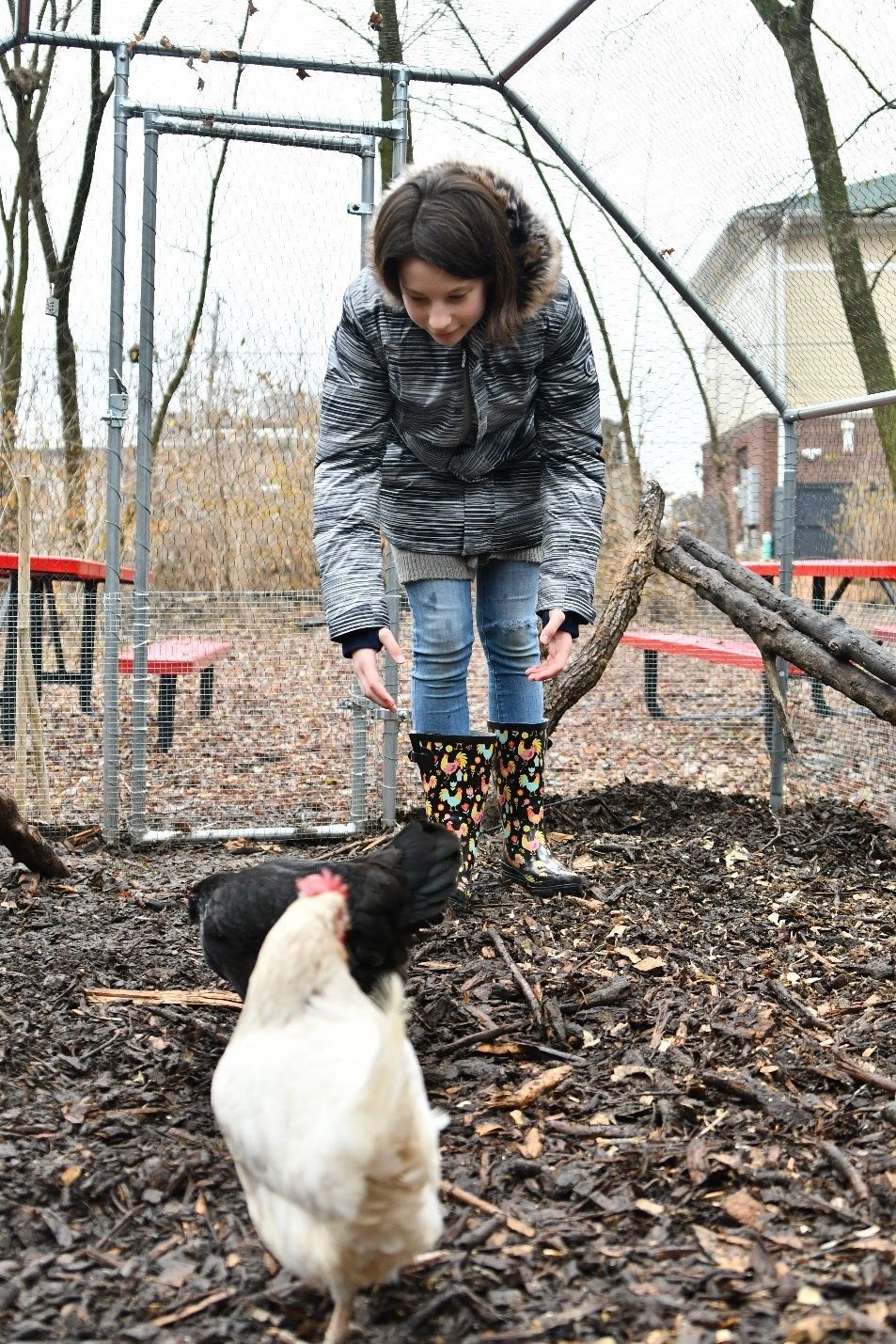
In a Montessori Erdkinder environment, students are required to meet the needs of the working farm. This allows them to face challenges and learn critical STEM skills that are required in doing so. The farm is a business, and the students must not only care for the farm itself, but successfully run the business. Working together with peers and adult guides to do so gives them the necessary skills to contribute as successful adults in their communities.
Researchers surveyed guides at Montessori adolescent programs across the United States asking a variety of questions, including both scaled and short-response open-ended questions. A total of 96 responses were collected.
Interestingly, most respondents hailed from programs that did not utilize the traditional Erdkinder farm program, but rather a different program more suited to their school, as well as strong implementation of other core Montessori principles.
Six important themes emerged as components of Montessori adolescent programs surveyed:
- Authentic & contextualized work
- Community & communities of practice
- Integrated STEM teaching & learning
- Holistic education
- Driven by student interests and funds of knowledge
- Socio Cultural & socio political connections
The researchers concluded that their assumptions regarding Montessori adolescent programs’ authentic and meaningful application of STEM were correct. They believe the model has much to offer students, as well as serving as a basis from which other educational settings should derive inspiration.
In this study, 290 middle school students from both Montessori and traditional schools were surveyed. Analysis of the results indicated that the Montessori students displayed:
- Greater affect
- Potency (feeling energetic)
- Intrinsic motivation
- Flow experience
- Undivided attention (a combination of high intrinsic motivation and importance)
Researchers noted that many studies have revealed the struggles most adolescents face during this period in their lives, and the unfortunate fact that most adolescent educational programs are not designed to meet the specific needs of the children they are meant to serve. They note that while Montessori education is typically associated with early childhood, they believe there is important information to be learned about the model’s approach for older children.
When considering the ideas set forth by numerous researchers regarding adolescent’s needs for their educational settings, Montessori provides solutions to current problems in mainstream education. Young people need experiential learning, opportunities for metacognition, increased autonomy, and a model that honors their drive to work with peers.
Typical middle school environments enact strict and rigid policies; Montessori does not. Teens in Montessori environments are given structure and guidance, but also a good amount of freedom and choice.
The Montessori schools that were chosen for this study had the following characteristics in common: each had a built-in philosophy of intrinsic motivation, rather than block periods they allowed for extended periods for self-directed work, neither grades nor standardized tests were used for comparison or placement, students took a prominent role in daily decision-making, and small-group work was encouraged over whole-class lectures.
Researchers noted that Montessori students did, indeed, display significantly higher levels of intrinsic motivation. They suggest that Montessori adolescent environments might serve as excellent models for traditional middle school reform across the United States.
We know that you join us in dreaming of the future when more students beyond our community have access to authentic and complete Montessori programs. If you are in the process of making decisions about your family’s education decisions, we’d love to help. Let us know what you need and how we can help you learn more about Wheaton Montessori School. Prospective families are invited to schedule a school tour by clicking on this link or the green Schedule a Tour button on the upper right-hand corner of this page.