
“When the child goes out, it is the world itself that offers itself to him. Let us take the child out to show him real things instead of making objects which represent ideas and closing them in cupboards.”
– Dr. Maria Montessori.
Our world–and as a result our children’s world–is increasingly dominated by screens and schedules. As such, the importance of reconnecting with nature has become more important than ever.
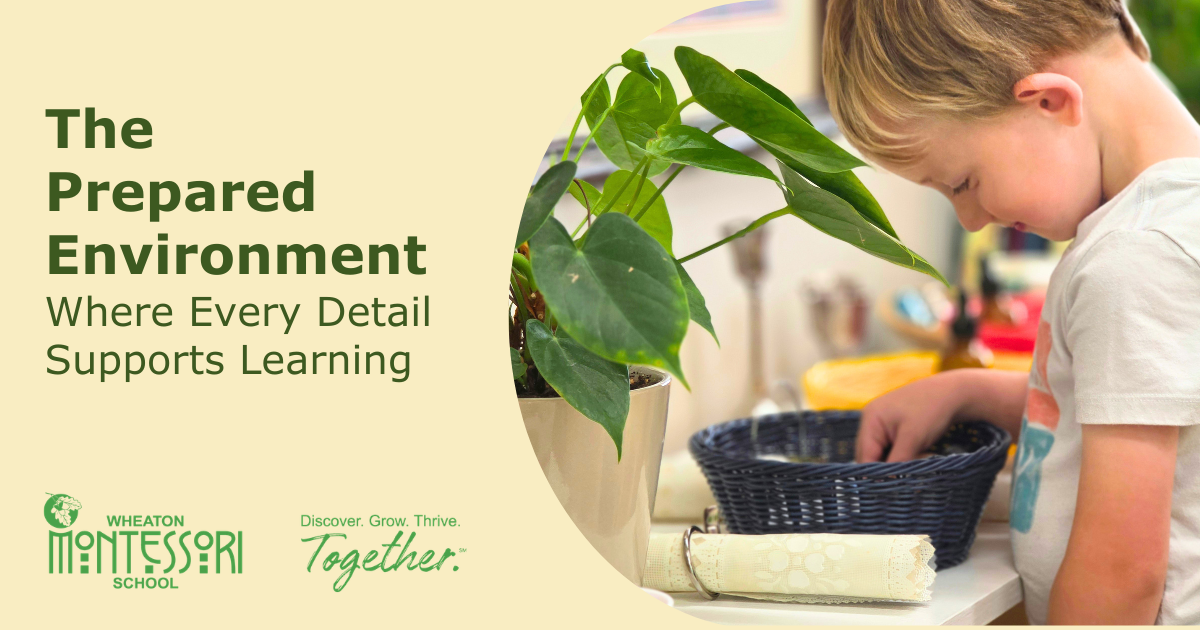
Dr. Maria Montessori believed in providing children with an environment that encourages exploration, independence, and self-discovery. Central to Montessori philosophy is the concept of the prepared environment, where every element is thoughtfully designed to support a child's natural development. Nature, with its infinite wonders and stimuli, serves as the ultimate prepared environment, offering boundless opportunities for social interaction, emotional regulation, and self-awareness.
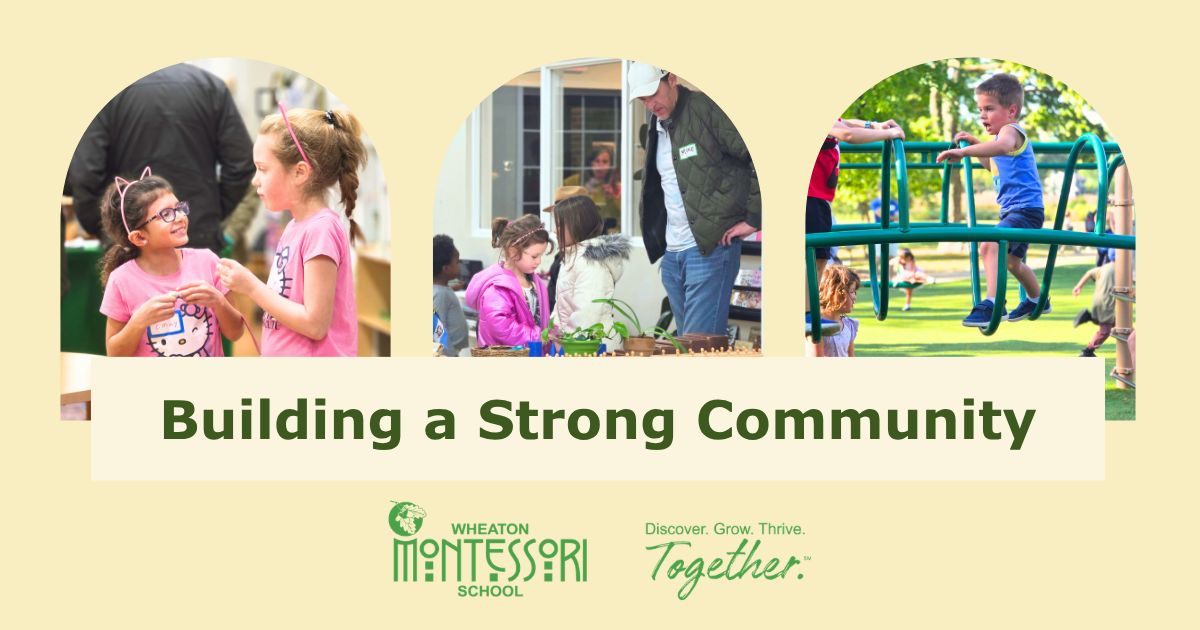
At Wheaton Montessori School, we place a strong emphasis on outdoor play as part of our educational philosophy. We recognize the numerous benefits that come with outdoor play, such as promoting physical health, fostering creativity, and enhancing social skills among peers. We encourage our students to engage in outdoor activities whenever the weather and circumstances permit. We believe that by blending classroom instruction with outdoor play and work, we are providing a well-rounded education that caters to the different interests and needs of our students. We are committed to fostering an environment that is conducive to academic learning and also encourages exploration, creativity, and physical health.
Social-Emotional Benefits of Outdoor Play
As humans, we are biologically designed to be outdoors. E.O. Wilson described this predisposition to connect to nature as the “biophilia hypothesis.” Numerous studies outline quantifiable benefits to being out of doors. Business Insider even offers “11 Scientifically Proven Reasons You Should Go Outside.”
For children, spending time outdoors promotes emotional well-being and resilience by providing opportunities for risk-taking and self-discovery. In nature, children appropriately push their boundaries, overcome obstacles, and learn from their mistakes.
Think about the very act of climbing a tree. In addition to practicing courage and perseverance, children have the chance to trust their instincts, assess risks, and develop confidence in their abilities. The result? Children develop a sense of agency and self-efficacy, laying the foundation for healthy emotional development and positive self-esteem.
Another profound social-emotional benefit of outdoor experiences is the opportunity for unstructured play and peer interaction. In the natural world, children are free to engage in imaginative play, negotiate conflicts, and develop essential social skills. Whether building forts, climbing trees, or playing games, outdoor play fosters cooperation, communication, and empathy as children navigate social dynamics and collaborate with peers.
Time in Nature Promotes Self-Regulation
Time in nature also helps us heal. The children’s book, When Sophie Gets Angry – Really, Really Angry by Molly Bang offers a reminder about the power of going outside when we need to find some inner peace. In the story, Sophie, a young child upset by a sibling interaction, runs outside. Dysregulated and angry she runs and runs until she can't run anymore. Then she cries. She climbs her favorite tree and the wide world comforts her.
When children hear this book, they hang onto every word, as if soaking up Sophie’s experience. Yet how often do we let our children slam the door, run outside, and seek solace in nature? How often do we, as adults, do this?
One reason why we can find solace in nature is due to being immersed in a unique sensory experience. From the soothing sound of rustling leaves to the calming sight of flowing water, the outdoors provides a multisensory environment that promotes relaxation, stress reduction, and emotional grounding.
Cultivating Inner Calm and Interconnectedness
By spending time in nature, children have an opportunity, like Sophie, to connect with their inner landscape while being immersed in an external landscape. This process cultivates a sense of belonging, purpose, and interconnectedness. As children explore natural ecosystems, observe wildlife, and experience the cycles of the seasons, they develop a profound appreciation for the beauty and complexity of the natural world. This sense of awe and wonder instills a deep sense of stewardship and environmental responsibility.
In Richard Louv’s book, Last Child in the Woods, he coins the phrase “nature-deficit disorder” to describe the costs of our alienation from nature. Think about your children. Do you see a difference after they’ve spent time outside? Maybe it’s the fresh air, or the room to run, or just the possibility they find in a corner of a grassy field. Think about yourself and the difference in your feelings when you take the time to be outdoors, even if only to take a stroll down the street as the day shifts to dusk.
In this age of trying to provide our children with the best opportunities, shouldn’t we be giving them more time outside? This spring is an excellent time to pay attention to those opportunities for children to connect to their place and just be outside. If you need fresh ideas for the children in your life, and even for yourself, Richard Louv’s recent book, The Essential Guide to a Nature-Rich Life: 500 Ways to Enrich Your Family’s Health & Happiness, is an excellent resource.
A Collective Responsibility
We have a collective responsibility to ensure that our children have ample opportunities to explore, discover, and connect with the natural world around them. At Wheaton Montessori School as we prioritize outdoor experiences in education, we support children's social-emotional well-being, resilience, and sense of connection with nature and each other.
The Montessori approach to education emphasizes the vital role of the outdoors in children’s development. Wheaton Montessori School’s campus is fortunate to have a 1-acre wetland and multiple playing areas for grassy play, nature areas, and sports. We invite you to visit our campus to learn more about the symbiotic relationship between Montessori principles, time in nature, and the profound benefits of outdoor experiences.
Current families are invited to schedule a classroom observation by clicking on the green buttons below.
We are enrolling children who will be between 2.5 and 4 for summer and fall 2024 start dates. Prospective families are invited to schedule a school tour by clicking on this link or the green Schedule a Tour button on the upper right-hand corner of this page.