We all know that reading is the single most important skill a child can learn. Every other school subject depends on the child’s ability to read in order to progress. The more you read, the more you learn, the longer you stay in school, the better opportunity you have in life. The emphasis placed on reading in the home environment is a critical component that can make the difference between a child who merely can read and one who loves reading and does it effortlessly and joyfully.
When reading is second nature, any topic under the sun (or beyond it) is available for them to discover. Elementary aged children devour information at a fantastic rate and are desperate to seek out answers to their questions. When they enter this phase as strong readers, they can make the most of their brain’s extraordinary power to collect and store facts.
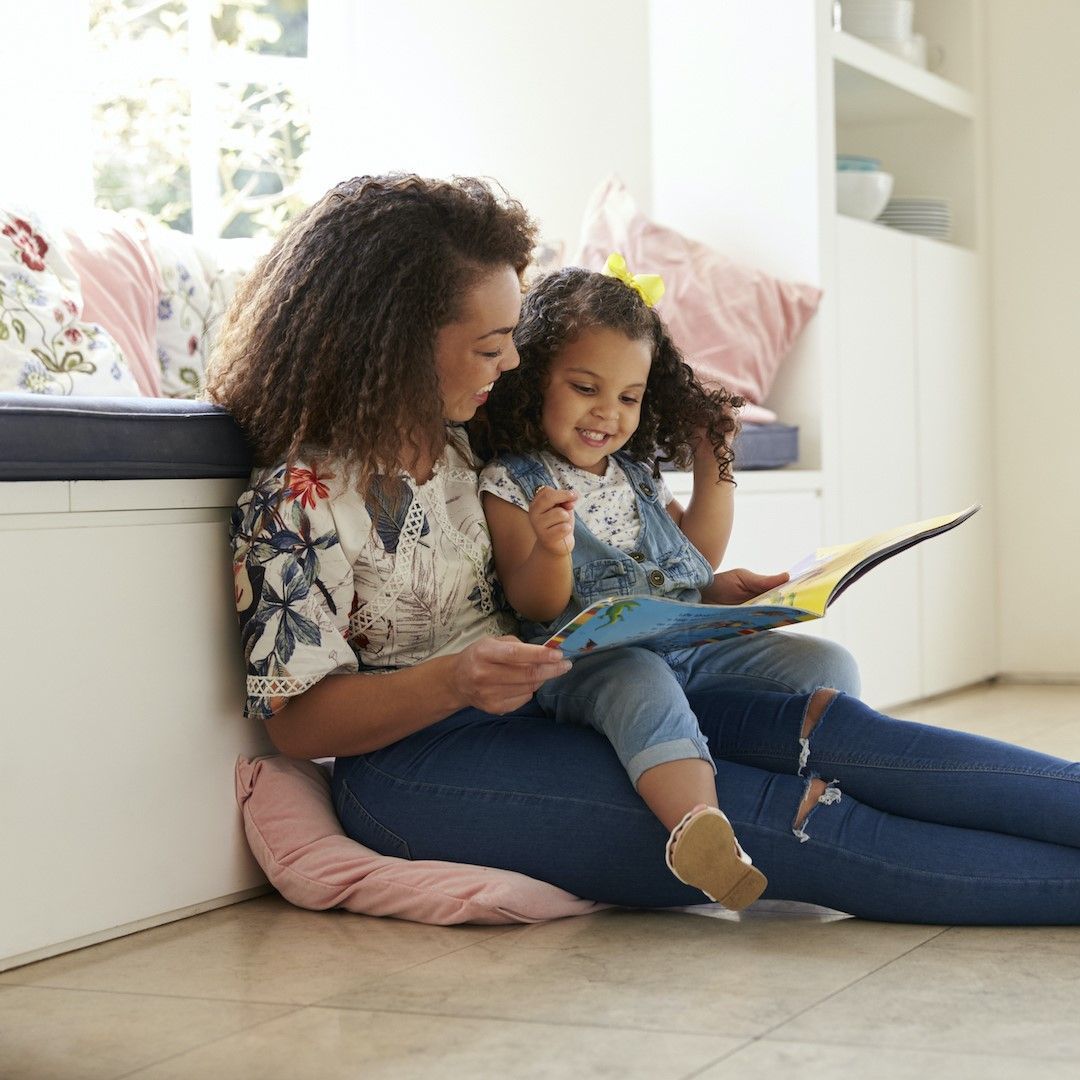
Start reading aloud and NEVER STOP. Reading aloud to children gives them several advantages, not the least of which is a strong and varied ‘listening vocabulary’ so that when they start reading they have a storehouse of sounds, syllables, words, and meanings available to them and therefore can recognize new words more easily – not to mention making them better writers. Additionally, reading aloud increases attention span, imparts an innate understanding of grammar, tone, humor, and punctuation, and most importantly creates a strong connection between reading and pleasure. Even once your child begins reading, you should continue your read-aloud time (perhaps alternate who is doing the reading!). When the parent is doing the reading, select books that are a few steps ahead of what your child can read himself to keep increasing the listening vocabulary and attention span. The bare minimum is about 15 minutes of reading per day; there is no maximum! Read aloud time is a daily activity at Wheaton Montessori School.
Limit “screen time.” Watching and playing games are plentiful and many even have some educational merit. However, even the most thought-provoking TV show or education-based computer game is an extremely poor alternative to reading. The average child in the US spends between 3-5 hours a day in front of a screen. Make at least one of those hours about reading instead.
Make reading a part of your family’s lifestyle. Some families read aloud while making dinner, during car rides, while waiting at the doctor’s office. Starting when they are very young, make frequent trips to the library with your children and let them select books that interest them. Let your child see you reading! When your preschooler or elementary child has a question about something, take them to the library and show her how to find books on that topic. Introduce the dictionary (there are versions for very young children) and demonstrate how to use the table of contents to find information. Let them see that reading is a tool to discovering their world. Don’t make reading at home a chore; view it as an enjoyable leisure activity. Choose books to read aloud that you also enjoy; if you can’t wait for it to be over, your frustration will come out in your reading.
Select good literature for reading aloud. Books that you cherished as a child are a great place to start. Many beloved classics contain rich, beautiful language that is very different from the way we speak today (and which is absent from much of the contemporary reading available to children these days). Examples include A.A. Milne, Rudyard Kipling or Roald Dahl. And don’t forget poetry! Do not be afraid that your child will not be able to follow the story if the language is a bit complicated; remember that their minds are absorbing every word and you are enriching their vocabulary, building brain power, and introducing different styles of humor by reading aloud. A wonderful resource for ideas is The Read-Aloud Handbook by Jim Trelease. Make a list of books to give to grandparents for gift ideas. When books are treasured in the home, the child will automatically think of reading as a first-choice activity for leisure time.
Focus on phonics. Toddlers and preschoolers need to know the sound the letter makes, not the name. For example, for the letter ‘o’ we say, “This letter makes the sound ‘ah’.” Make your expression of the sound very clear and leave off any extra sounds – just the ‘t’, not ‘tuh’. This prevents children from reading “cat” as “cuh – ayuh – tuh”. Once the child understands the letter sounds, they have all the skills necessary to decode any word they come across. In their Montessori primary classroom they will eventually put their phonics knowledge together with phonograms (th, sh, oo) and puzzle words (the, I, come, etc.) for a complete reading skill set.
There is no need to purchase expensive phonics programs to help your child with reading. You already possess the only tools you need to give your child the keys to reading success. Simply read aloud as often as you can! At home, you can augment your read-aloud time with other activities that support writing and reading development:
I Spy (begin around age 2.5 or 3) Play this tried-and-true game using items around your home or a basket full of small objects. Say, “I spy with my little eye, something beginning with ‘t’.” Together you can name all the things you see. Note: Do not only focus on the beginning sound! While the beginning sound may be the easiest for the child to identify at first, give equal time to the sounds you hear in the middle and end of the word as well.
Sound Games (Begin around age 3 – 3.5) Again, with these games you want to pay attention to the sounds at the beginning, middle and end of the word. Do this for as long as the child shows interest.
Stage 1: “I am going to say a sound and I want you to listen very carefully. The sound is: ‘m’. Do you hear the ‘m’ in ‘mat’? Do you hear ‘m’ in ‘hamburger’? Do you hear ‘m’ in ‘farm’?
Stage 2 (after many days of practice with Stage 1): “I am thinking of a sound. The sound is ‘d’. Can you think of any words that have ‘d’ in them?
Note: if the child gives a word that doesn’t have the sound, don’t correct him. If the sound is ‘d’ and the child says, “house!” just smile and go on. “I hear a ‘d’ in ‘dog’, do you?” If it happens frequently the child probably just needs more practice with Stage 1.
Stage 3 (for an older preschooler who has had lots of experience with the other stages): “I am thinking of the word ‘mat’. What are the sounds we hear in ‘mat’? I hear ‘m’, ‘a’, ‘t’. ‘Mat’.” After much experience, the child may begin to identify the different sounds on his own. Again, don’t correct the child if he makes a mistake, just give more examples and more practice!
Phonograms (for a child who is already reading phonetically): These are the letter combinations that make a new sound, such as ‘sh’, ‘ch’, ‘ai’, ‘ing’, etc. Your child will be working with phonograms in school. When you are reading together with your child, simply point out the different phonograms from time to time and say, “When we see a ‘p’ and ‘h’ together like this, they work together to make the sound ‘ph’. Let’s see if we can find some more words in this book that have the ‘ph’ sound!”
Puzzle Words (for a child who is already reading phonetically): Puzzle words are those words that can’t be sounded out using phonetic sounds or phonogram combinations. Examples are ‘the’, ‘of’, ‘through’, ‘enough’, ‘come’, etc. Ask us for a list of the puzzle words that our classrooms use. With your older children, feel free to study these words and quiz them. Knowing these words will provide the final key to total mastery of reading.
Schedule your parent/teacher conferences to hear about your child’s social and academic success. And be sure to schedule a visit to see how reading is part of our school days at all ages.