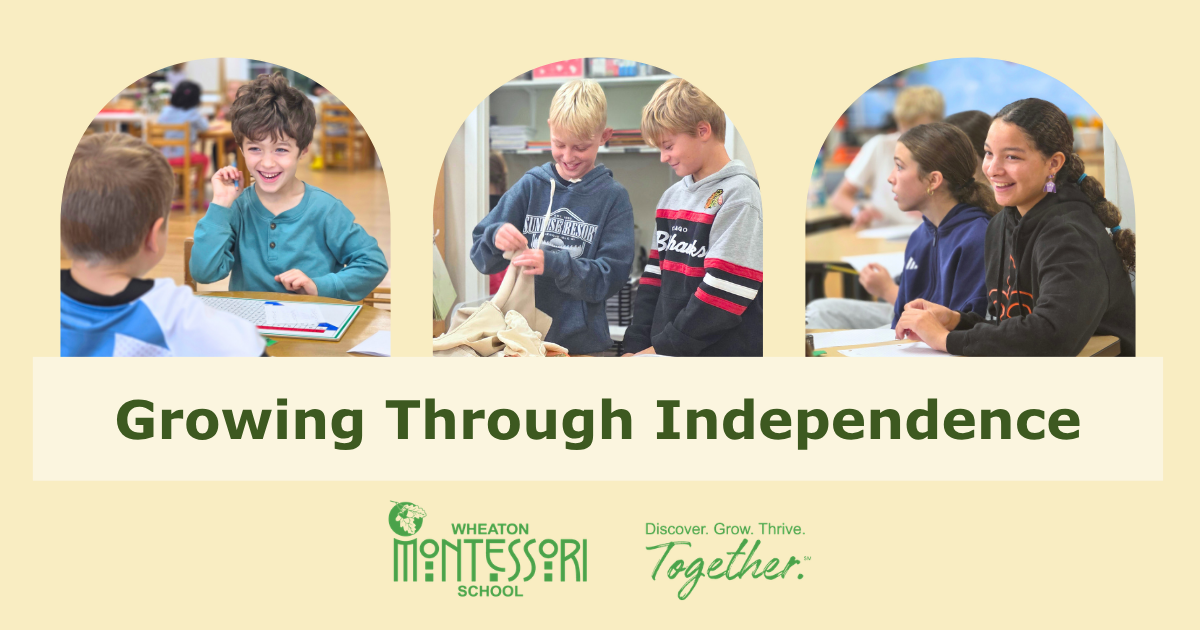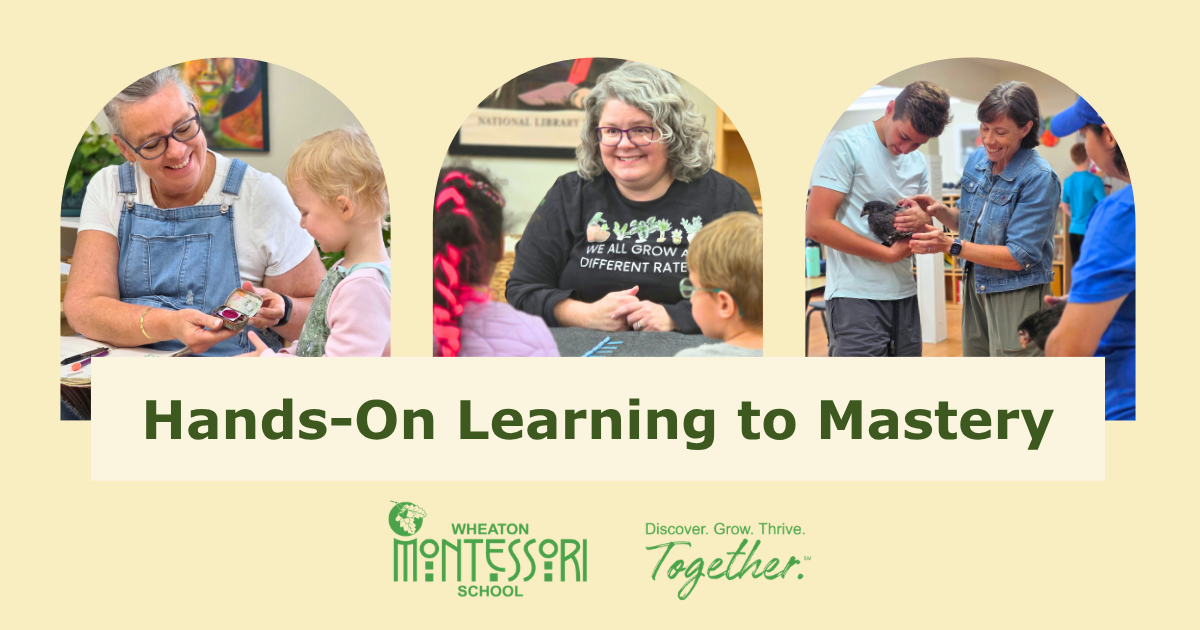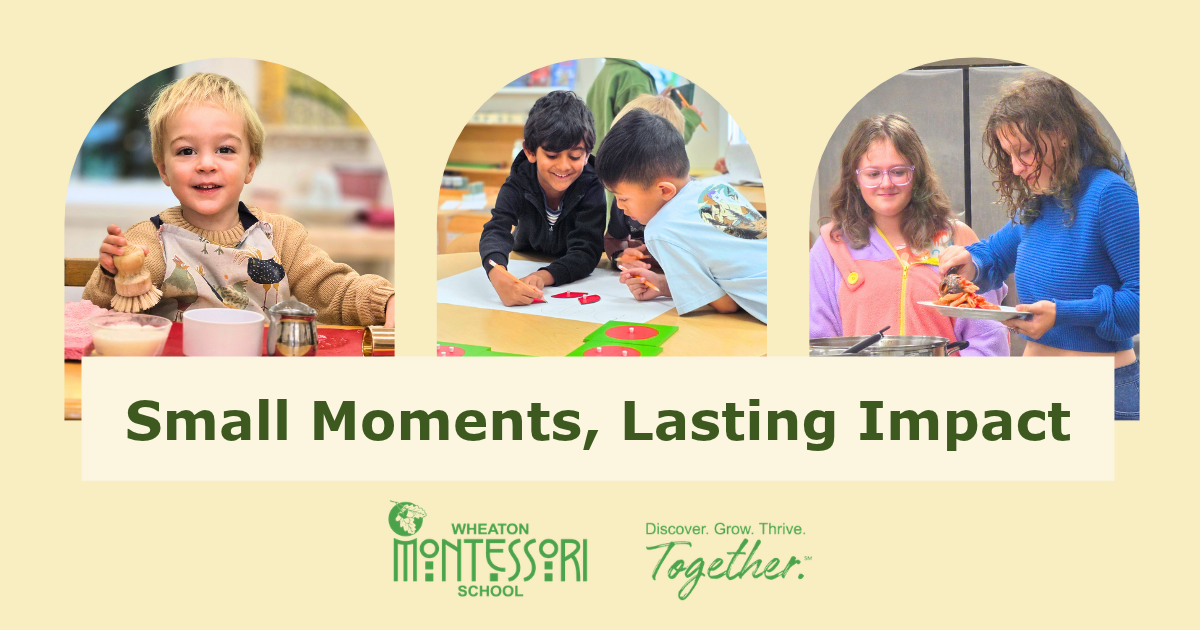
Reading, math, geography, and science are foundational, and raising capable, compassionate people matters just as much. In our classrooms every day, children practice what it means to be valued, responsible, contributing members of a community.
As November turns our attention to thanks and togetherness, we want to share how gratitude, leadership, and responsibility are woven into school life at Wheaton Montessori School.
Relationships Matter
A strong community is built on meaningful connections, and ours cross age groups, classrooms, and generations.
In our multi-age classrooms, younger students look up to older peers with trust, while older students learn patience, empathy, and grace as they mentor. Parents, grandparents, and grandfriends extend that circle. When grandparents and grandfriends visit classrooms and join school traditions, students see a multi-generational village at work: people who propped us up to be here, and gifts we leave for those who come after.
The Grandparents and Grandfriends Come to School
These special days bring so much excitement to the classroom. Children have the joy of welcoming grandparents or special grandfriends into a place that matters to them, and for a change, the children are the ones showing the adults around.
They can take their grandparents through the classroom, show them the materials they enjoy, demonstrate lessons, and talk about the work they have been doing. They know where things belong and which activities they want to share. You can see how pleased they are to have someone special there to see their classroom through their eyes.
The maps are often a favorite. Grandparents enjoy finding places they have traveled to, showing their grandchildren where they have been, and talking about the states or countries on the map.
The conversations move naturally between the map and the family's own experiences. A place on the map becomes somewhere Grandma visited, or somewhere Grandpa remembers. The classroom material gives them something to explore together.
I love seeing the children lead these visits. They know the classroom, and they have something to share with the people who have come to see it.
For a little while, the grandparents get to experience the school from the children's point of view.
A Continuum of Growth
True independence isn’t just doing things alone. It’s building the skills, confidence, and desire to contribute to others. Responsibility isn’t taught through lectures; it’s lived through practice and grows as children mature.
Primary (3-6 years): Caring for Self and Environment
In Primary, children learn to care for themselves and their surroundings. They hang up their coats, change their shoes, and prepare for the day. They also get to decide what they are doing first from the work they have had lessons on.
On one day, a child might write the names of favorite candies inspired by Halloween, while two classmates discuss whether to use addition or multiplication with the golden beads. These everyday choices nurture a sense of agency: I am capable, and my actions matter.
Small moments of kindness reveal how responsibility and care for others grow alongside independence.
A kindergarten student helped a younger friend sew a sunflower. As they worked, she encouraged him: “Next time, make your stitches smaller and closer together.” When asked why, she simply replied, “Because that’s what sewing is.”
On the way to recess, another kindergartener noticed a newer student tangled in his backpack straps. Pointing to the space where the backpack belonged, he said, “Right here.” He then gently helped free his arms and hung up the bag. No one had asked him to help. Both children smiled and dashed off to play.
These moments may seem small, but they reflect something important: children learning to notice what needs to be done and choosing to help.
Elementary (1st-6th grade): Owning Work and Relationships
As children grow, they take greater ownership of their academic work, time, and relationships. They collaborate on group projects, work through disagreements, and learn to consider different perspectives. Experienced students also begin taking on more visible leadership roles, guiding younger classmates through lessons and helping maintain classroom routines.
Through these experiences, children discover that leadership isn’t simply being in charge. It means listening, cooperating, solving problems, and helping others succeed.
Adolescent Community (7th-9th grade): Real-World Leadership
In the Adolescent Community, leadership becomes increasingly connected to real-world responsibilities. Students manage micro-economy projects, organize community service, maintain outdoor spaces, and take on operational roles that contribute to the school community.
For example, our ninth-grade Market Manager works with other student committee leaders to improve the market’s ordering process. Together, they consider practical questions: How will flyers reach families? How can an online order form make ordering easier? Who will organize and deliver orders to families? What challenges need to be addressed, and what solutions might work best?
One ninth grader is exploring how the market can make better use of online ordering to streamline sales. This work requires more than coming up with ideas. Students must identify problems, evaluate options, communicate with others, and put workable solutions into practice.
Through experiences like these, adolescents develop entrepreneurial thinking, collaboration, problem-solving, and accountability. Their decisions have real consequences, and their contributions make a tangible difference to the community.
Gratitude Is Lived, Not Just Taught
At Wheaton Montessori School, gratitude is a daily practice. It appears when a child thanks a classmate for introducing a new material, when someone cares for classroom tools so they’ll be ready for the next person, or when children participate in community service and see how their efforts can brighten someone else’s day.
Our adolescents begin each weekly meeting with ten minutes of shout-outs, recognizing classmates who have helped, contributed, or made someone’s day a little easier. Sometimes the appreciation is for preparing a delicious meal, helping in the kitchen, or taking over someone else’s chores.
What stands out is how naturally the recognition moves around the group. Students speak up to acknowledge one another. In a world where teenagers are often criticized for what they aren’t doing, it’s wonderful to see young people so thoughtfully recognizing what others do well.
When children have genuine opportunities to contribute, they also learn to recognize and value the contributions of others. They discover that a thriving community depends on the kindness, effort, and care of everyone in it.
Partnering Together
As parents, grandparents, and educators, we share a common goal: guiding children toward becoming capable, confident, and empathetic adults who understand their responsibility to others.
We’re grateful for your partnership, and for the warm, caring community we build together every day. Through the small acts of kindness in our youngest classrooms and the meaningful leadership of our oldest adolescents, we see children learning that they belong, that their contributions matter, and that they can make a difference.
Together, we’re helping them grow into thoughtful, responsible members of their communities and the wider world.