Parents ask us some version of the same question: How do you know when my child is ready to move from counting to multiplication? Or when they need a nudge toward leadership, or a quiet stretch to let a new skill settle?
The answer is that we watch. Observation is the core of how Montessori teachers teach.
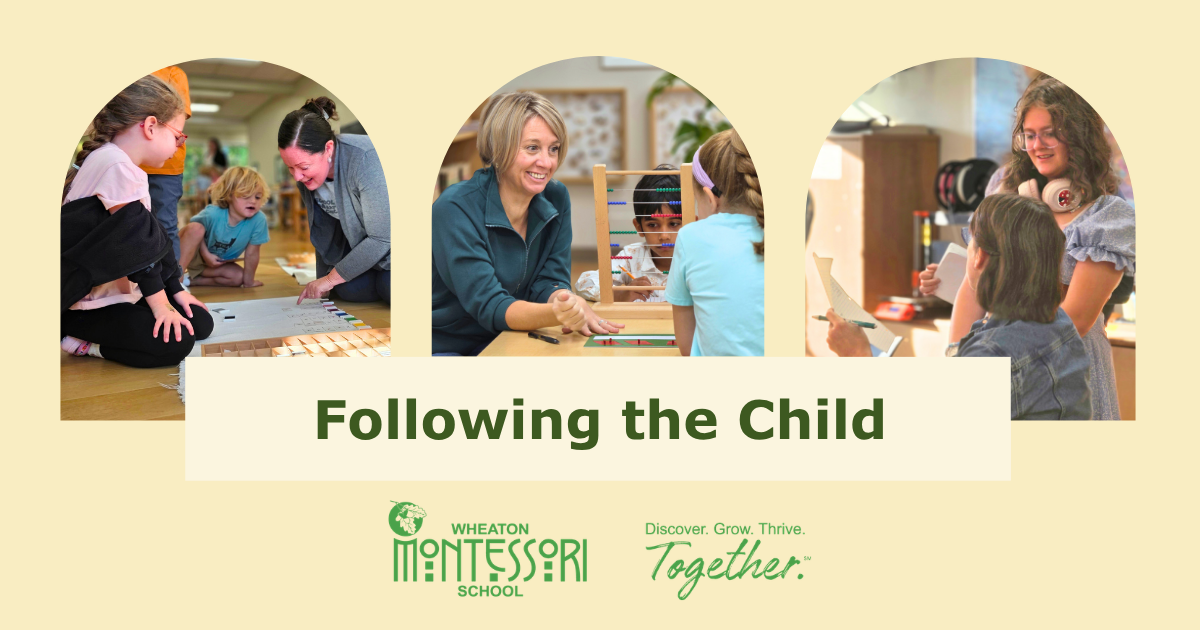
Dr. Maria Montessori called this "following the child." It doesn't mean children do whatever they like. It means your child's teacher pays close attention to what they choose, what holds their focus, and what they're ready for next, then shapes the learning around that.
What Teachers Are Watching For
Each day, teachers sit quietly in the room and take notes. They're asking things like:
- What is this child choosing on their own?
- How long can they stay with a task?
- Is this mastery, or productive struggle?
Over time, those notes show a child's "sensitive periods," the windows when they're especially ready to absorb something, whether it's language, number, or working well with others. This is why we don't run on a calendar. Your child's next lesson depends on your child.
“I often think children come to school with a plan of their own. Sometimes they arrive already knowing exactly what they want to work on, especially if they had a lesson the day before. They return ready to practice, explore, and do the work again.
Part of my role as a teacher is to observe what each child chooses and how they engage with it. I watch for signs of concentration, interest, and readiness. When a child begins to lose interest in a material, or when I see that they are ready for something more, I can offer a follow-up exercise that will keep them engaged and help them move forward.
There is a rhythm to this process. The child chooses the work, returns to it, and practices. I observe, and when the time is right, I offer another lesson. The child remains at the center of the learning, and my observations help me understand what might come next.”
Katerine Celaya, AMI Trained Primary Teacher Assistant
What It Looks Like at Each Stage
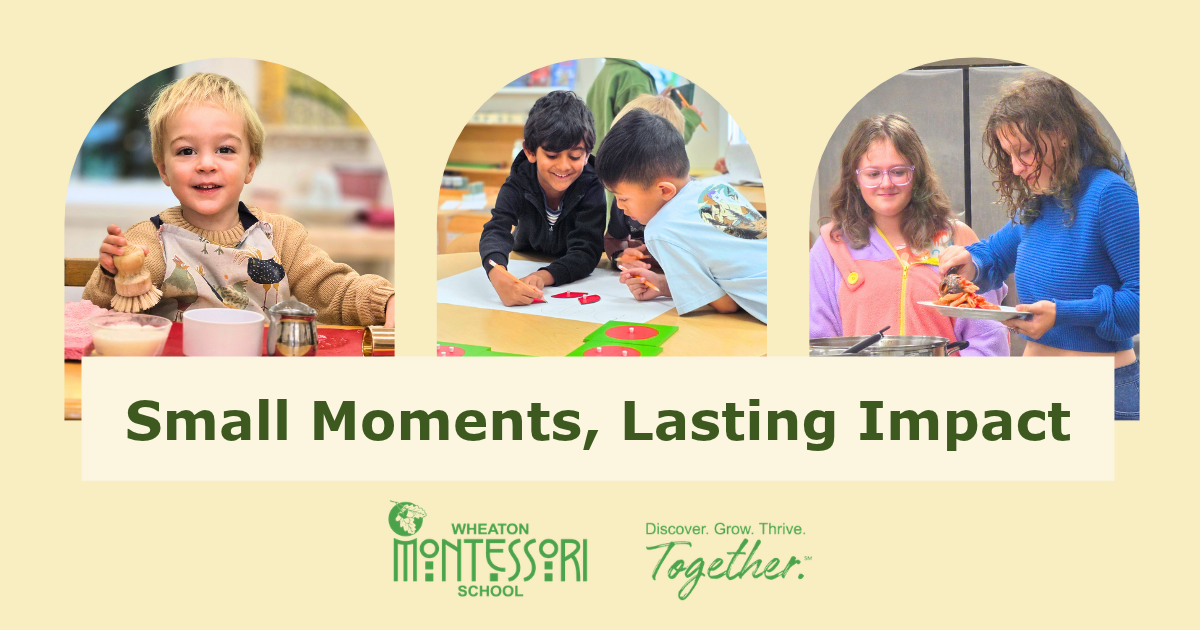
Primary (3-6 years): Here we watch for coordination, concentration, and self-care. A three-year-old who can pour water without spilling is building the hand control they'll later need for holding a pencil. When a child has mastered a material, the teacher offers the next step, and confidence grows with it.
One of the things I appreciate about the Montessori method is that repetition begins with the child's own choice. A child returns to a material because something about it interests them. They want to do it again, and then again.
Each time they choose the work, they have another opportunity to practice. Over time, that repetition builds toward mastery. The child becomes more confident, more capable, and more independent.
Something else happens along the way. As children gain experience, they begin to see possibilities they didn't see before. They may approach a problem one way today and discover a different way to solve it tomorrow. They begin to recognize that they can reach the same conclusion through different pathways.
I think of this as the development of the mathematical mind, the ability to recognize patterns, make connections, and reason through problems. A child who returns to familiar material isn't necessarily doing the same thing in the same way. They may be discovering something new each time.
Elementary (1st-6th grade): Attention shifts to time management, group work, and independent research. A child who has mastered a concept with hands-on materials like the decimal board is ready to move toward abstract mental math, and the teacher presents that bridge. Teachers are also watching how students handle disagreements and mentor younger classmates.
Adolescent (7th-9th grade): Readiness here looks like real-world responsibility: running a micro-economy business, managing a budget, organizing a service project, being ready to lead a lit seminar, presenting your quarter research project, or being ready to explain how you arrived at answers for math seminar. For the micro economy committees, once a student shows they're ready, the teacher steps back into an advisory role and lets the student lead; the same for academics after lessons have been provided.
“When I observe the adolescents and the work they choose, I find myself asking two questions. What does this activity offer them at this stage of their development? And should I step in, or should I step back?
Adolescents are working toward economic independence. They need opportunities to be with their peers, and they need autonomy in deciding how to spend their time. Those needs are always in the back of my mind when I observe them working.
But giving them choices also means allowing them to experience the results
of those choices.
Sometimes, I see a student heading in a direction that makes me wonder whether I should intervene. Would another choice serve them better? Would a little guidance help them reconsider? Or is this an opportunity to let them make the decision and see what follows?
I don't think there is one answer that works every time. I have to consider the particular student, the situation, and what the experience might offer them.
The balance is in knowing when to let the adolescent take the lead and when to offer guidance. I'm still observing, still weighing those questions, and still deciding when or how much of my involvement will be useful.”
Kelly Jonelis, Adolescent Program Director and Math Teacher
What This Means for Your Child
Because learning is matched to each child, no one is rushed, and no one is held back. Children see that everyone moves at a different pace, which builds empathy instead of competition. Older students help younger ones because they see a need, not because a teacher assigned it. And children learn to appreciate the people around them: their teachers, their classmates, and the families and grandfriends who support our community.
Montessori isn't an assembly line. It's a living classroom, and your child's teachers are paying attention to who they are today and who they're becoming.