BIRTH TO 1 YEAR:
As caregivers and parents, we have a bittersweet role. While we want to keep our children close, we ultimately need to support their path toward independence. We plan to do everything for our babies, but our newborns have already begun moving towards independence at birth. They start breathing on their own and with the cutting of the umbilical cord (our expression “It’s time to cut the cord” indicates the shift to increased independence) gain nutrition as they begin latching on or suckling.
Children in this age group:
- Increase movements from one place to another by using arms and legs, sitting up and crawling
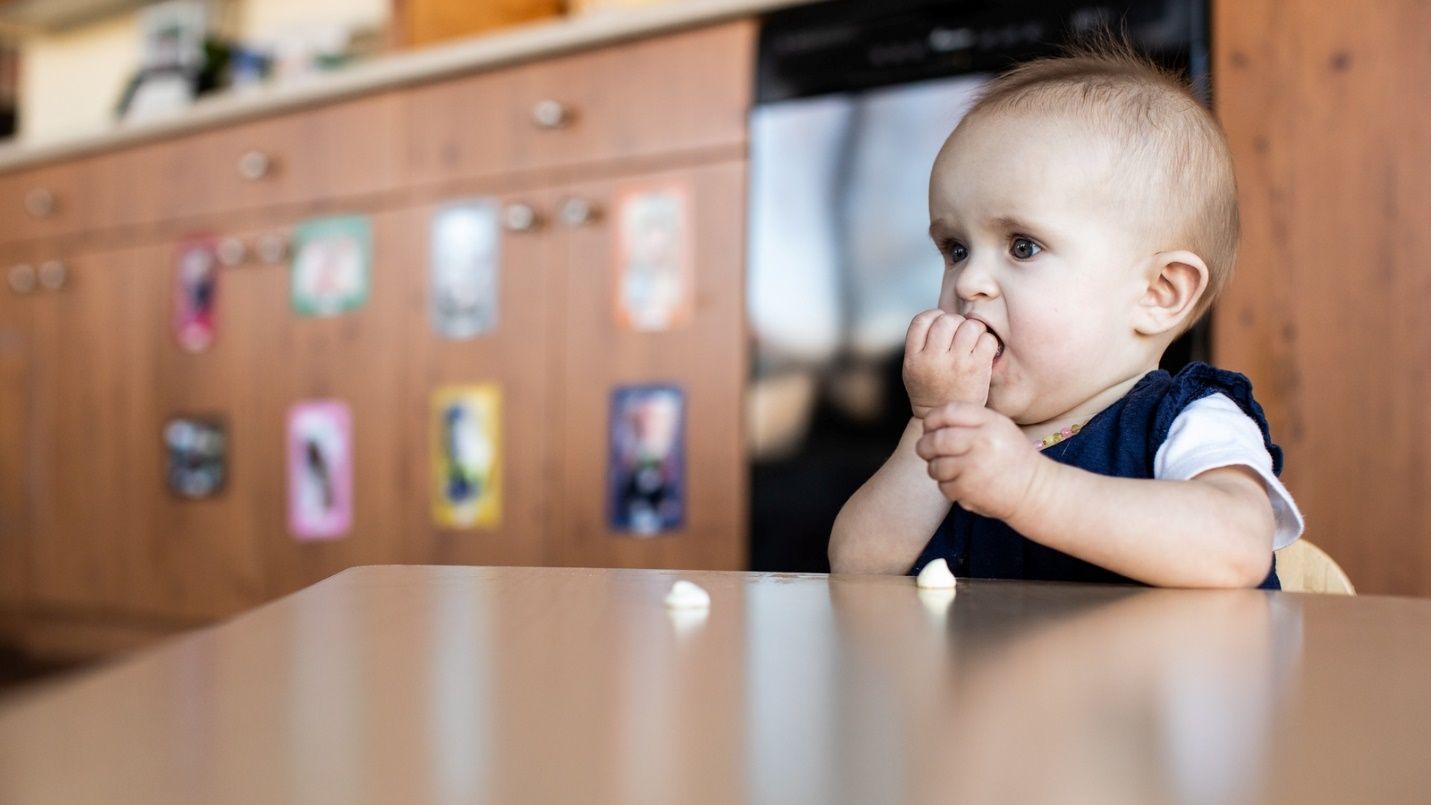
- Begin to feed themselves with foods and tools they can use independently (e.g., a tiny glass for water, toddler sized utensils, finger foods, etc.)
- Practice using child-sized and functional utensils
- Experience healthy separation from their caregiver(s) for time without adult engagement
- Utilize methods to communicate with others such as crying, cooing, smiling, etc.
- Develop ability to use language to communicate their needs around the end of their first year
1-3 YEARS:
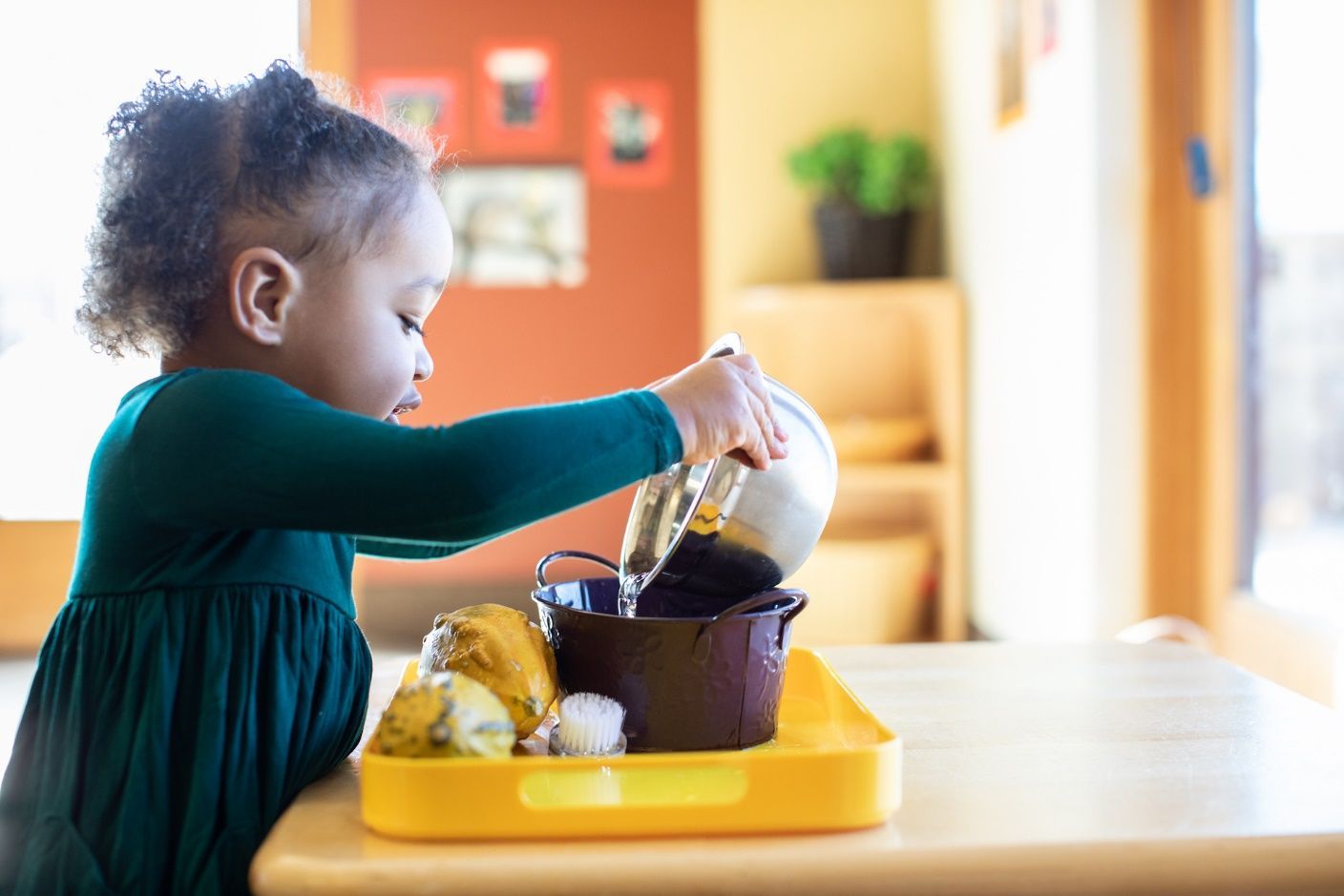
As children get older, they need opportunities to develop their self-confidence. Thus, during this stage of independence, it is important that children can make choices, act for themselves, and exercise their will.
Children in this age group:
- Walk, run and climb with confidence
- Begin the process of becoming independent in toileting
- Become more independent with the use of their hands, which become tools for exploration
- Express themselves with language use
- Begin to dress themselves
- Start using simple tools (crayons, sticks, cups, utensils, etc.).
- Become more capable of caring for their own personal hygiene (brushing their teeth, washing their face, brushing their hair, etc.).
- Get more proficient with and capable of carrying their own items
- Have the capacity to clean up after themselves (put away belongings, fold clothing, wipe spills, sweep crumbs, etc.)
3-4.5 YEARS: PRESCHOOL
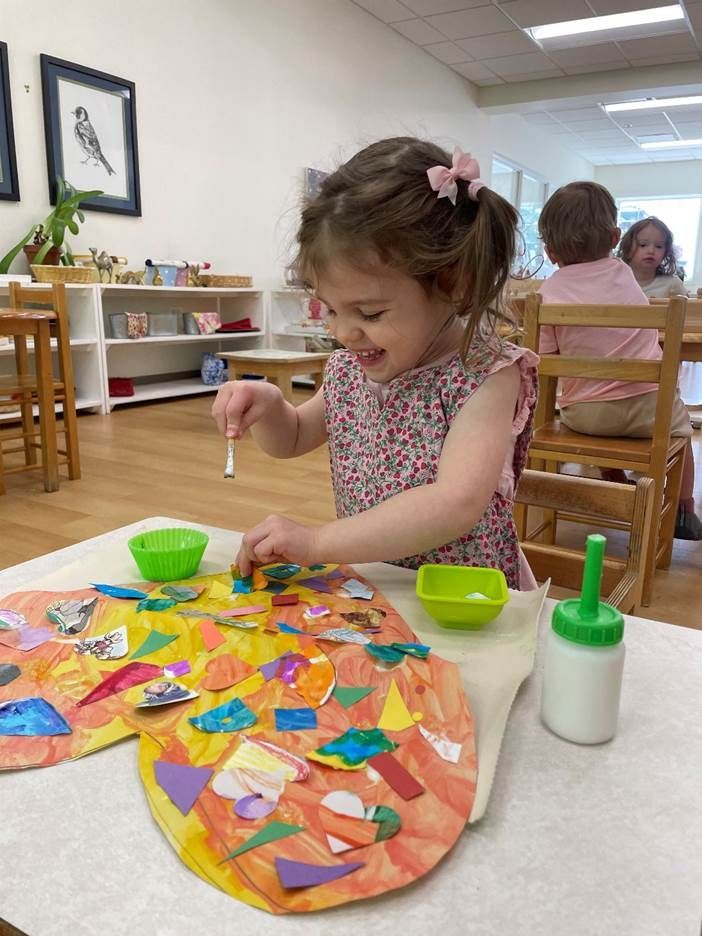
During this phase of childhood, children realize they can trust others, which is a significant step in their independence. Children experience separation from family (e.g., going to school). For children who haven’t been able to experience this separation yet may encounter this as a somewhat difficult process.
Children in this age group:
- Develop a wider range of social skills.
- Acquire more developed and refined motor and visual skills
- Engage in more games (e.g. catching and throwing a ball).
- Have finer manual dexterity (using individual fingers) as well as refined fine motor skills (when all fingers are working in unison)
- Begin to develop the ability to use language to express their emotions with a multitude of words
- Use utensils and tools to prepare their own food (This ideally happens prior to age three. Research shows that children involved in preparing their own food are more likely to try diverse foods.)
- Learn to self-care by mastering fasteners (zippers, buckles, bows, etc.) for dressing and undressing
- Contribute and care for their community and their environment through simple responsibilities like setting the table, folding towels, etc.
- Become more independent in taking care of their own hygiene needs
- Expand on their vocabulary and better express their thoughts
4.5-6 YEARS: KINDERGARTEN
The conquests of independence children go through are ultimately about becoming functionally independent. Young children are in a process of mastering different aspects of their lives, and they need and search for us, their caregivers, to support them in this process.
Children in this age group:
- Have more social independence and help others
- Become more independent in their social skills to internalize and apply the social norms of their community (e.g. pushing in chairs, greeting visitors, communicating that they need space, etc.).
- Grow to be more proficient in dressing themselves and help younger peers with the jacket zippers and tying others’ shoes
- Acquire the capacity to have empathy and compassion
- Have a basic understanding of quantities and how they are represented, instead of just mimicking or rote counting
- Begin to recognize and use the symbols of our language (e.g. expressing themselves through writing or interpreting the thoughts of others through reading).
6-12 YEARS: ELEMENTARY
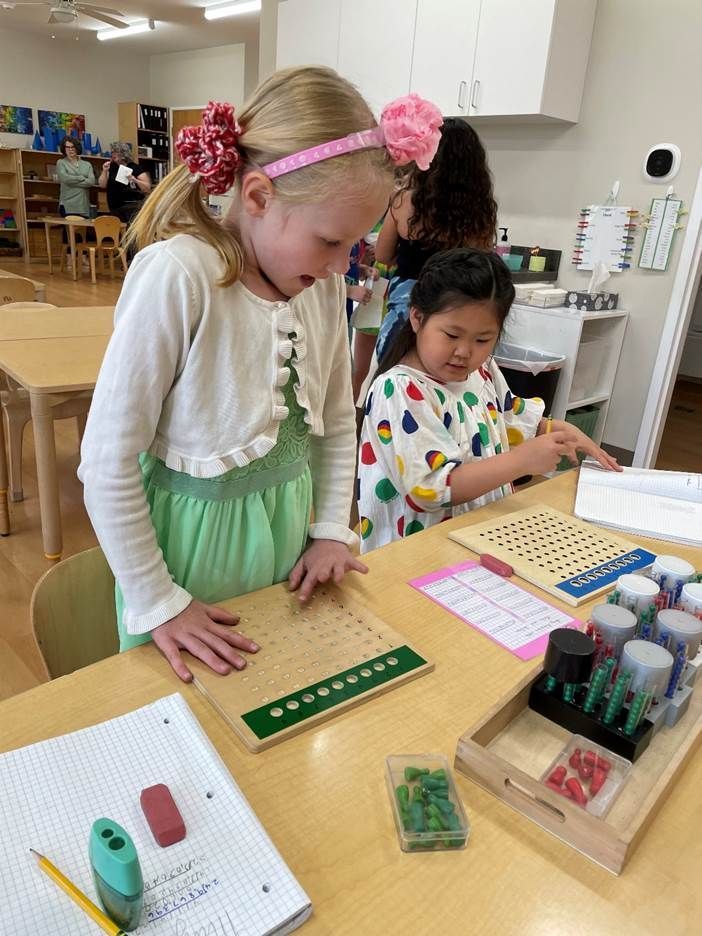
During this phase of education, Montessori misconceptions often include the idea that children get to do whatever they want. In an authentic Montessori classroom, everyone is given an amount of freedom within structures that is appropriate. Depending on the individual child, some children may have a limit of 2-3 appropriate choices while others may have a wide range of desirable options.
In addition to gaining self-confidence, freedom, and responsibility by choosing their own work, these students get to experience even more of these by reaching new independence levels. In an authentic Montessori school like Wheaton Montessori, elementary age students have a unique variety of field trips. We call them going outs and they are related to students’ work. Only the 2-3 students investigating the subject matter make a request and are approved to “go out” and do further research on their subject.
This age group also listens to stories about the contributions that individuals and cultures have made to our daily lives. Their interest in role models is rooted in their desire to imagine how they will better society.
Elementary students:
- Enjoy being busy and involved in activities.
- Have more coordinated and graceful physical movements
- Like competitions, clubs, and board games
- Dress and groom themselves
- Flourish in marking time, left and right identification, reading, writing, math, and science
- Gain intellectual freedom
- Like and respect parental figures
- Value friends and peers
- Have occasional temper tantrums
- Dress and groom themselves
- Become modest about their bodies
- Experience anxiety about growing up
12-15 YEARS: ADOLESCENSE
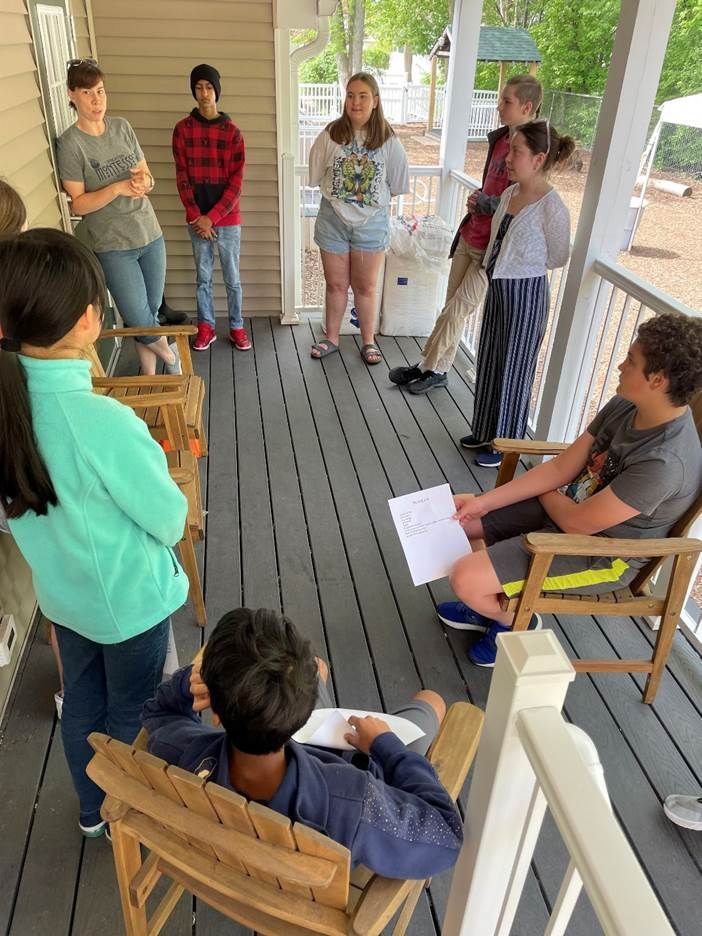
Dr. Maria Montessori’s vision for adolescence lays the path of a continuous quest for more responsibility and control. These young adults are motivated to define and establish their position in their social world while gaining more independence and in the meantime put their social skills into practice by collaborating as a team member working on projects with others.
Gaining responsibility and self-control is also displayed by these students as they plan for their weekly lunch meals, shop, and cook daily from scratch. Their amazing desserts are delicious and incorporate health benefits! Their desserts are required to be made with recipes that either include a fruit or a vegetable such as fruit fillings with reduced sugar or avocado as a fat replacement. Some delicious examples are avocado chocolate chip cookies, fruit pies and zucchini banana bread, having the best of two worlds in one!
By learning and practicing the concepts of microeconomy, Wheaton Montessori adolescents feel the entrepreneurial spirit and can create a vision in their minds of how they can gain economic independence and a more sustainable independent life for their future, thus becoming leaders of what they want to be. Activities such as planning, sourcing, how pricing is affected by demand and supply, product management and marketing, and after sales service create a picture for them of how the business world operates. These students, in essence, are running their small businesses making soap, taking care of chickens, and selling their eggs, and nurturing beehives that lead to healthy and happy bees who produce honey that they sell. All their actions and decision-making processes lead them to enjoy the profits they make by applying them towards payments for outings, for instance ice skating, entrance fees to museums and events, and camping trips.
Adolescence students:
- Find their place and connections beyond the school community
- Make positive contributions to their communities outside of school (e.g. feeding a community of their choice with a variety of meals ranging from crepes, sushi to pasta)
- Criticize parental figures and their home
- Adopt extremes in clothing, speech, handwriting, and mannerisms
- Acquire interest in politics, philosophy, and social issues
- Benefit from consistent and loving guidance
- Flourish when provided freedoms within structured limits
- Search for finding ways to spend time with others
- Accept taking on new challenges.
- Feel honored when their self-worth is recognized
Our children have the desire and potential to increase their independence and thus become the leaders of themselves and their communities. We invite you to sign up for a school tour and watch how Wheaton Montessori’s community values and practices enable children to gain their independence. Schedule a tour!