Soon our early elementary classrooms will be filling once. Among the happy faces will be those of the youngest children, those who are making the leap into the second plane of development and experiencing for the elementary community that Wheaton Montessori teachers have so meticulously prepared for them. In all the anticipation of welcoming the children, we also want to acknowledge parents.
Below – a letter that says eloquently what we would like elementary parents to know, especially parents of 6-8 year olds.
An Open Letter to Elementary Parents
Reprinted with permission by John Snyder, who dedicated his life’s work to Montessori primarily at Austin Montessori School in TX.
Dear Parents,
Welcome to our elementary community and to your new role as the parent of an elementary-age child. You did it! You successfully nurtured your child through the crucial first six years of life, giving them a solid Montessori foundation on which they will now begin to build a healthy childhood as the foundation for a healthy adolescence. It wasn’t easy at times, and there was so much to learn about your child and yourself as a parent, so many surprises, so much to think about.
Much of what you now know about parenting will continue to stand you in good stead, but it is also important to acknowledge that you are now the parent of a new child. Those sweet, transparent, cuddly little ones that you have so loved and enjoyed will quickly be leaving their infant selves behind to stretch and strengthen themselves to leave the nest and begin to venture out into the larger world. The environments and the relationships we and you so carefully prepared at school and at home to support the developmental needs of the young child no longer fit this new child. New preparations are in order! Not to recognize this and change our ways of working with the child would be like forcing a frog to continue living underwater as though it were still a tadpole.
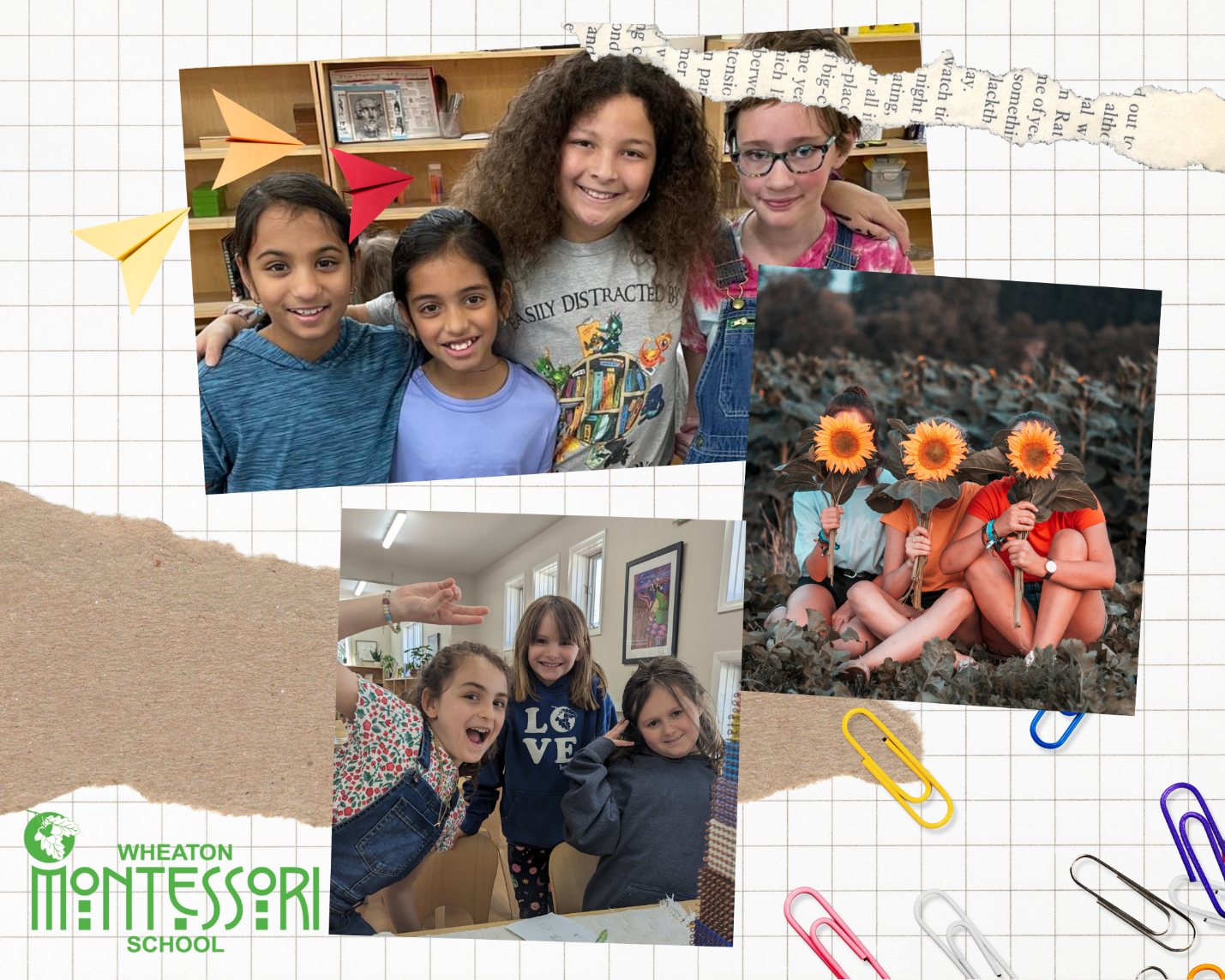
Your child will very likely find their new elementary classroom to have much that is familiar to them from their previous school experience. They will see some of the same materials on the shelf. They will see children working by choice and with the grace and courtesy characteristic of the Montessori community. They will find that their new guide has the same respect for and commitment to children that their old guide had.
All the same, your new elementary child will need some time to grow into the new classroom environment. The elementary environment is full of freedom, friends, group work, and unstructured blocks of time, for these are some of the elements that elementary children need to reach their full intellectual and social/emotional potential. To a newcomer, however, it may seem like a never-ending party! Don’t be too surprised if your little Primary worker bee is initially a bit disoriented and drunk on freedom. The guide and the community of older children will bring them around in due time and show them what it means to work productively in the collaborative environment of the Montessori elementary. The elementary is largely about learning to balance freedom and responsibility, and this is the work of years, not days or weeks.
Don’t worry if your child is not yet reading or doing arithmetic. The elementary guide [Tracy Fortun or Suzanna Mayhugh] will know how to meet them wherever they are and keep them moving forward. From the first day of school, there will be work for them to do as they pick up the thread from last year. The beauty of Montessori education, and the reason it is still flourishing around the world in scores of countries, cultures, and conditions, is that it is organized to support the natural development of each child according to their individual developmental timetable. Save yourself and your child the anxiety created by comparing them to other children and to students in curriculum-driven lock-step traditional programs.
As a new member of the elementary community, you can expect the guide to provide extra support for you as well as your child. The guide will be working diligently to create a solid partnership with you on behalf of your child. They will also be working to help you and your child find your respective places in the community of parents and children. They will be getting to know your child and connecting them to meaningful work. They, with the help of the older children, will be acquainting your child with the culture and customs of their new community. Later, sometimes as late as the second year, they will be introducing your child to Work Journals or other tools that will allow your child to gradually take more and more responsibility for their own education.
It goes without saying that your child’s guide is there to help them develop academically and intellectually, but the bigger and even more important work they will be undertaking is the creation of a classroom culture that supports the development of character, positive habits of mind, and the social skills needed to be a happy contributing member of our work culture based on collaboration, mutual help, and mutual care. This greater focus on the social nature of work parallels the elementary child’s psychological needs and natural interests. While the guide will continue to work with each child as they have need, they will work more often with the whole community. In a very real sense, the elementary child has two guides – the adult and the community of their peers – and a skilled guide will understand that they always have that other partner in the room to consider and support.
The stimulation and intensity of the well-functioning Montessori elementary classroom can be physically and emotionally exhausting for the new children who are still in transition. There’s so much to take in, so much to think about, so much to learn! Plan now to offer them extra support at home by seeing that they have the very best nutrition and 9-11 hours of sleep each night. Renew your commitment to protecting them from daily exposure to television, computer games, and video games. Give them lots of “down time” and time outdoors in nature. This is not the time to load up their schedules with private lessons and extracurricular activities! Read aloud to them daily from books recommended by your school or your child’s guide. Have a family meal at least several times a week to practice the art of conversation about topics your child will be encountering in school. Practice giving your elementary child room to talk, to speculate, to question, to imagine aloud. Speak less and listen more.
Ask your guide to recommend good parenting resources for parents with elementary-age children. Be sure one of the books you read soon is How to Talk So Kids Will Listen, How to Listen So Kids Will Talk by Faber and Mazlish. Check out Sandy Blackard’s book and online course at languageoflistening.com. [Use Good Inside through podcasts, the book, or social media.] And stay in touch with your guide [teacher] as you have questions and concerns.
Above all, enjoy getting to know this new child of yours, as they come to know themselves. The elementary years will be rich, challenging, and full of new experiences and vivid memories. Grow joyfully along with your Montessori elementary child these next six years! Never again will you have such an opportunity for self-improvement and personal growth. This is the gift of your new child to you if you will only accept it.
Sincerely,
John Snyder
Participate in our get togethers, parent nights, and social activities to connect with Wheaton Montessori parents who have been in your shoes already. This is one of the best ways to feel more confident as a parent. See you soon for 1st grade Meet Your Teacher Orientations and we look forward your visit to our elementary classrooms to experience Wheaton Montessori.