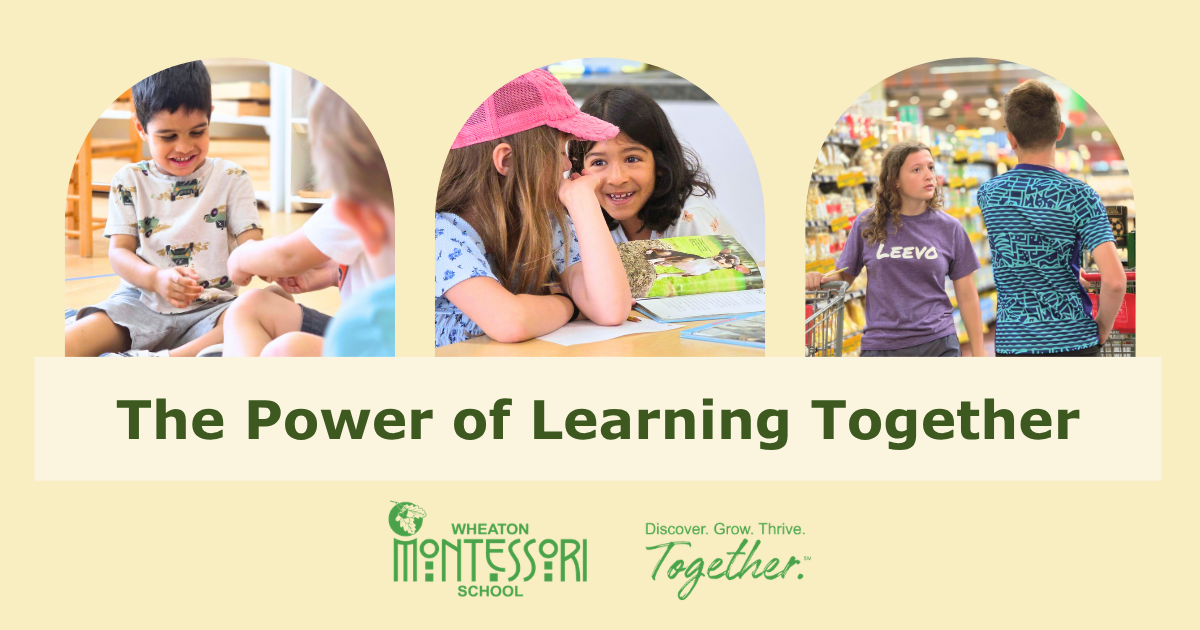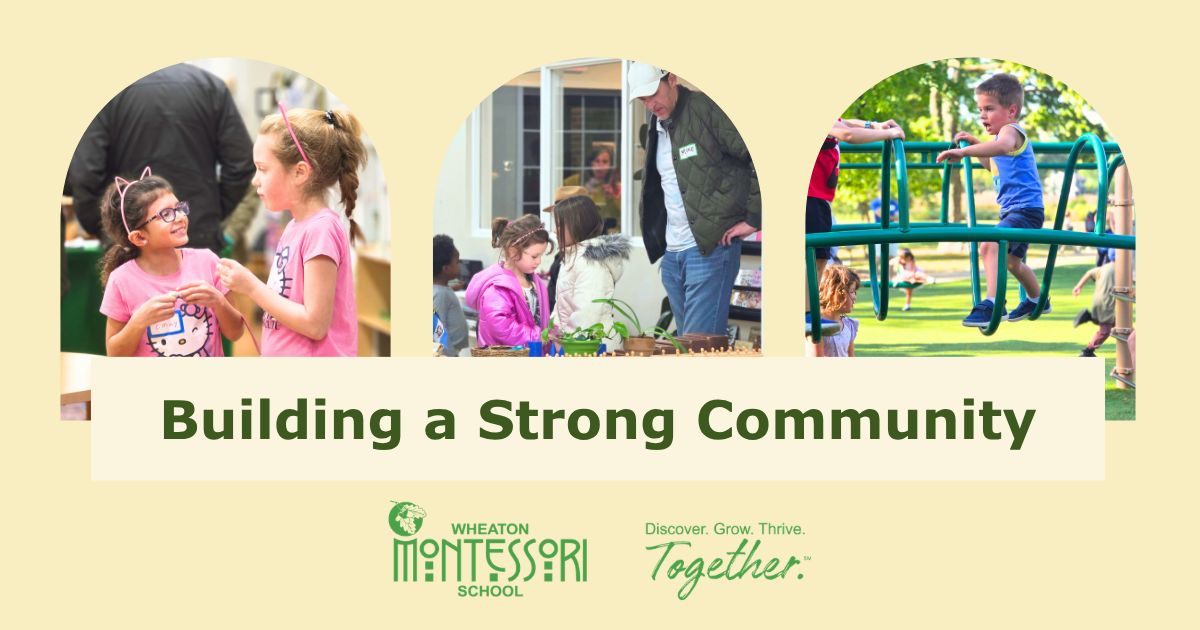

Have you ever stumbled upon your children acting out an imaginary scene? Perhaps you've found them "playing school" or witnessed them use a Lego person to boss a Beanie Baby around a bit. Play is a way for children to process and make sense of their lives.
They need play, and as Lawrence J. Cohen, PhD, so eloquently explains in his book, Playful Parenting, children need adults in their lives to play too.
At Wheaton Montessori School, we believe play is not a break from childhood; it is childhood. Through play, children rehearse social situations, process emotions, and build the confidence they need to navigate the world.
Filling the Emotional Bank Account
If we think about how our children have emotional bank accounts, we can make deposits to those accounts, much as we do when we put money into our financial accounts. Those deposits can take the form of hugs, appreciations, reading together, and really whatever strengthens the connection.
The emotional bank account is a useful metaphor because it reminds us that connection is cumulative. Just as we make deposits through connection and attention, we can unintentionally make withdrawals when stress, distraction, or conflict get in the way. When our emotional bank accounts are full, a little withdrawal here and there doesn't feel so bad because there's plenty of cushion in the account.
Is Your Child's Cup Running Empty?
Cohen has a similar description in terms of establishing our connection with children. He describes how children (and really adults, too) need their cups filled. A child's need for attachment is like a cup that gets emptied by being tired, hungry, hurt, or lonely, and then refilled by being loved, cuddled, encouraged, and even fed.
Cohen suggests looking at children's behavior and thinking about these "cups." Is a child running around desperately trying to get a refill? Is she bouncing off the walls in the process and even spilling what little is in her cup? Does a child have a leaky cup, always needing more attention but never feeling satisfied? Is the child who really needs a refill blocking others from giving him just what he needs to feel better?
When our children need their cups refilled or deposits in their emotional bank accounts, it's time for us to re-establish connection. And a very effective way to rekindle that connection is through play.
Follow the Giggles
Cohen's tenet is to "follow the giggles." It's actually pretty amazing how effective following the giggles can be, even for those of us who have a hard time letting ourselves go in the playful department. Parents often tell us they feel pressure to get everything right. The good news is that children are not asking for perfection. They are asking for a connection. Sometimes the quickest path back to connection is laughter.
One simple strategy is role reversal. When parents playfully take on the child's role, children often respond with laughter and cooperation rather than resistance.
Playfulness as Proactive Discipline
First, playfulness is proactive. We're filling cups so children don't resort to unpleasant behavior to get our attention. And we are supporting one of our core beliefs: connection comes before correction. Children are more receptive to guidance when they feel seen, safe, and understood.
"A healthy classroom holds both delight and discipline, where children are free to laugh together and responsible enough to protect one another's concentration."
Mrs. Elizabeth Berdick, Primary Teacher &
Co-Founder, Wheaton Montessori School
Another of Cohen’s suggestions is to have a “couch meeting.” Instead of escalating discipline, families gather in a space associated with comfort and connection. The couch symbolizes snuggles and comfort, not harsh discipline, which makes problem-solving easier for everyone.
This is exactly what Cohen advocates, too. His insight into how we can approach interactions and connections with lighthearted yet meaningful play can benefit us all. For more information about Cohen's work, visit: www.playfulparenting.com. See how your child can thrive academically while enjoying a rich, playful learning experience at Wheaton Montessori School. Visit us to learn more.
Classroom observations are available throughout the school year for enrolled families. Tours for prospective families are offered year-round.
*A Note on Montessori and Play
Cohen takes a Montessori quote out of context in the last paragraph of the book. In an email exchange, Cohen graciously admitted that he wished he hadn't misunderstood Dr. Maria Montessori's words about work and play.
Dr. Montessori's writings about work and play have many subtleties. She wanted to emphasize that children are drawn to meaningful activities, and using the term "work" rather than "play" helped validate their choices and respect.
The essence of Montessori philosophy is about respecting our children, recognizing what they need from their environment, and aligning with developmental characteristics and stages.