
Participation in Practical Matters
Rebecca Lingo • August 21, 2023

In our daily lives, we do so much to take maintain our surroundings, as well as care for ourselves and others. As adults, we take these activities for granted. Young children, however, yearn to participate in practical matters.


Everything we do to care for the environment, ourselves, and others make up what can be called "practical life" activities. In a Montessori home or school environment, practical life activities help children learn about cultural norms, while also helping them develop internal motivation, intellect, and body coordination.


Purposes of Practical Life  

With this in mind, we can really think about how practical life activities have two purposes: one is external and one is internal. The first purpose is to help children engage in something meaningful and real. For example, washing a table leads to a clean table. The second aim is to help children develop their internal worth and sense of competency. 


Practical life activities help children become psychologically and physically independent. By the time 24-year-olds begin life on their own, they should be able to provide for themselves, be responsible for their actions, plan for their future, and perhaps even help support others. The little things we do early in children’s lives set them up for later success. 


As children engage in purposeful work, they develop a sense of being an important part of the family or community. By beginning to help take care of their personal needs, they also develop a sense of accomplishment. 


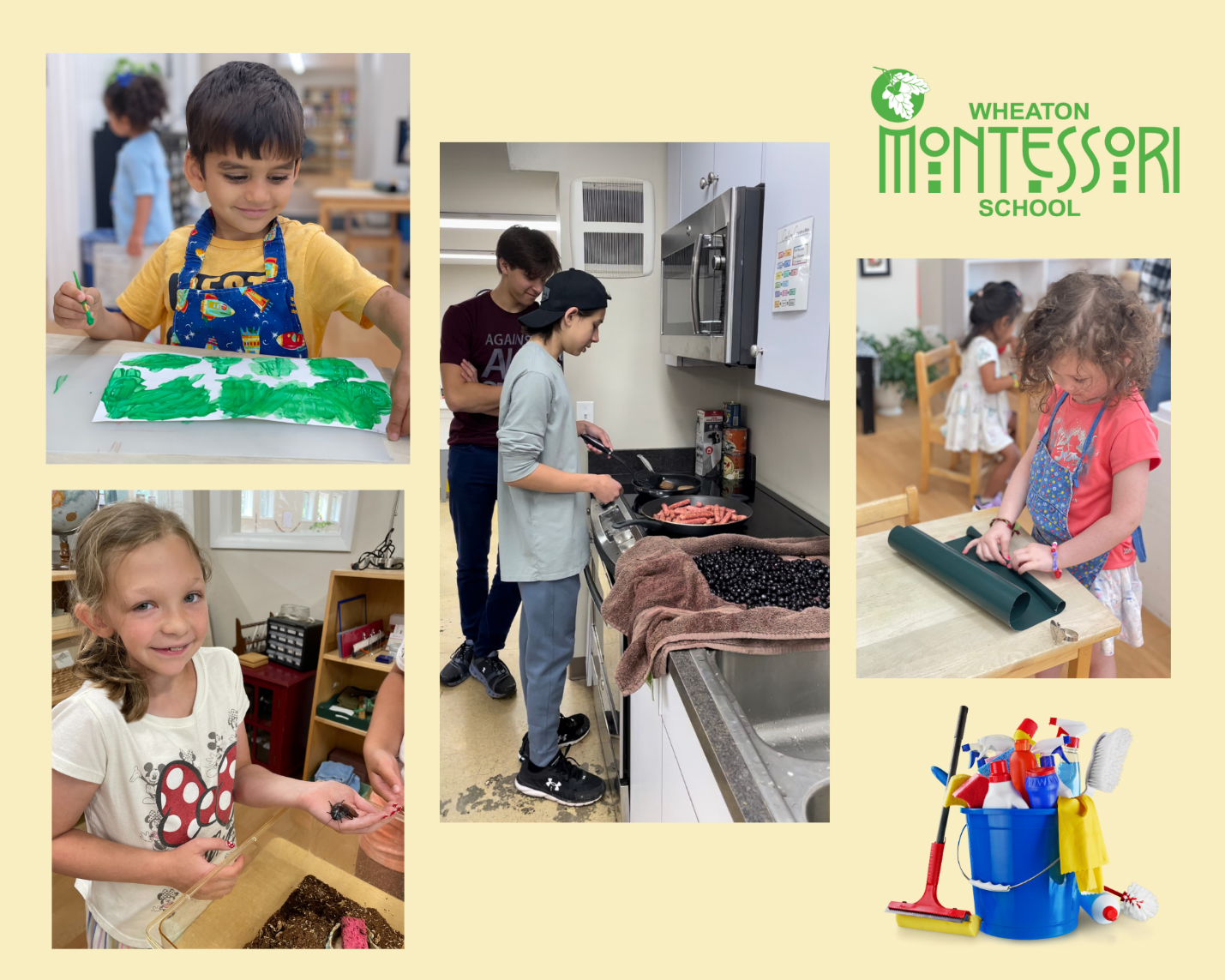
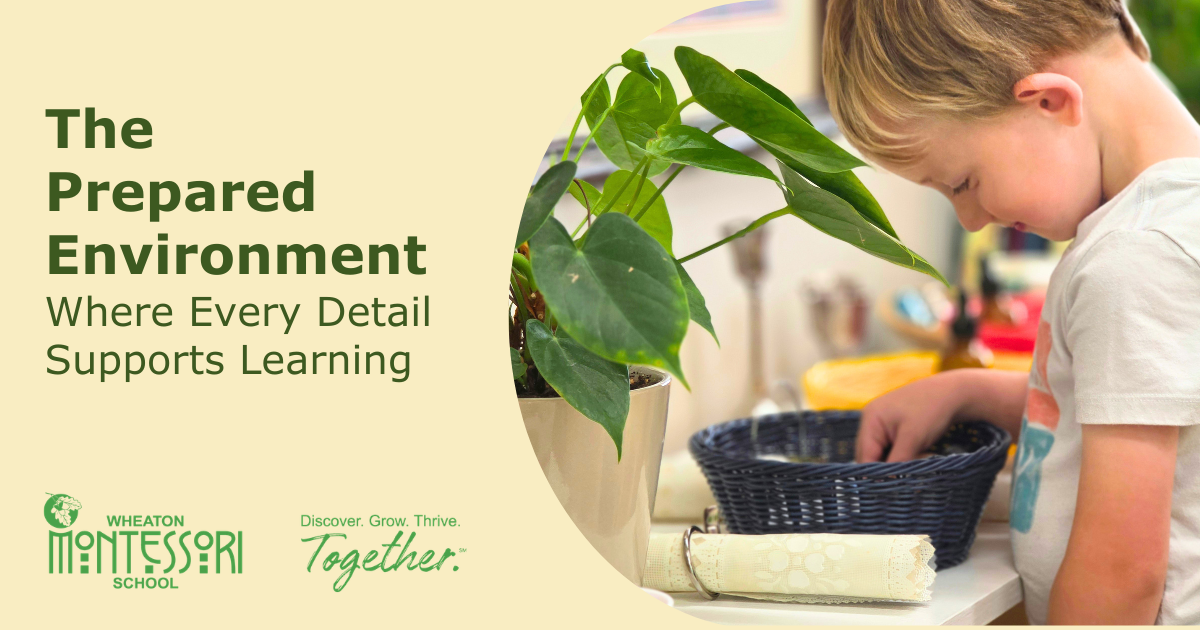
In a Montessori environment, children have a place where practical life activities are carefully prepared and presented to support emerging independence. The sink is at children’s height. The faucet is easy to turn on and off. The soap container holds just enough soap to wash hands. Children can perform activities that were perhaps previously done for them. 
Practicing Self-Care

The practice of self-care can begin early in children’s lives by approaching tasks with an attitude of collaboration. Even if a baby can’t do an action, they can have a sense of participating. We can invite this participation by saying things like, “I’m going to put on your shirt. Let’s put your arm through the sleeve.” As we allow for more and more collaboration, children’s active participation gradually increases. Opportunities for collaboration can be as simple as offering something in front of a child rather than actually putting it into their hands.


Caring for Surroundings

In addition to self-care, every Montessori environment provides numerous ways for children to care for their surroundings. In order for children to be successful in this process of caring for their surroundings, we intentionally prepare for it. Child-sized materials give children an opportunity to participate successfully. Their work must be real work, rather than activities to just keep them busy. Plus, the impact on the environment needs to be clear. If the plants need water, then children can water the plants. If the floor is wet, children can mop the floor. If a table is dirty, children can wash the table. Through real and meaningful activities, children develop a strong sense of belonging within their family, class, and school community. 


Supporting Practical Life at Home

Parents often ask how to support their children’s work at home. One easy and meaningful strategy is to create routines that help children care for their surroundings. They can clean up toys at the end of the day, set the table for dinner, or put dirty clothes in the laundry basket. The preparation for these kinds of activities isn’t elaborate and merely requires carefully selected items or furniture: a basket in the laundry room for dirty clothes, a shelf for toys, or a low drawer in the kitchen prepared with items for setting the table. 


When thinking about how to create practical life activities, consider the following:


  1. Will the activity help develop independence and coordination of movement? 
  2. Can it be done independently?
  3. What skills are needed?
  4. Will this activity allow repetition?
  5. Is it culturally appropriate and necessary?
  6. Is it beautiful?
  7. Is the material child-sized?
  8. Is it logical? 
  9. Is it safe?


With these guiding questions in mind, we can create simple and purposeful ways for our children to learn how to care for themselves, those around them, and their surroundings. In the process, children observe what is essential and then make the activities their own. Plus, as they internalize the procedure, children start to realize how capable they are! They put their whole focus into their work and experience great satisfaction in completing the activity. Meaningful engagement in practical life activities allows children to develop a strong sense of belonging and ultimately flourish into their fullest selves.


This fall, take a look at where your children might be able to contribute to the daily rhythms of the household, or even take more ownership of their own routines for self-care. Children will begin to imitate their adults, which leads to them performing tasks in their own unique ways. 


Keep in mind that this process is not completely linear, as some days children need more support than on other days. At this point, we can offer loving assistance while still upholding a sense of their involvement: “I see your clothes are still on the floor. Let’s pick them up together.” We all can use a little help sometimes!


From infants to adolescents, our young people are quite capable and benefit greatly from participating in practical life activities. If you would like some inspiration for how children are involved in caring for themselves, their surroundings, and others at Wheaton Montessori School please schedule your visit:


Current parents, classroom observations are open between October and April annually.


Families who are not yet enrolled with infants and toddlers please schedule your preschool tour here. New Paragraph
Child reaching for an object,
By Rebecca Lingo January 26, 2026
Learn how the Montessori Absorbent Mind empowers young children to effortlessly absorb language, culture, and behavior, and how parents can nurture it.
Children outside a building; title
By Suzanna Mayhugh, Lower Elementary Teacher January 19, 2026
Montessori Mayhem? Pint-Sized Pandemonium? When I give tours of the Elementary classrooms or welcome new parents to the Elementary program at Wheaton Montessori School, some parents believe that students are allowed complete freedom, as if the classrooms are a beautiful den of chaos and anarchy. Indeed, this is one of the biggest misconceptions about Montessori education. (The biggest misconception being, in my experience, that Montessori isn’t “real world” education. But as we say in our lessons, “That’s a story for another day.”) While Montessori classrooms DO give children the freedoms they require and deserve, it’s not an unlimited free-for-all with an adult watching from an observation chair! Freedom is always balanced with responsibility, to oneself and to the community. These values, freedom and responsibility, are essential for creating a happy, busy, humming classroom where children thrive. What Does Freedom Mean in Our Classroom? “Freedom” in the classroom means that students are encouraged to make choices about their learning. Just as in our Primary classrooms at Wheaton Montessori School, students are free to choose their work, their seat, and their work partners. They are free to move about the classroom and do not need to raise their hands to visit the restroom, get a drink of water, or ask a question. Let’s look at a few of these freedoms more closely. Students are Free to Choose Their Work. For example, they may choose which book to read, choose a work partner to research a chosen topic, or practice a tricky bit of a lesson over and over. They are also able to choose how they will show their understanding. They might present their understanding through a poster, a diorama, a model, a handmade book, or an enormous amount of cardboard and hot glue. These choices empower students to take charge of their education and express themselves in ways that suit their interests and strengths, something a standardized test or a worksheet can never do. However, freedom in the classroom ALWAYS has limits. For example, students are free to choose their work, but choosing NOT to work is not an option. They are free to choose their work from the lessons that have been presented to them. While students may choose their reading material, it must be appropriate for their reading level and classroom guidelines. When students select a partner, they must do so respectfully and inclusively. When students create projects and work output, they must do so with care, make proper use of materials, and in a way that shows what they understand about their topic. Additionally, these choices should never disrupt their own learning and construction, or that of their peers. The Role of Responsibility In a true Montessori classroom, freedom comes with responsibility. And that responsibility can sometimes be uncomfortable at first. Students are expected to care for classroom materials, such as returning books and lesson materials to the shelf, taking part in classroom jobs, keeping a record of their work in their work journals, and handling art supplies properly. They are responsible for practicing their lessons and completing chosen follow-up work, listening attentively during lessons or when a classmate is sharing a presentation or thought, and helping classmates when needed and available. A student is not free to use materials in a way that damages or wastes the classroom supplies or puts anyone in harm’s way. Freedom within our classroom never allows for harming oneself, others, or the classroom materials. Healthy boundaries, limits, and structures are consistently communicated in advance with clarity and respect, ensuring practicality and alignment within the community. Classroom expectations and rules are collaboratively developed and agreed upon by the community. In order to foster a positive learning environment, both students and teachers are expected to adhere to the shared expectations and responsibilities. When necessary, the classroom adult will address students and reiterate expectations and boundaries in a firm yet considerate manner. This balanced approach is effective only when maintained consistently throughout each day. What Might it Look Like When the Balance Needs to Shift? The adults in the classroom are constantly observing the children to be sure that each child has as much freedom as they are ready for, providing them space, room, and opportunities to show their strengths, and make their own choices throughout the day. When that freedom is too much, a teacher might need to provide more lessons in how to use materials that have been damaged or used improperly, limit work partner choices, or have a student sit with the teacher while they practice lessons or work with precious art materials. The adults will be watching for the perfect moment to allow the child increased freedom within the classroom, and within the limits of the understood responsibilities. How Freedom and Responsibility Work Together Finding the right mix of freedom and responsibility is something we work on together every day in our classroom. Montessori teachers are specially trained to guide this balance, helping students practice important skills like making good choices, solving problems, and learning self-control. When children are trusted to make decisions, they also learn to take responsibility for those choices. Experiencing the natural consequences of their actions helps them become kind, thoughtful, and capable members of their community who understand how their choices affect others. What Does This Have to Do with Parents? Your support at home makes a big difference. By working together, we can help your child thrive both at school and at home. Encouraging your child to take responsibility for their actions and decisions reinforces what they learn in class. Yes, it can be uncomfortable, but it is necessary. It also becomes easier, more comfortable, and needs to be practiced less often when practiced consistently (like most things!). This supportive consistency across settings, at home and at school, helps children feel confident, cared for, and increasingly independent.