Independence: The Significance of Food
April 3, 2023

Throughout history, human survival has depended upon finding, preparing, and consuming different kinds of food. It is certainly understandable why food is a central part of our lives!


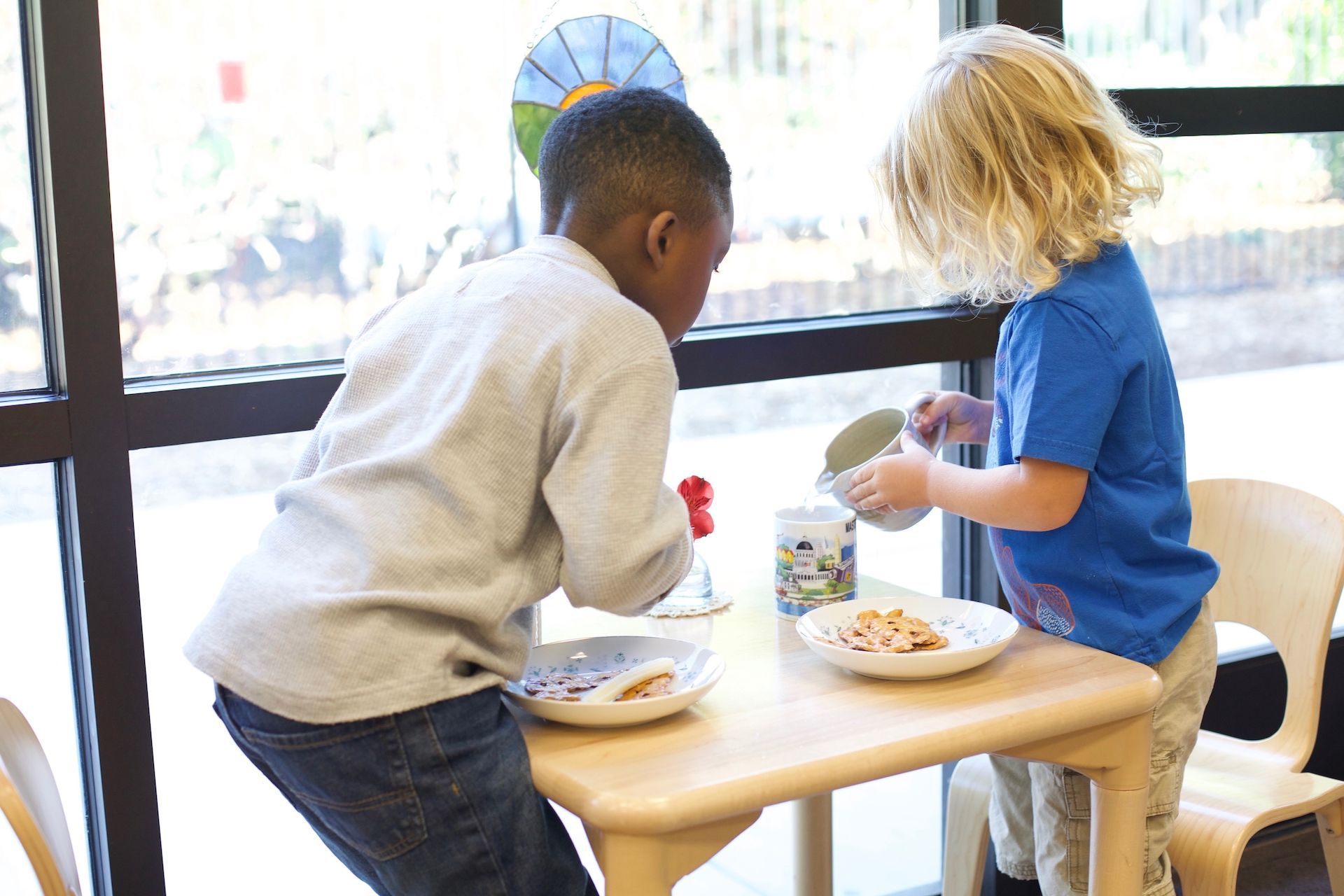
In Montessori, we recognize that food plays a bigger role in our young humans’ development. While nutrition is key, food also represents so much more! Therefore, we offer children the opportunity to use food as a way to develop a richer understanding of the world, master abilities to function independently, and develop a rich language for communication.


Understanding the World


As children develop their relationship with food, it’s important that they get to experience food in its natural state rather than only prepackaged. During the sensitive period for refining their senses, young children need to be able to explore their food sensorially so they can experience the taste, texture, smell, appearance (uncooked and cooked), and even any sound food might make.


In Montessori environments, we offer children opportunities to see and taste fresh foods, and even experience creating homemade breads and soups. Rather than opening a can or package, we start with natural raw ingredients and let the children put all the pieces together so they can see the steps involved in making different foods.


Whenever possible, we also try to give children meaningful connections to nature and its bounty, including when foods are in season. It’s a bonus when we can have fruits, vegetables, and herbs growing in planters or in the outdoor environment! Our goal is for children to develop a connection to food and its growth cycle throughout the year. In the process, children can learn about the parts of plants we eat: leaves, stems, roots, seeds, and flowers.


As children get older, they become more involved with the production and exchange aspects of food, from purchasing ingredients to preparing whole meals for others.


Mastering Abilities & Movement


When children are preparing food, we start with basic skills such as cutting, dicing, peeling, grating, and juicing. As children gain more dexterity and skill, like holding and using a knife, we move toward teaching more complex skills, such as how to prepare the ingredients when following a recipe, or how to operate kitchen appliances such as toasters, openers, coffee makers, juicers, mixers, etc.


Whether using simple or complex equipment, children need items that they can learn to manage on their own. As such, we provide kitchen items that are sized appropriately. So children can master their movements and abilities, the kitchen tools must work for children and not cause unnecessary obstacles. Through plenty of repetition with food preparation and the varied kinds of tools involved, children begin to coordinate their movements and refine their skills.


Developing Language


While children are working with food preparation activities, adults take care to use precise terminology to name the ingredients, materials, and actions involved. When we do this, we help increase and expand children’s language and more permanently fix the concepts in their memory.


Table setting also offers a wonderful opportunity for language development. For the youngest children, we can say, “We need four plates.” Then together the adults and children can count to four. While our youngest children may not have an idea of the concept, they will set the plates one to one and lay the foundation for future math work. Table setting can also be an indirect lesson about prepositions. In a very natural way, we can ask children to put the spoon next to the plate, or to the right of the plate, or a napkin on top of the plate. The word “preposition” is never spoken but the experience gives children exposure to the concept of the function of a preposition in a sentence. 


As children get older, we can introduce more complex language and also offer opportunities for them to interpret recipes, write their own instructional steps, and even tap into the expressive creativity involved with food preparation and presentation. 


Cultural Importance


Where we live in the world dictates how and what we eat. Different cultures have disparate expectations about cooking or consuming. Yet in all cultural groups, people have explored and experimented with food. This makes sense, of course. People have needed to know what they can eat, if food needs to be cooked to be edible, how foods can be combined, and how our bodies might react to particular foods or food combinations. 


Food also plays a key role in rituals and customs, from people coming together socially to religious ceremonies to relying on food for medical purposes. All cultures have some kind of beliefs about both the significance of food and different foods’ ability to make our bodies feel better or worse.


With all of the cultural richness woven into food, bringing in family traditions, customs, favorite recipes, and rituals around food can enhance the classroom community’s experience and provide a culturally responsive school-family partnership.


Food preparation is an essential part of our learning communities and a significant part of our children’s development. Please schedule a time to visit the school, see this work for yourself, and perhaps even share a bit about your own culinary traditions!
Child reaching for an object,
By Rebecca Lingo January 26, 2026
Learn how the Montessori Absorbent Mind empowers young children to effortlessly absorb language, culture, and behavior, and how parents can nurture it.
Children outside a building; title
By Suzanna Mayhugh, Lower Elementary Teacher January 19, 2026
Montessori Mayhem? Pint-Sized Pandemonium? When I give tours of the Elementary classrooms or welcome new parents to the Elementary program at Wheaton Montessori School, some parents believe that students are allowed complete freedom, as if the classrooms are a beautiful den of chaos and anarchy. Indeed, this is one of the biggest misconceptions about Montessori education. (The biggest misconception being, in my experience, that Montessori isn’t “real world” education. But as we say in our lessons, “That’s a story for another day.”) While Montessori classrooms DO give children the freedoms they require and deserve, it’s not an unlimited free-for-all with an adult watching from an observation chair! Freedom is always balanced with responsibility, to oneself and to the community. These values, freedom and responsibility, are essential for creating a happy, busy, humming classroom where children thrive. What Does Freedom Mean in Our Classroom? “Freedom” in the classroom means that students are encouraged to make choices about their learning. Just as in our Primary classrooms at Wheaton Montessori School, students are free to choose their work, their seat, and their work partners. They are free to move about the classroom and do not need to raise their hands to visit the restroom, get a drink of water, or ask a question. Let’s look at a few of these freedoms more closely. Students are Free to Choose Their Work. For example, they may choose which book to read, choose a work partner to research a chosen topic, or practice a tricky bit of a lesson over and over. They are also able to choose how they will show their understanding. They might present their understanding through a poster, a diorama, a model, a handmade book, or an enormous amount of cardboard and hot glue. These choices empower students to take charge of their education and express themselves in ways that suit their interests and strengths, something a standardized test or a worksheet can never do. However, freedom in the classroom ALWAYS has limits. For example, students are free to choose their work, but choosing NOT to work is not an option. They are free to choose their work from the lessons that have been presented to them. While students may choose their reading material, it must be appropriate for their reading level and classroom guidelines. When students select a partner, they must do so respectfully and inclusively. When students create projects and work output, they must do so with care, make proper use of materials, and in a way that shows what they understand about their topic. Additionally, these choices should never disrupt their own learning and construction, or that of their peers. The Role of Responsibility In a true Montessori classroom, freedom comes with responsibility. And that responsibility can sometimes be uncomfortable at first. Students are expected to care for classroom materials, such as returning books and lesson materials to the shelf, taking part in classroom jobs, keeping a record of their work in their work journals, and handling art supplies properly. They are responsible for practicing their lessons and completing chosen follow-up work, listening attentively during lessons or when a classmate is sharing a presentation or thought, and helping classmates when needed and available. A student is not free to use materials in a way that damages or wastes the classroom supplies or puts anyone in harm’s way. Freedom within our classroom never allows for harming oneself, others, or the classroom materials. Healthy boundaries, limits, and structures are consistently communicated in advance with clarity and respect, ensuring practicality and alignment within the community. Classroom expectations and rules are collaboratively developed and agreed upon by the community. In order to foster a positive learning environment, both students and teachers are expected to adhere to the shared expectations and responsibilities. When necessary, the classroom adult will address students and reiterate expectations and boundaries in a firm yet considerate manner. This balanced approach is effective only when maintained consistently throughout each day. What Might it Look Like When the Balance Needs to Shift? The adults in the classroom are constantly observing the children to be sure that each child has as much freedom as they are ready for, providing them space, room, and opportunities to show their strengths, and make their own choices throughout the day. When that freedom is too much, a teacher might need to provide more lessons in how to use materials that have been damaged or used improperly, limit work partner choices, or have a student sit with the teacher while they practice lessons or work with precious art materials. The adults will be watching for the perfect moment to allow the child increased freedom within the classroom, and within the limits of the understood responsibilities. How Freedom and Responsibility Work Together Finding the right mix of freedom and responsibility is something we work on together every day in our classroom. Montessori teachers are specially trained to guide this balance, helping students practice important skills like making good choices, solving problems, and learning self-control. When children are trusted to make decisions, they also learn to take responsibility for those choices. Experiencing the natural consequences of their actions helps them become kind, thoughtful, and capable members of their community who understand how their choices affect others. What Does This Have to Do with Parents? Your support at home makes a big difference. By working together, we can help your child thrive both at school and at home. Encouraging your child to take responsibility for their actions and decisions reinforces what they learn in class. Yes, it can be uncomfortable, but it is necessary. It also becomes easier, more comfortable, and needs to be practiced less often when practiced consistently (like most things!). This supportive consistency across settings, at home and at school, helps children feel confident, cared for, and increasingly independent.