Ideas for Summer by Amy Chiste
Amy Chiste • July 3, 2023

I [Amy Chiste] have been receiving requests for ideas for summer activities from parents lately. Please keep in mind that this is not a "must do" list. These are merely suggestions. Some of them are “academic-ish,” but most are not. As I balance summer for my students in camp, I think about academic development (because learning and growing doesn’t take a break), time outdoors in nature, and special summer activities. This list is full of things to do whether you are in camp with me or not and a few may have an educational bent to them. So without further ado, here it goes...

1. Read to your child. Make trips to the library. Explore poetry, picture books, fiction and non-fiction. Find out how to sign up for a library card and join the summer reading program. The librarians have a wealth of knowledge and can offer you suggestions for titles based on interest or reading level.  There are always adult programs too!

2. Go on a scavenger hunt. In the primary classroom, we make collections. For example, the children find things in the environment that match the color tablets in color box 2. Eventually, someone wants to bring only materials that are blue to the rug, and they have made a collection of blue things. At home, you can make a list (or your child can help you make the list, or write the list him/herself) of ten things to find on a walk, at the park, in the grocery store, in the living room, etc. 

3. Plant something. “Plant all the things!” It doesn't have to be a major undertaking. Container gardens are an easy way to start. Buy plants or seeds and start small. Children can weed, water and cut flowers for arrangements. 

4. Get outside. Bubbles, sidewalk chalk, painting with water, take an easel outside, etc.

5. Visit the website for a local zoo and pick an animal to learn more about. Do some research at the library and then plan a trip to the zoo!


6. Count together. Count the number of steps to the car, the number of crackers on your plate, the number of ladybugs at the park. The list is endless.


7. Cook something. Even the youngest child can contribute to a family meal. Your child has probably had a lesson on preparing a carrot, an apple, and a hard-boiled egg and is able to stir, 

tear lettuce or set the table. You can find child-friendly cookbooks and recipes at your local library.


8. Write a letter or send a picture to someone. Who doesn’t love getting a surprise in their mailbox? 


9. Plan a trip to the beach. Trust me, it will be worth the drive.


10. Make lists. Grocery lists, what you are going to do that day, things to pack on a trip, etc. If your child isn’t writing yet, have them dictate to you. 


11. Make your own play dough, paint, bubble juice, slime, etc. You can find recipes online or craft books for kids at the library.


12. Camp out in your back yard. Catch fireflies together.


13. Have a picnic. Make all the food together.


14. Learn how to play a new game. Your local library may have games or puzzles available.  


15. Build something. Use Legos, cardboard boxes, couch cushions, get creative!


16. Make your own popsicles or ice cream.


17. Start a lemonade stand.


18. Play mini golf.


19. Make one day a “craft day.”


20. Have an indoor cook out on a rainy day. I call them “cook ins!” kind of like a sleep under.


Visit Wheaton Montessori School to see all ages involved and engaged socially and academically. You will leave with ideas to implement at home!
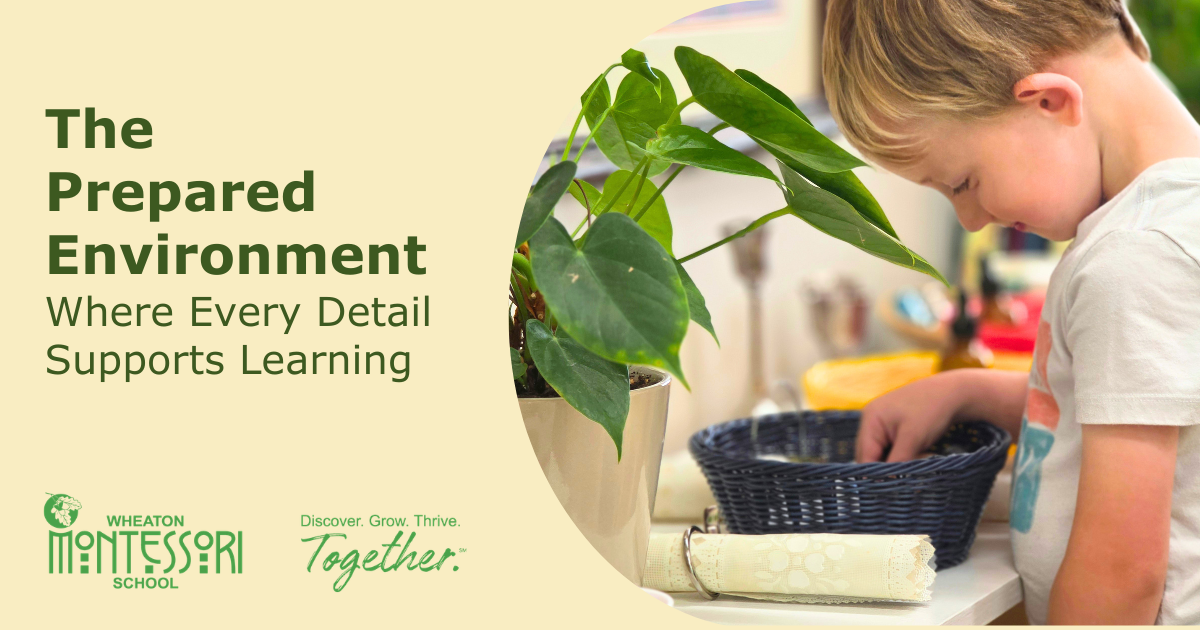
Child reaching for an object,
By Rebecca Lingo January 26, 2026
Learn how the Montessori Absorbent Mind empowers young children to effortlessly absorb language, culture, and behavior, and how parents can nurture it.
Children outside a building; title
By Suzanna Mayhugh, Lower Elementary Teacher January 19, 2026
Montessori Mayhem? Pint-Sized Pandemonium? When I give tours of the Elementary classrooms or welcome new parents to the Elementary program at Wheaton Montessori School, some parents believe that students are allowed complete freedom, as if the classrooms are a beautiful den of chaos and anarchy. Indeed, this is one of the biggest misconceptions about Montessori education. (The biggest misconception being, in my experience, that Montessori isn’t “real world” education. But as we say in our lessons, “That’s a story for another day.”) While Montessori classrooms DO give children the freedoms they require and deserve, it’s not an unlimited free-for-all with an adult watching from an observation chair! Freedom is always balanced with responsibility, to oneself and to the community. These values, freedom and responsibility, are essential for creating a happy, busy, humming classroom where children thrive. What Does Freedom Mean in Our Classroom? “Freedom” in the classroom means that students are encouraged to make choices about their learning. Just as in our Primary classrooms at Wheaton Montessori School, students are free to choose their work, their seat, and their work partners. They are free to move about the classroom and do not need to raise their hands to visit the restroom, get a drink of water, or ask a question. Let’s look at a few of these freedoms more closely. Students are Free to Choose Their Work. For example, they may choose which book to read, choose a work partner to research a chosen topic, or practice a tricky bit of a lesson over and over. They are also able to choose how they will show their understanding. They might present their understanding through a poster, a diorama, a model, a handmade book, or an enormous amount of cardboard and hot glue. These choices empower students to take charge of their education and express themselves in ways that suit their interests and strengths, something a standardized test or a worksheet can never do. However, freedom in the classroom ALWAYS has limits. For example, students are free to choose their work, but choosing NOT to work is not an option. They are free to choose their work from the lessons that have been presented to them. While students may choose their reading material, it must be appropriate for their reading level and classroom guidelines. When students select a partner, they must do so respectfully and inclusively. When students create projects and work output, they must do so with care, make proper use of materials, and in a way that shows what they understand about their topic. Additionally, these choices should never disrupt their own learning and construction, or that of their peers. The Role of Responsibility In a true Montessori classroom, freedom comes with responsibility. And that responsibility can sometimes be uncomfortable at first. Students are expected to care for classroom materials, such as returning books and lesson materials to the shelf, taking part in classroom jobs, keeping a record of their work in their work journals, and handling art supplies properly. They are responsible for practicing their lessons and completing chosen follow-up work, listening attentively during lessons or when a classmate is sharing a presentation or thought, and helping classmates when needed and available. A student is not free to use materials in a way that damages or wastes the classroom supplies or puts anyone in harm’s way. Freedom within our classroom never allows for harming oneself, others, or the classroom materials. Healthy boundaries, limits, and structures are consistently communicated in advance with clarity and respect, ensuring practicality and alignment within the community. Classroom expectations and rules are collaboratively developed and agreed upon by the community. In order to foster a positive learning environment, both students and teachers are expected to adhere to the shared expectations and responsibilities. When necessary, the classroom adult will address students and reiterate expectations and boundaries in a firm yet considerate manner. This balanced approach is effective only when maintained consistently throughout each day. What Might it Look Like When the Balance Needs to Shift? The adults in the classroom are constantly observing the children to be sure that each child has as much freedom as they are ready for, providing them space, room, and opportunities to show their strengths, and make their own choices throughout the day. When that freedom is too much, a teacher might need to provide more lessons in how to use materials that have been damaged or used improperly, limit work partner choices, or have a student sit with the teacher while they practice lessons or work with precious art materials. The adults will be watching for the perfect moment to allow the child increased freedom within the classroom, and within the limits of the understood responsibilities. How Freedom and Responsibility Work Together Finding the right mix of freedom and responsibility is something we work on together every day in our classroom. Montessori teachers are specially trained to guide this balance, helping students practice important skills like making good choices, solving problems, and learning self-control. When children are trusted to make decisions, they also learn to take responsibility for those choices. Experiencing the natural consequences of their actions helps them become kind, thoughtful, and capable members of their community who understand how their choices affect others. What Does This Have to Do with Parents? Your support at home makes a big difference. By working together, we can help your child thrive both at school and at home. Encouraging your child to take responsibility for their actions and decisions reinforces what they learn in class. Yes, it can be uncomfortable, but it is necessary. It also becomes easier, more comfortable, and needs to be practiced less often when practiced consistently (like most things!). This supportive consistency across settings, at home and at school, helps children feel confident, cared for, and increasingly independent.