Whether we are excited about the delights of Halloween or reluctant to face the excess of sweets, the holiday is upon us! At Wheaton Montessori, we approach holidays as an opportunity to learn more about culture in age appropriate styles. This includes talking about the history as well as related traditions. As with other aspects of culture, we also think about how to give and show respect in a way that is developmentally appropriate. Above all, we keep in mind what makes sense for each child.
Teach the History
How did Halloween begin? This is an excellent time to explore the origin of Halloween with your elementary child. Young children appreciate a very simple explanation that is linked to the rhythm of the year. For example: “Around this time, when the nights are getting longer and darker, different cultures have different ways of marking this shift from summer into winter. In our culture, one way people have celebrated the change of seasons is by dressing up and visiting neighbors.”
With elementary children, it’s fun to do a little research together into Halloween’s ancient Celtic origins. Telling a little teaser story can spark some interest in learning more. For example: “Did you know that Halloween began over 2,000 years ago? It wasn’t called Halloween then, though. Its name was Samhain (pronounced ‘sow-in’), which means ‘summer’s end.’ Back then winter was a dangerous time, so people got together to face some of the superstitions and fears, and also to play games and eat together before winter began. Let’s see what else we can discover about this celebration and traditions over time!”
Visit your library and check out books on Halloween by Gail Gibbons. She has one on the history and one on pumpkins. (While you are there, check out more Gail Gibbons books too! She offers something to adults, preschoolers, and young elementary readers.)
If you are interested in learning more, here are some helpful links for collaborative research:
The Origins of Halloween Traditions
This History of Halloween for Kids
Halloween History for Kids: Six Facts They Should Know
Practice Grace & Courtesy
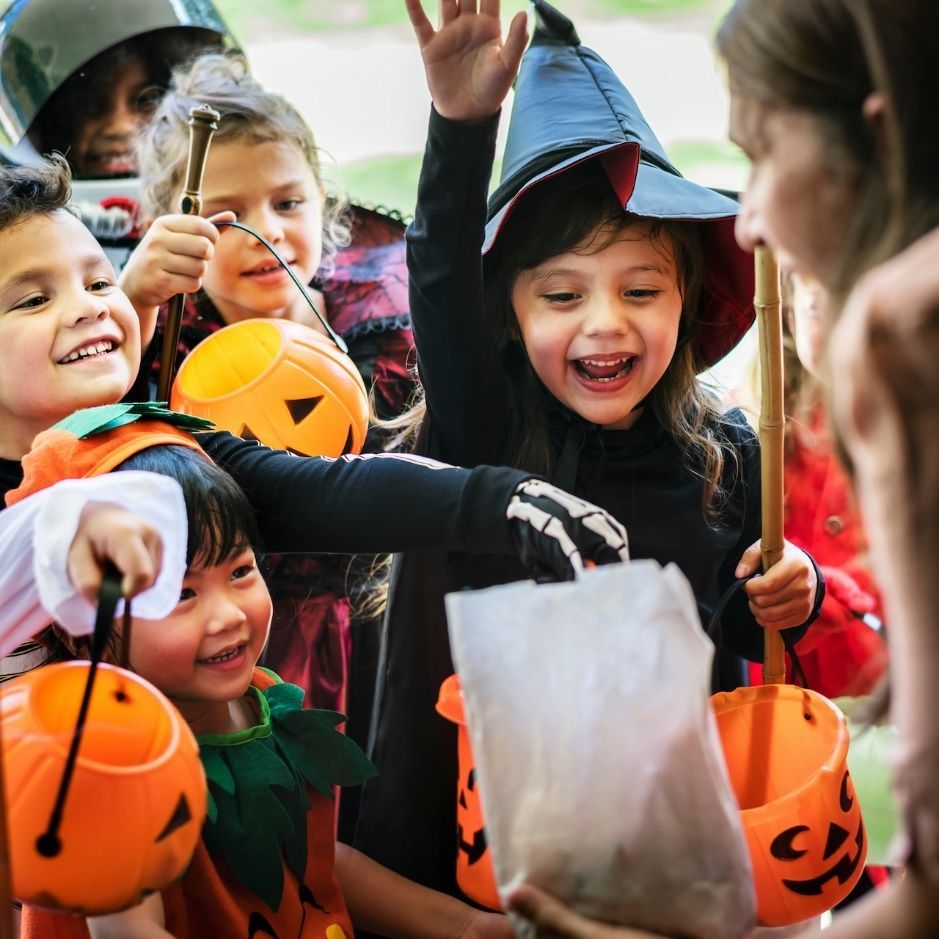
It’s not often that we march up to multiple houses and demand treats! As such, we want to be thoughtful about how we introduce the practice of trick-or-treating to our children, uphold our family values, and model showing manners while having fun.
Young children will likely benefit from some demonstration before they jump into the experience. Role-playing with a family member, friend, or neighbor can set children up for success before they are in the awkward situation of standing before a neighbor uncertain about what to do (or not do).
With older children (and their friends if they are trick-or-treating as a group), it’s also helpful to collaboratively review expectations such as walking on people’s sidewalks rather than marching through yards, only approaching houses with porch lights on, the protocol for knocking and/or ringing the doorbell, how to politely respond or engage when someone comes to the door, and what to say as you leave (e.g. “thank you” or “Happy Halloween!”). In addition, Halloween is an excellent time to review road safety around crossing the street and checking for cars.
Remember Developmental Appropriateness
Our young children are still distinguishing between what is real and what isn’t. As such, Halloween can be an exciting and yet sometimes disorienting time. Our language can help. Just like with toddlers when we say, “This is a picture of a giraffe” rather than “This is a giraffe” when we present a language card with a giraffe image, during Halloween festivities, we can be specific about how we talk about people in costumes or even decorations. For example, we might say, “Oh look, there is a person dressed up in a witch costume!” rather than “There is a witch!” Or we might offer some explanation if our children are hesitant, “Those bat and spider figurines hanging on the porch look so real, but when I look more closely, I see how they are made of plastic. Can you see that, too?”
If fears do arise, acknowledge your child’s feelings, let them know it’s okay to feel scared, and make sure they feel heard and supported. They can be brave at the houses that are very familiar. Be ready to make modifications to the Halloween plans. Ultimately, we want to make sure the festivities are fun for our children. This might mean considering other options, like decorating pumpkins versus dressing up like zombies. Low-key or autumn-themed activities might be best if children are feeling anxious or fearful.
Our Wheaton Montessori team loves that our adolescent students participate in dressing up, collecting candy, and celebrating childhood on this day. Most of you have probably read social media posts about treating everyone who comes to your door even if they look “too old” to trick or treat. If you’ve missed that beautifully written sentiment, let me know and I’ll share it. These moments of youth are worth awknowledging.
However your family chooses to celebrate the season, remember we have an opportunity to model respect and thoughtfulness while having some fun! Let us know what you love to do this time of year. We would love to hear about your family’s favorite autumn traditions!
We look forward to hosting you for our Halloween Parade tradition and would love to have you observe on typical school days too. Current parents please use these links to sign up for your classroom observation:
Adolescent Seminar Observation
Ms. Searcy’s Upper Elementary Classroom Observation
Mrs. Fortun’s Lower Elementary Classroom Observation
Mrs. Mayhugh’s Lower Elementary Classroom Observation
Mrs. Berdick’s Primary Classroom Observation
Ms. Carr’s Primary Classroom Observation
Ms. Chiste’s Primary Classroom Observation
Mrs. Rogers’ Primary Classroom Observation
Looking ahead for preschool? Parents of children under 4 years interested in touring Wheaton Montessori School, please use the green Schedule a Tour button located on the upper right-hand corner of our web site. Enrollment is open for January, summer, and next fall.