At the start of this new school year, we’ve been thinking about how to offer ideas for integrating Montessori learning at home. With this in mind, we'd like to present you with a family challenge. You can think of this challenge as your homework. Even though we don’t really assign homework in Montessori, we do like to collaborate to help children develop their skills and confidence!
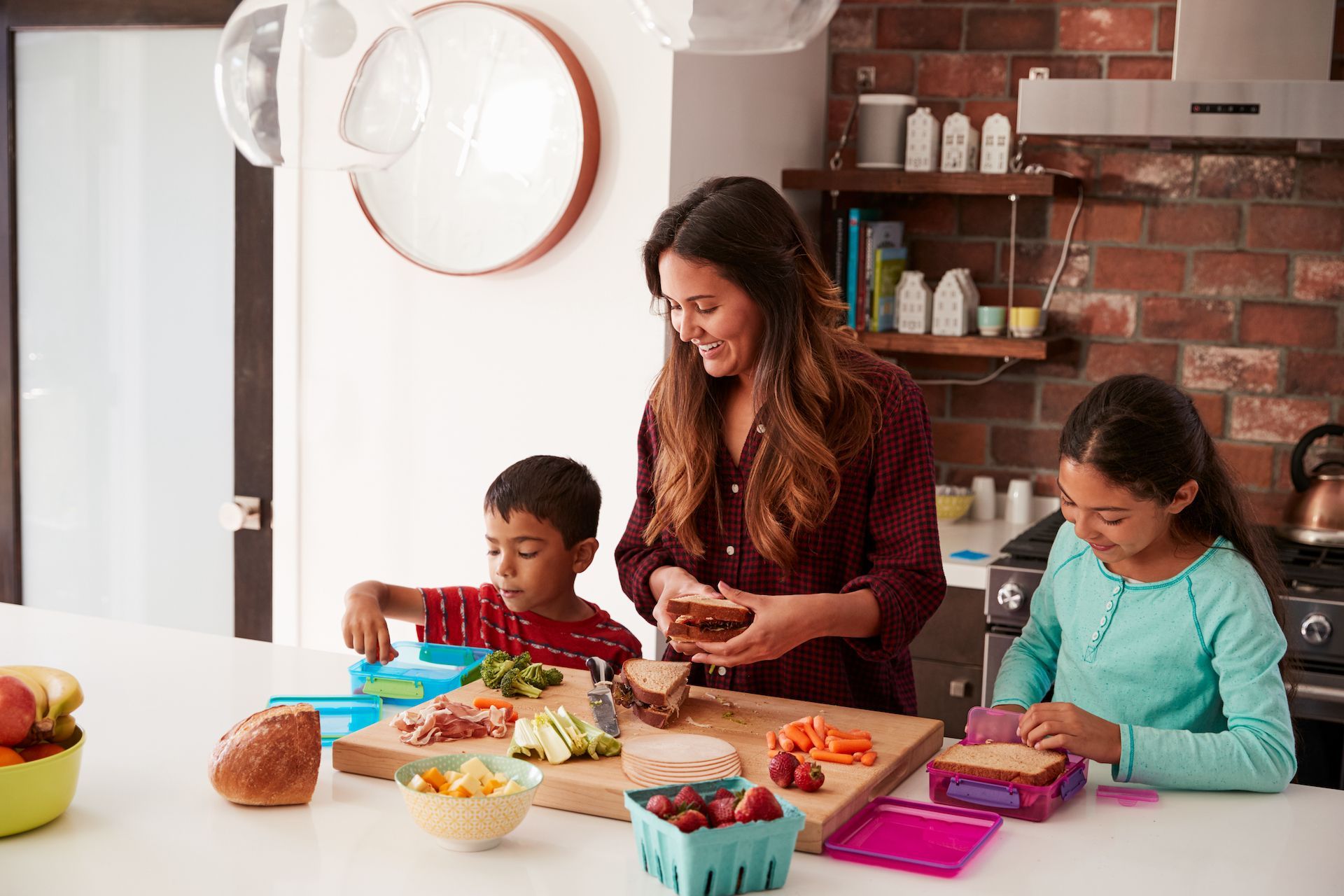
Children in Montessori settings do a lot of food preparation. Food preparation is a big part of their practical life experience at school and a big part of becoming functionally independent in the world. So, our challenge is this: Rather than taking on the sole responsibility of preparing lunches for our children, let's make a commitment to move toward helping our children become their own lunch packers!
Seems Daunting?
Maybe you already have a quick and easy routine for packing lunches. Or maybe it feels a little bit like a drag you stumble through every day. Regardless, preparing lunch is a part of our daily lives. Many of us try to fine-tune lunch packing to make it as efficient and painless as possible. The thought of including our children in that process may at first seem completely overwhelming and impossible.
We recognize the challenge may feel uncomfortable, but bear with us! Not only does helping our children learn how to pack their own lunches help prepare them for important life skills, it also supports their Montessori experience in a pretty significant way. Plus, all too often we see children open up their lunch at school and complain that the food is something they don’t like or want. The side benefit of having children be part of the process is that they have some responsibility and accountability for what they bring. If it's food they helped choose, prepare, and/or pack, they know what they have!
Let’s break down the steps for supporting children as they learn how to prepare their food, pack their lunch, or even just be part of even putting items in their lunch bag or box. Keep in mind that this family “homework” challenge can even start with toddlers!
Shop Together
A wonderful way to enlist children’s involvement is by including them in some part of the shopping experience. Young children can be part of selecting certain food options off the shelf and putting them in the cart. Older children can help make a grocery list, figure out the cost of different items, and keep track of what is needed while in the store. Even a little bit of involvement in picking out lunch food options helps children have a sense of ownership and control.
Choice within Limits
In order to have a balance between wants and needs, it’s worth also weaving in some conversation about balancing different food groups and having plenty of healthy options. Some families have success with collaboratively creating a list of different choices within each food group. Decide as a family what you prioritize then list various options from food groups (e.g. grains, vegetables, fruit, dairy, and protein). It can help to create a visual guide so even young children can see what their choices are when thinking about what to plan for and purchase.
Accessibility
After coming home from the grocery store, children can be part of putting away the items they will be using to prepare and pack their lunches. Accessibility is key. Having a designated spot for lunch foods helps with the packing process. Low cabinet shelves or even low drawers work well. If possible, also find an easy-to-reach space in the refrigerator for perishable items.
It can help to have clear containers so children can easily see their options. For example, after purchasing grapes, children can help wash them, remove the grapes from their stems, and then place the ready-to-eat grapes in a glass or plastic container to store in the refrigerator. Similarly, carrots can be washed, cut, and stored in water in a see-through container. If this system works for your family, even non-perishable items, like crackers, can be removed from their packaging and placed in a clear storage container with other accessible lunch foods.
Easy to Make & Easy to Eat
Young children tend to love having small portions with lots of variety. So when preparing food, think about how children can help with this step. They might like to help cut a sandwich into mini-sandwiches, peel and section a clementine, or slice some cucumbers. With a variety of different choices, children can try combining foods in different ways. They might like to sample a piece of cheese with their apple slice or see how cream cheese tastes on a cracker. Older children can create their own wraps, roll-ups, or sandwiches or choose some dinner leftovers to put into containers for the next day’s lunch.
When children are part of preparing food, there can be some mess involved. It’s good to allow a little time and space for spills to happen. We can show children how to clean up after themselves, while also remembering that the youngest children won’t necessarily be able to clean it all up themselves. When we collaborate in the process, we are helping our children learn how to do it themselves. Whatever path makes sense for your family, just remember that when children are part of the preparation process, they are more invested in trying and eating a variety of foods.
Plan Ahead
Because mornings can be rushed, it often helps to do a little planning ahead of time. Some families like to use the weekend to map out a lunch menu with their children. This can be posted in an easy-to-reference place in the kitchen. When it’s time to get the foods ready or put them in lunch containers, children can just look at the lunch plan for that day. Some families go as far as collaborating with their children to get as many lunch foods as possible ready over the weekend so that their kids can just put that day’s items into their lunch bag or box each morning. Other families might set up a routine so that children are part of emptying and washing their lunch containers when they get home from school and then can use that time to get their lunch set up for the following day. Children may even like to get their lunch packed the night before, store the whole lunch bag in the refrigerator, and then just grab the lunch and go in the morning.
Your kids are more capable than it may seem! Although the process may feel overwhelming at first, remember that you are helping your child learn valuable life skills and reinforcing their Montessori education. If you’d like to come visit the school to see children’s food preparation in action, schedule a tour. We would love to support you with this Montessori challenge!