
Back to School in Five Steps
August 12, 2024

We hope you are enjoying this last stretch of summer! As the school year begins next week, we wanted to suggest ways you can help your child (and yourself!) prepare for the transition back to school.


Encourage Mealtime Independence


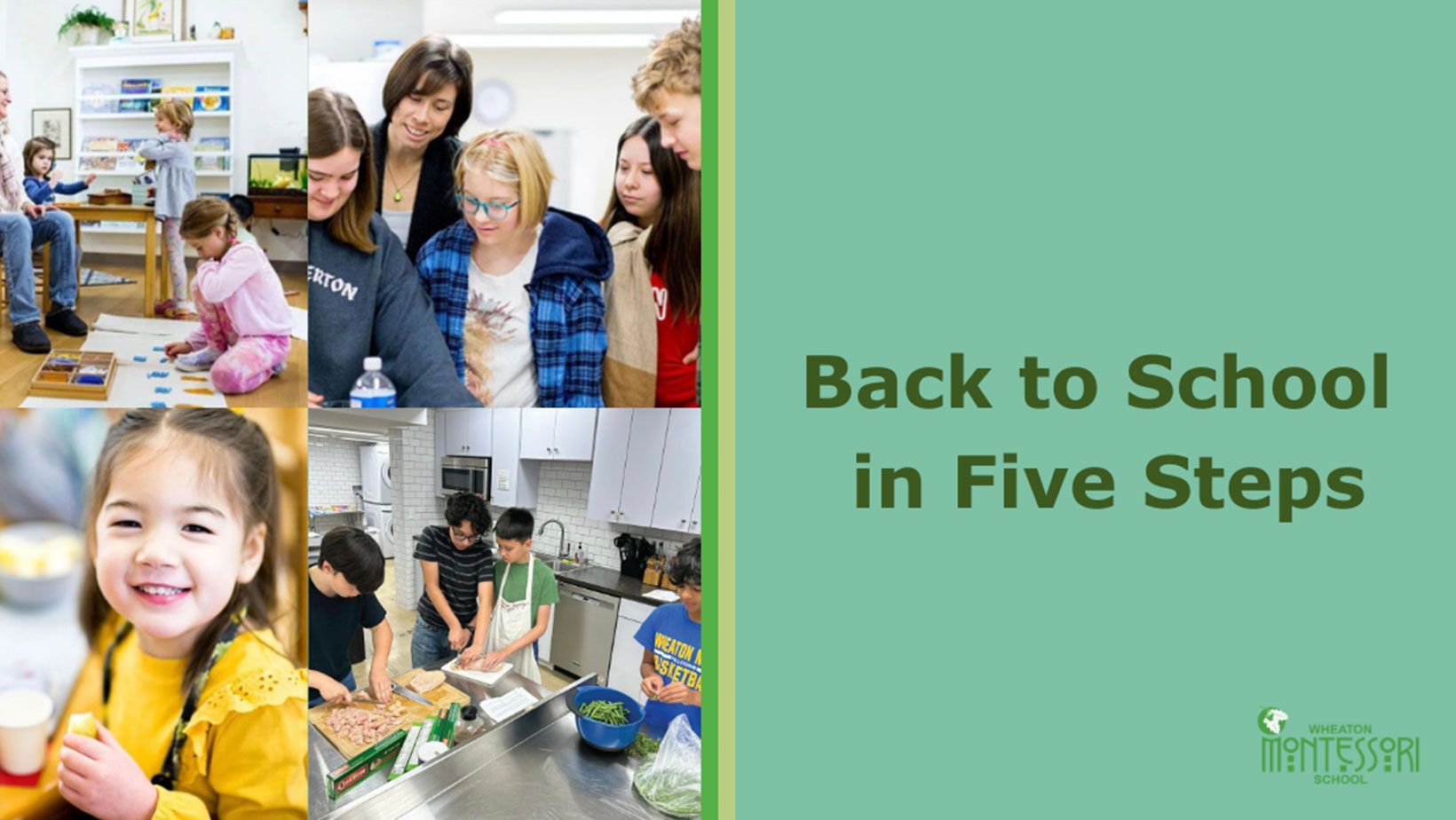
Food preparation and meals are important parts of our daily lives. At school, children will be involved with preparing food, setting the tables, pouring water, and cleaning up after themselves. 


We recommend incorporating this at home. Children can be part of preparing the table and then clearing the dirty dishes after the meal. We recommend having a clear routine for cleaning up, which can include putting dirty dishes in the sink or dishwasher after eating. We also encourage the use of regular cups and glasses for meals and snacks. Younger children can be encouraged to use silverware to feed themselves. Model and practice good table manners by eating family style meals sitting at the table together.


Older children can be involved with setting the menu for meals and helping with grocery shopping. They can start to map out what they want to pack for lunch and be part of the process of getting their food ready in containers and everything into their lunch box. This also helps children have ownership and buy-in about what they are eating.


We also recommend that your child have food containers that are easy to open and close. Going to the store and having your child try opening different kinds of containers is a great way to find some that work well!


And those of you with children entering 7th grade get ready to hear about the best meals ever instead of packing lunches because our 7th-9th grades meal plan, shop, prep, and cook their meals daily.


Think About What to Wear


Because younger children are becoming independent with their dressing and undressing, it helps for them to practice these skills at home. Even young toddlers are capable of doing quite a lot of taking off and putting on different items, and they love to do things for themselves. We recommend giving your child the time and encouragement to do things for themselves, including taking shoes off, pulling pants up, unzipping jackets, and so on. Choosing clothing and shoes that are easy for your child to put on and take off is a big help for the transition to school.


Older children can gather their belongings to make sure they have everything ready for the first day of school (and every subsequent day!). They can check the weather to determine appropriate outerwear and shoes, practice setting out their clothes the night before, and prep items needed for after-school activities. 


Prepare a Goodbye Routine 


To be ready for the first days of school, we recommend preparing your child (and yourself) for what drop-off will look and feel like. It can be helpful to drive by the school and casually notice with your child(ren) where drop-off will happen. As adults, the more clear we are about the routine, the more secure our children will feel. New parents, don’t worry, you’ll be given a few tips during your Meet-Your-
Teacher appointment. 


Short and sweet transitions are key. The longer we linger the harder it is for our children to recalibrate and settle into the classroom. To that end, figure out your goodbye process ahead of time. Perhaps it is one hug plus a double wave goodbye. Whatever you decide, stick with it. Our children are hard-wired to test our limits and they will want to figure out if they can negotiate two hugs and a long squeeze goodbye then more hugs and kisses. Ms. Rivera and Ms. Lingo will be there to help at the main door!


To help ensure the goodbye plan is a success, practice! While at home and when everyone is in a great mood, suggest a game of pretending you are doing drop-off at school. Remember (or create) the goodbye routine and then act it out together! Take turns being the adult and the child (children love getting to be the adult). Playacting is a fun way to work through what can be a stressful few moments.


By establishing clear and firm routines, we help our children develop trust and confidence. If we feel hesitant or unsure, our children absorb those feelings. So we want to exude assuredness! Parents can call the office later to check in if necessary.


Adjust Schedules


If our children have been staying up later during the long days of summer, it helps to gradually shift bedtimes and establish a consistent routine. Rushed mornings tend to be more difficult, so putting additional effort into getting enough sleep can really help the transition back to school. 


Although earlier mornings can be tough, children do so much better when they can get to school with enough time to settle in. Please avoid being even 5 minutes late. We recommend trying to come on the early side of the arrival window. Coming late can mean that they miss out on the social, emotional, and academic benefits of the day.


Check-In


As always, please let us know if you need anything or have any questions. It’s our teachers’ standard to prioritize your children’s day but they have time to get back to you after 3:00. After morning drop-off, you can call or email the office if you want to check-in. We are happy to help get your day off to a better start too!


If you are curious to see more about how we support, model, and guide children, schedule a visit! Prospective families can schedule tours. Current families can schedule observations beginning in October and we have parent nights too! We can’t wait to share what your children are doing here with you through our events and on social media.

Child reaching for an object,
By Rebecca Lingo January 26, 2026
Learn how the Montessori Absorbent Mind empowers young children to effortlessly absorb language, culture, and behavior, and how parents can nurture it.
Children outside a building; title
By Suzanna Mayhugh, Lower Elementary Teacher January 19, 2026
Montessori Mayhem? Pint-Sized Pandemonium? When I give tours of the Elementary classrooms or welcome new parents to the Elementary program at Wheaton Montessori School, some parents believe that students are allowed complete freedom, as if the classrooms are a beautiful den of chaos and anarchy. Indeed, this is one of the biggest misconceptions about Montessori education. (The biggest misconception being, in my experience, that Montessori isn’t “real world” education. But as we say in our lessons, “That’s a story for another day.”) While Montessori classrooms DO give children the freedoms they require and deserve, it’s not an unlimited free-for-all with an adult watching from an observation chair! Freedom is always balanced with responsibility, to oneself and to the community. These values, freedom and responsibility, are essential for creating a happy, busy, humming classroom where children thrive. What Does Freedom Mean in Our Classroom? “Freedom” in the classroom means that students are encouraged to make choices about their learning. Just as in our Primary classrooms at Wheaton Montessori School, students are free to choose their work, their seat, and their work partners. They are free to move about the classroom and do not need to raise their hands to visit the restroom, get a drink of water, or ask a question. Let’s look at a few of these freedoms more closely. Students are Free to Choose Their Work. For example, they may choose which book to read, choose a work partner to research a chosen topic, or practice a tricky bit of a lesson over and over. They are also able to choose how they will show their understanding. They might present their understanding through a poster, a diorama, a model, a handmade book, or an enormous amount of cardboard and hot glue. These choices empower students to take charge of their education and express themselves in ways that suit their interests and strengths, something a standardized test or a worksheet can never do. However, freedom in the classroom ALWAYS has limits. For example, students are free to choose their work, but choosing NOT to work is not an option. They are free to choose their work from the lessons that have been presented to them. While students may choose their reading material, it must be appropriate for their reading level and classroom guidelines. When students select a partner, they must do so respectfully and inclusively. When students create projects and work output, they must do so with care, make proper use of materials, and in a way that shows what they understand about their topic. Additionally, these choices should never disrupt their own learning and construction, or that of their peers. The Role of Responsibility In a true Montessori classroom, freedom comes with responsibility. And that responsibility can sometimes be uncomfortable at first. Students are expected to care for classroom materials, such as returning books and lesson materials to the shelf, taking part in classroom jobs, keeping a record of their work in their work journals, and handling art supplies properly. They are responsible for practicing their lessons and completing chosen follow-up work, listening attentively during lessons or when a classmate is sharing a presentation or thought, and helping classmates when needed and available. A student is not free to use materials in a way that damages or wastes the classroom supplies or puts anyone in harm’s way. Freedom within our classroom never allows for harming oneself, others, or the classroom materials. Healthy boundaries, limits, and structures are consistently communicated in advance with clarity and respect, ensuring practicality and alignment within the community. Classroom expectations and rules are collaboratively developed and agreed upon by the community. In order to foster a positive learning environment, both students and teachers are expected to adhere to the shared expectations and responsibilities. When necessary, the classroom adult will address students and reiterate expectations and boundaries in a firm yet considerate manner. This balanced approach is effective only when maintained consistently throughout each day. What Might it Look Like When the Balance Needs to Shift? The adults in the classroom are constantly observing the children to be sure that each child has as much freedom as they are ready for, providing them space, room, and opportunities to show their strengths, and make their own choices throughout the day. When that freedom is too much, a teacher might need to provide more lessons in how to use materials that have been damaged or used improperly, limit work partner choices, or have a student sit with the teacher while they practice lessons or work with precious art materials. The adults will be watching for the perfect moment to allow the child increased freedom within the classroom, and within the limits of the understood responsibilities. How Freedom and Responsibility Work Together Finding the right mix of freedom and responsibility is something we work on together every day in our classroom. Montessori teachers are specially trained to guide this balance, helping students practice important skills like making good choices, solving problems, and learning self-control. When children are trusted to make decisions, they also learn to take responsibility for those choices. Experiencing the natural consequences of their actions helps them become kind, thoughtful, and capable members of their community who understand how their choices affect others. What Does This Have to Do with Parents? Your support at home makes a big difference. By working together, we can help your child thrive both at school and at home. Encouraging your child to take responsibility for their actions and decisions reinforces what they learn in class. Yes, it can be uncomfortable, but it is necessary. It also becomes easier, more comfortable, and needs to be practiced less often when practiced consistently (like most things!). This supportive consistency across settings, at home and at school, helps children feel confident, cared for, and increasingly independent.