Many of us didn’t grow up with Montessori. As a result, we often find ourselves drawing upon a great deal of trust. We may intellectually understand how this unique method supports our children and their development. Still, we don’t always have the experiential knowledge to explain how and why it works!
We understand that life can be busy, and we aim to provide you with valuable information to help you address your questions and those of others. Additionally, we believe that the more engaged you are, the greater your chances of understanding the authentic and accredited Montessori education we provide, ultimately enhancing your child's experience with Montessori's child-centered approach!
Goals for Family Education Events
At Wheaton Montessori School, we have some goals as we design parent and family education events. We want to deepen your understanding of Montessori philosophy and practice. We want to work together in partnerships, and we often hear that families want to better understand how Montessori can be implemented at home. We are excited to help with this, especially knowing that when we are all aligned, we can work together to foster independence, responsibility, and self-discipline in our children.
Supporting Your Child’s Development
We hope that as you learn more about what we do and as we learn more about what you do, we can use a shared understanding of Montessori principles to support your child’s development both in and outside of Wheaton Montessori School. Understanding developmental stages through a Montessori lens often leads to children feeling a stronger sense of belonging and connection because they feel understood and supported. This can translate into easier day-to-day interactions, better collaborative problem-solving, a long-term love for learning, and an increase in confidence and independence.
Partnership in the Parenting Journey
We want to help build a strong home-school partnership. Through consistent and varied communication and learning opportunities, we hope to create a collaborative environment and opportunities for meaningful dialogue. Parenting is a tough job, and we want to ensure you know you aren’t alone on this journey! Through different platforms, we aim to address common misconceptions and help you feel good about answering questions that come up at family gatherings and neighborhood events!
We cherish an engaged community and aim to foster your connections with fellow families from Wheaton Montessori School. By sharing experiences and challenges with like-minded parents, we can navigate the ups and downs of parenting together. Our goal is for our school community to offer both emotional support and practical guidance.
Ultimately, we want you to gain a deeper understanding of the Montessori education we offer. This knowledge will empower you to effectively advocate for your child's learning and prepare you for the transitions they will face at various stages of their life.
UPCOMING EVENTS AT WHEATON MONTESSORI SCHOOL
We hope you can join us for our upcoming Parent Discovery Nights and Better Together Get-Together event. We value your participation and your partnership!
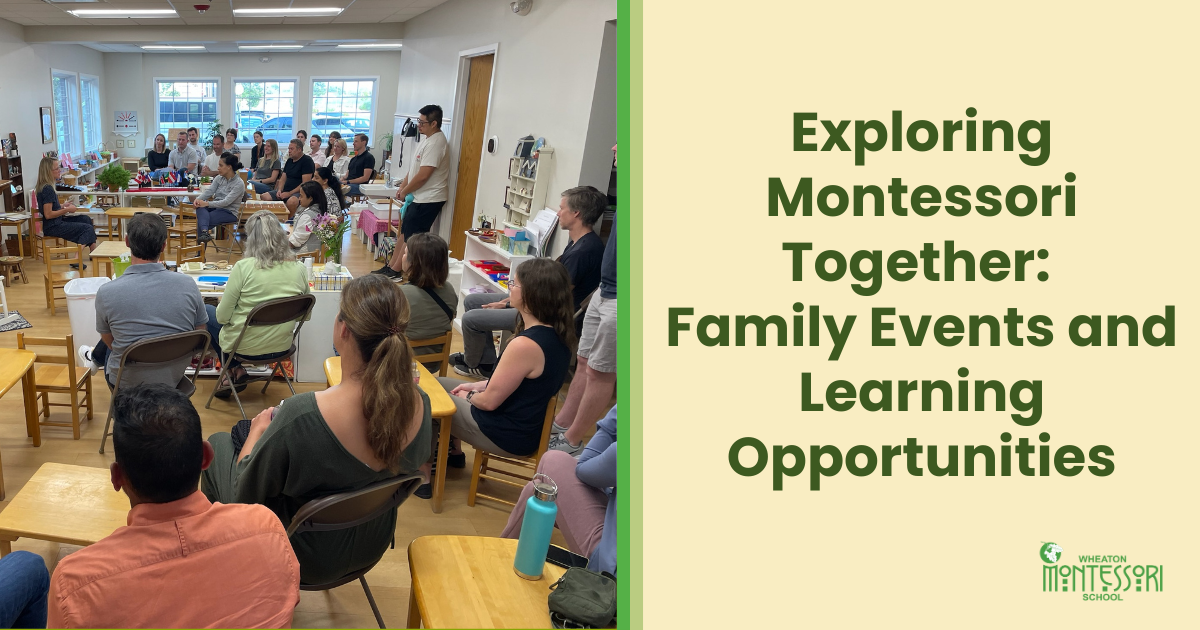
Parent Discovery Nights
During the Parent Discovery Nights, you will gain insights into the curriculum and ask questions. There will be interactive sessions to engage with your child's daily materials and methods. This is a great chance to connect with other parents and foster a supportive community for nurturing children's growth. Please RSVP by clicking on the links below for the events you will attend. Prospective Families, please kindly note that the only Parent Discovery Night available for your participation is the Primary one.
- Wednesday, November 6, 2024: 6:00 p.m.- Parent Discovery Night- Adolescent Community
- RSVP link: https://calendly.com/wheaton-montessori/parent-discovery-night-adolescent?preview_source=et_card
- Thursday, November 7, 2024: 6:00 p.m.- Parent Discovery Night- Primary
- RSVP link: https://calendly.com/wheaton-montessori/parent-discovery-night-primary?preview_source=et_card
- Thursday, November 14, 2024: 6:00 p.m.- Parent Discovery Night- Elementary
- RSVP link: https://calendly.com/wheaton-montessori/parent-discovery-night-elementary?preview_source=et_card
Better Together Get-Together
As parents, we aim to ensure our children's well-being and success while balancing control and freedom. Join Ms. Christine Carr, one of our primary teachers, to explore the concept of "lighthouse parenting”. We stand strongly like a lighthouse and guide our children with support without dictating their actions. This approach helps children build confidence and resilience as they learn to navigate life's challenges independently.
All families are invited to attend to socialize and increase their knowledge of lighthouse parenting. Toddlers are welcome in our playroom during the meeting.
- Thursday, November 14, 2024: 9:00 a.m.- Better Together Get-Together
- Topic: Be a Lighthouse Parent
- Presenter: Ms. Christine Carr, Primary Teacher
- Location: Wheaton Montessori School
- RSVP link: https://calendly.com/wheaton-montessori/better-together-get-together-be-a-lighthouse-parent?preview_source=et_card&month=2024-11
In addition to attending our school events, prospective families interested in our school are encouraged to schedule a tour by clicking on this link or the green Schedule a Tour button on the upper right-hand corner of this page.